Literacy & children's yoga-is there a connection?
Absolutely! The connection is in the way they both engage children-one through physical movement, the other through imagination!
When the two are combined, you have a poweful format for bringing a lesson to life by personalizing it. In doing this, you give it more relevant value to the student.
In many children's yoga programs, such as the one I founded (S.M.Art Kids® Adaptive Yoga -Stories, Movement, Art) stories and character themes are used as a basis for the lesson plan. (Yes-yoga teachers DO write lesson plans!)
We have found that stories are a versatile way to help kids identify more easily with character qualities, situations & abstract concepts. Yoga postures are often used to tell the story actively.
This type of interactive storytelling and character identification can be used as a method of instilling language and vocabulary skills, expressive & receptive communication skills, social and emotional learning concepts and an atmosphere of diversity, sharing, respect and belonging.
Stories can be found in so many places: personal and family histories, world history, mythology, cultural stories & folk tales, movies, video games, social stories and children's books. Storytelling makes learning engaging, kid-friendly, and fun!
My friend Angela at OMazing Kids Yoga in Norman OK has compiled this fantastic list of children's books that can be used by yoga teachers and other educators for creative, interactive learning: Books for Kid's Yoga
Other Great Storytelling Resources:
S.M.Art Stories™
Story Jumper
Barefoot Books
Bucks County Public Libraries
Storytime Yoga
For more Information contact: barbara@bodylogique.com
or visit: www.bodylogique.com
.
Showing posts with label Children's Literature. Show all posts
Wednesday, April 11, 2012
Monday, May 2, 2011
Dandelions
I have always had a fondness for Dandelions, picking large bouquets of them in the spring for my mother and teachers. I remember many times as a young child, riding in the car with my grandparents and my grandfather pulling over to the side of the road in front of huge dandelion fields that were like seas of yellow. He & my grandmother would get out with paper bags and gather the dandelion plants-roots and all-until the bag was full. They looked like they were in heaven. They knew the many secrets & lessons of Dandelions.
Originally from Asia, this resilient, versatile and completely edible plant (from flowers to stem and roots) played an important role as both food and medicine. Arabian & French physicians have used this plant for centuries as a medicine. Dandelions made appearances in Canada with the French in the 1700’s where they were used in salads.
The Spanish brought it to New Mexico for a medicine and food source, they called it 'chicoria'. Germans brought the plant to Pennsylvania in the 1850’s and used it as a spring infusion of nutritional vitamins. The English also brought the plants to America to cure liver illnesses and Native Americans soon started to see benefits from the plants and started to grow them for medicinal use. Dandelions grown in India are used mainly for a remedy for liver problems. Most recently the dandelion root is being grown and exported to Russia for use in medical remedies. Read more about the health benefits of Dandelions here.
My grandparents were the first people I remember who used food as a medicine. Being brought up on a farm in Pottstown during the depression, and each having 12 or 13 brothers & sisters, the families could not afford to have a doctor call for illnesses, so they used healthy food as a simple, logical way to prevent illnesses. (Many times did I sit, against my will, and eat one of my grandmother's garlicky sauteed vegetable remedies, or a plate of raw scallions with olive oil to "cure" my sniffles. I will say that it did work every time.) Dandelions and other bitter greens were a staple in their food pharmacy.
So I do think of Dandelions as a natural food source, but also as a metaphor for life. The bright yellow that springs up, seemingly overnight, to me, symbolizes resilience, persistence & rebirth. The bright vibrant color , like little suns on the lawn remind me to stay "sunny" and positive. They demonstrate how life does go on when we choose it to, no matter how harsh the winter or how many times we are stepped on, run over, have our heads bitten off, (or whacked off with a golf club-one of my dad's former favorite pastimes ) are uprooted or are cut down. It is still possible to not only survive, but thrive!
When the flowers finally go to seed, we teach our children to "make wishes" and blow them into the air, just as we have done as children, demonstrating that our hopes & dreams are carried by the wind, and will take root and keep growing when the seeds finally find a place to rest.
I have a beautiful book that I have used for yoga classes called "The Dandelion Seed". I highly recommend this book for parents, traditional as well as yoga teachers (for ages 3-10). It is a simple but very profound story about a tiny seed's journey as it is carried through a very big & dangerous world and about the challenges it must overcome. It is one of my favorites and I use it again and again, with music, art and of course movements. I hope this becomes on of your & your child's favorites too!
~Barbara
Wednesday, March 2, 2011
Are YOU Going to Solla Sollew?
Unless someone like you cares a whole awful lot, nothing is going to get better. It's not.
~Dr. Seuss
One of my favorite children’s book authors of all time, is Dr. Seuss, born Theodor Seuss Geisel on March 2, 1904 in Springfield, Massachusetts. He published 44 children's books, which were often characterized by imaginative characters & creatures & creative rhyme.
Best known for his "Cat in the Hat" Books, he used nonsensical words to create vivid worlds that have nothing to do with reality and are only limited by what the audience’s imaginations can create. Children & adults of all ages have come to love Dr. Suess and his amazing stories.
If I had to pick a favorite Dr. Suess book, it would have to be “ I Had Trouble in Getting to Solla Sollew” (©1965). This was a favorite of my sons (now 25 & 26) growing up. They would ask me to read it to them again and again, (complete with character voices). I even gave a copy to one of them as a high school graduation gift. (Somehow now my daughter, 11, has acquired that very same copy and refuses to return it to its rightful owner!)
In this imaginative, story, our main character, (a strange but cute & lovable little fellow) has a very hard time staying away from troubles & finding Peace & Happiness.
After stubbing his toe and being bitten in the tail end by a Quilligan Quail, he decides that he’ll go in search of the city of Solla Sollew, a magical place where there will be better luck, so he is told.
Unfortunately, no one is able to actually lead him to the wonderful land of Solla Sollew, (on the beautiful banks of the River Wa-hoo) and a series of unexpected, and unplanned for, mishaps make for an interesting, yet frustrating adventure as troubles seem to follow him wherever he goes.
The themes in this book are timeless and fall into the many lessons of yoga: through this story children can learn about coping with troubles, the reality of impermanence, about what happens when we blindly follow others, how things are not always as bad as they seem, planning ahead and thinking things through, trusting your instincts and most importantly, how happiness is not a faraway place-it’s a state of being.
It’s a great reminder for adults too-that many times, that very magical place we are looking for is right underneath our noses.
Filled with vivid imagery, this is one Children’s book that belongs in everyone’s personal library!!
*Dr. Suess’s birthday, March 2, has been adopted as the annual date for National Read Across America Day, an initiative on reading created by the National Education Association.
*Want to hear the story of "Solla Sollew"? Click here to listen...
Thursday, January 27, 2011
Taming Your Toddler
Children are natural explorers and the world is here waiting for them to discover it! Sometimes, when bedtime arrives, children can become very intent on delaying it for as long as possible, much to the frustration of a parent or caretaker. This is when its helpful to set up a bedtime (or nap time) routine to 'tame' the Wild Explorer & ease him or her into sleep.
I received this e-mail last week from a mom:
"Hi Barb,
I was just reading your posts regarding calming toddlers down and was particularly interested in the Starfish Relaxation techniques. I am having a little trouble getting my son to sleep so this might work well.
Also, I think I want to try the "Breathing Ball" for deep breathing. He tends to get frustrated, (thank God not all the time,) and throws things. He knows he should jump on the trampoline, tackle his tackle buddy or take a deep breath... However, the sphere is tangible and portable and he could use the imagery in places other than at home.
I love learning new things!
Thanks!"
Toddlers are dynamic bundles of energy. As a toddler, my daughter used to get wound up before bedtime or nap time too. She was (and is) very inquisitive and thinks she is going to"miss" something! At 11 years old, she still drags out and delays bedtime as much as possible!
What I have found is that the calm (and sleep) will come only after the excess physical energy is released and the active (or overactive) mind is guided to calm down. The key is to do this long enough before, yet close enough to bedtime so that the 'release' is sustained and the 'calm' can take effect.
Some effective ways to release excess energy are jumping on a trampoline, (if you have access to one) playing with thera-putty or heavy work activities.
While it seems counter-intuitive to put a child to work before bed, heavy work activities are known to calm the central nervous system down for the longest period of time (4-6 hours) Heavy work includes anything that combines movement with resistance. Lifting books, shoveling snow, pushing or carrying a laundry basket of toys, carrying a backpack, etc. are all examples of heavy work activities. The idea is to make the items or activity heavy enough to challenge and work the muscles but not so heavy as to frustrate the child or hurt the joints. This can be the start of your bedtime routine up to an hour or two before the "calming" rituals start.
I used to play "Log Roll" with my daughter. I would have her lay on the floor, hands at sides, like a log, and I would push & roll her over a few times and back again. Then, I would lay like a log and have her try and roll me over. I could use my own muscles to vary the amount of force she needed to move me and resist her enough that she would have to push pretty hard to roll me-or, I could let her roll me easily at times by "helping" her. She never knew if I would be a "light log" or a "heavy log" . She would dig in her little legs and push with all her might when I was "heavy", and sometimes sail over top of me when I was "light". We would both be laughing hard by the end of a 15 minute game. (Laughing, by the way is another-no-its the best way to release muscle tension!)
The added benefit of these activities is that they also help improve balance, respiration and body awareness and this has an overall stabilizing, grounding & calming effect on the body.
After the muscle tension is released, then you can use a story, the "Breathing Ball" or any of the other calming breath & imagery or art techniques to further facilitate & encourage inner quiet to the busy mind and active body.
One of my favorites is the Starfish Imagery. You can guide your child or your students through this until they know the "story" and can guide themselves. Most children can easily relate to and visualize a starfish, resting quietly, in the sand, under the ocean waves. Its also easy for most children to lay down like a starfish-arms out & legs out like a star. (There is even a Starfish art activity to go with the Imagery, so that each child can have their very own Starfish to help remind them when & how to be calm.) You can use some soft music to set the mood and make a deeper association with the calming imagery.
For the wintertime, you can adapt this to be a Snowflake Imagery instead-and the little delicate snowflake floats softly from a cloud, through the air and slowly down to the ground with the other snowflakes (or by itself) and as the sun comes up and shines down on the snowflake, it gets warmer & warmer and then slowly, it melts...
One of the reasons yoga is so calming to the body is because breathing deeply & correctly & moving specific large muscles simultaneously work directly on the central nervous system. This is especially true with children and toddlers. If the process is made fun and engaging, and a regular part of a daily routine, the child learns the techniques in a natural non-threatening way and will eventually self-regulate & apply the methods themselves as they need to.
I like to add stories, fun games, puppets, props, art & imagery activities to Children's Yoga. This helps to keep them engaged, actively moving, focused and, when the time comes, as tame as possible so they can rest and be ready to explore the world another day!
For more information on incorporating movement games & art into children's yoga visit: www.bodylogique.com
Order a "Breathing Ball" here:
BodyLogique: Products
Find beautifully illustrated award winning stories here at
Barefoot Books!
Subscribe to S.M.Art Kids / Healthy Kids by Email
.
I received this e-mail last week from a mom:
"Hi Barb,
I was just reading your posts regarding calming toddlers down and was particularly interested in the Starfish Relaxation techniques. I am having a little trouble getting my son to sleep so this might work well.
Also, I think I want to try the "Breathing Ball" for deep breathing. He tends to get frustrated, (thank God not all the time,) and throws things. He knows he should jump on the trampoline, tackle his tackle buddy or take a deep breath... However, the sphere is tangible and portable and he could use the imagery in places other than at home.
I love learning new things!
Thanks!"
Toddlers are dynamic bundles of energy. As a toddler, my daughter used to get wound up before bedtime or nap time too. She was (and is) very inquisitive and thinks she is going to"miss" something! At 11 years old, she still drags out and delays bedtime as much as possible!
What I have found is that the calm (and sleep) will come only after the excess physical energy is released and the active (or overactive) mind is guided to calm down. The key is to do this long enough before, yet close enough to bedtime so that the 'release' is sustained and the 'calm' can take effect.
Some effective ways to release excess energy are jumping on a trampoline, (if you have access to one) playing with thera-putty or heavy work activities.
The added benefit of these activities is that they also help improve balance, respiration and body awareness and this has an overall stabilizing, grounding & calming effect on the body.
After the muscle tension is released, then you can use a story, the "Breathing Ball" or any of the other calming breath & imagery or art techniques to further facilitate & encourage inner quiet to the busy mind and active body.
One of my favorites is the Starfish Imagery. You can guide your child or your students through this until they know the "story" and can guide themselves. Most children can easily relate to and visualize a starfish, resting quietly, in the sand, under the ocean waves. Its also easy for most children to lay down like a starfish-arms out & legs out like a star. (There is even a Starfish art activity to go with the Imagery, so that each child can have their very own Starfish to help remind them when & how to be calm.) You can use some soft music to set the mood and make a deeper association with the calming imagery.
For the wintertime, you can adapt this to be a Snowflake Imagery instead-and the little delicate snowflake floats softly from a cloud, through the air and slowly down to the ground with the other snowflakes (or by itself) and as the sun comes up and shines down on the snowflake, it gets warmer & warmer and then slowly, it melts...
One of the reasons yoga is so calming to the body is because breathing deeply & correctly & moving specific large muscles simultaneously work directly on the central nervous system. This is especially true with children and toddlers. If the process is made fun and engaging, and a regular part of a daily routine, the child learns the techniques in a natural non-threatening way and will eventually self-regulate & apply the methods themselves as they need to.
I like to add stories, fun games, puppets, props, art & imagery activities to Children's Yoga. This helps to keep them engaged, actively moving, focused and, when the time comes, as tame as possible so they can rest and be ready to explore the world another day!
For more information on incorporating movement games & art into children's yoga visit: www.bodylogique.com
Order a "Breathing Ball" here:
BodyLogique: Products
Find beautifully illustrated award winning stories here at
Barefoot Books!
Subscribe to S.M.Art Kids / Healthy Kids by Email
.
Wednesday, December 8, 2010
La Befana
I turned 46 last week. I love celebrating a birthday around holidays. I use this a time to self-evaluate-where have I been, where am I going and how can I become a better version of me?
I was sitting here last night in front of the fireplace thinking of all the celebrations in the past 46 years-some festive, and others not. I came to understand fully the significance of these ceremonies & milestones. The history we live, and the stories we tell about it, help us to identify with those qualities we want to embody and share with others.
In my quest (okay-suddenly its becoming more of an obsession) for remembering and finding more holiday traditions, I came across the legend of La Befana. (Sent to me by Sydney Solis of 'Storytime Yoga'.) She (La Befana...and Sydney for that matter) embodies the feminine spirit of benevolence.
La Befana is a female version of Santa Claus in Italy, who loves children dearly. She is a kind old woman with magical powers who brings gifts to the children of Italy on the eve of the Epiphany. (Jan 6-the date that is said to be when the wise man found the baby Jesus in the manger.)
The name Befana is derived from the word epifania, the Italian name for the religious festival of the Epiphany. In the weeks leading to the Epiphany, the children of Italy write notes to Befana telling her the presents they would like. They are on their best behavior because they know that Befana will leave a lump of coal, instead of sweets and toys, for children who misbehave.
There are several variations to this legend that takes place at the time of the birth of Baby Jesus, the Christ Child. La Befana is an old woman who lives in a house in the hills of Italy. She once had a husband and child, but now lives alone. Befana spends her days sweeping and baking, and gathering wood.
One night, Befana notices a bright light in the sky, she thinks nothing of it and goes back to her work of sweeping and baking. Later, a glorious caravan led by Three Wise Men stop and ask Befana for directions to Bethlehem and invite Befana to join them in their search for the new King-the Christ Child.
Befana is too busy and knows nothing of this far-away place nor the birth of a special baby. After the caravan disappeared over the hills, Befana thought of how much she missed her child who sadly died at a very young age. She changed her mind and wanted to visit this special child, because she loves children very much. So she placed some baked goods and gifts for the child in a sack, took her broom to help the new mother clean and raced out after the caravan in search of the Baby Jesus.
Befana soon was lost. And just as she tired, angels appeared from the bright light, the magic star, in the sky to give flight to Befana on her broom - after all this was a night of miracles. She searched and searched for the caravan & Baby Jesus and could not find him.
Befana still searches, even today, even after all these centuries. Every year on the eve of the Epiphany, whenever Befana comes to a house where there is a child, she drops in to see if it might be the child she seeks. It never is, but Befana leaves a gift anyway, for Befana has come to realize, over the years, that her searching is not vain; that the qualities and unconditional love of the Christ Child can be found in all children.
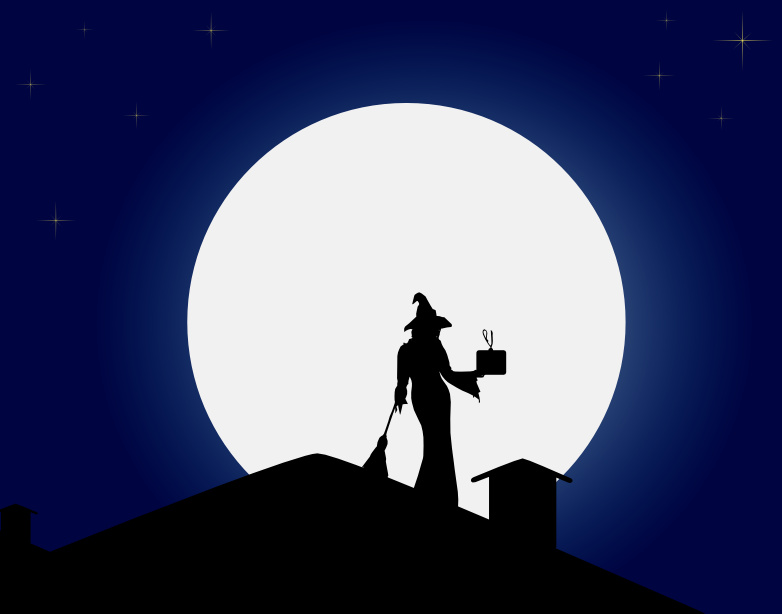
In another version, the children are afraid of her and think she is a witch even though all she does is sweep and bake. In fact, before people realized how kind she was, they rang bells made of earthenware and blew glass trumpets to scare her away. This has all been forgotten now, and, as her story shows, Befana never deserved it.
Storytelling and legends, are a way for us to preserve family history & cultural traditions. Share these stories with your children & students and encourage them to tell stories of their own. Help build positive character traits such as benevolence, acceptance and inclusion, encourage emotional growth and development, spark imaginations & open young hearts & minds.
Buon Natale!
Happy Holidays to all!
To read another version of this beautiful story, click here.
To order "The Legend of Old Befana" children's Book, click here
To read more about Holiday Celebrations, Stories and Traditions from around the world, click here.
To find more holiday stories that teach, Click Here.
*What are some of the legends & stories that you or your family tell during the holidays? Please tell us in the comments below!
~Barbara
Monday, June 7, 2010
Native American Lore & a Lesson from an "Old Turtle"
![]() |
| Photo: The Living Drums Company |
Turtles were very special to the Native Americans, having a unique physical form compared to other animals. They are comparatively very slow moving, but are well protected under a thick shell and live a fairly long life. It is said that turtles have a slower metabolic and respiratory rate (of about 3 breaths per minute) and this is thought to be the reason for their longevity.
The turtle was a symbol of the people’s spirit and was believed to have many strengths. It was told that the earth itself was born on the Turtle’s back. Because the turtle carries its home on its back, it was believed that the turtle could thrive through very difficult situations. The turtle was essentially regarded as a symbol of protection.
It has also been known as a symbol for strength, fertility and perseverance. It was believed to have the ability to defy death and the Great Plains people regarded the turtle as a symbol of a meaningful and long life.
The Native American turtle is a symbol of truth. It is believed that knowing truth means understanding and live by the fundamental laws of the Creator.
The Native American turtle and its various meanings are still very much alive today, especially in story, legends & art. It is depicted in pecked designs on rocks, basketry and pottery.
Today, the the turtle continues to remind us to give back to the Earth that which we take, and complete the cycle of sharing.
My favorite turtle story is a more modern one called "Old Turtle". I use this story for all ages to express & teach the concept of Peaceful interactions. The version I use is one I have modified & adapted from the original, which was written by Douglas Wood and illustrated by the watercolor artist, Chen-Khee Chee. In this beautifully told and illustrated story, the animals and rocks and trees and all the creatures of the earth are arguing over the nature of God. Old Turtle steps in and with grace, strength, wisdom and non-judgement shows everyone a different point of view.
The story of "Old Turtle" is easily adapted to a variety of yoga poses, movement games and I even have a turtle puppet to narrate the story!
Use this link to order this book, click here.
For Native American Turtle Stories, Myths & Legends, click here.
Beautiful Handpainted Drums at the Living Drums Company.
And for More Information on children's Yoga please visit:
www.bodylogique.com
Subscribe to:
Posts (Atom)