Showing posts with label nature. Show all posts

Wednesday, May 2, 2012

8 Reasons to Play in The Rain


Photo: wallpaperbases.com

My daughter went out the door this rainy morning, with no umbrella, no raincoat and sandals on her feet, splashing in puddles as she walked out to the bus stop. Being a mother, I started to suggest that she put on some sneakers or 'more appropriate' footwear, but I stopped as I watched her raising her face to the sky and wiggling her toes in the water.

Whether it was from a sense of rebellion, or a genuinely enjoyable moment, I could see that she was perfectly happy being wet.

Why are we so afraid of our children getting rained on? What do we think will happen and why do we assume this a bad thing?

For me, its definitely conditioning. To my mom, it was about mud, extra laundry and an unwanted trip to the doctor. My parents insisted wear those stretchy rubber boots that slip over your shoe, (bright red), wear a bright green plastic raincoat, and carry a huge (clear) bubble umbrella, along with my books, notebooks and lunch box. It made walking very difficult. At least it gave the neighborhood kids something entertaining to do on the bus ride to school. (As if I didn't get teased enough!)

My parents were only doing what theirs did:  protect their child's well-being. It was believed that playing in the rain would cause you to catch a cold and they didn't want me to experience sickness. We know now that rain actually will not cause illness, but 40 years ago, this was an accepted fact.

This morning I also started to protect my daughter's well being, as my parents did for me. We don't want our kids to suffer-or to be uncomfortable. But I think sometimes in protecting them from perceived discomfort, we accidentally teach kids other lessons that we don't mean to. Those accidental lessons prevent children from developing a healthy attitude towards change & about their own ability to handle change.  It makes it hard for them to embrace new experiences in more positive ways.

What if we turned the tables on how we viewed rainy days and other 'uncomfortable' experiences and looked at them through a new perspective? What if we taught kids to perceive rain as an adventures or "Skill Builder" instead of another inconvenience to be dealt with or a danger to be protected from?

Then rain wouldn't be something to be avoided-it could be an event to look forward to. Even one to learn from.

Whenever  it rains, children tend to want to explore it in their own way as my daughter did this morning. Rain has a certain sensory appeal for kids and I can think of  8 reasons off the top of my head why we should let them (and ourselves) play in the rain once and awhile:

  • Puddles - (They are just so much fun to splash in!)
  • New Adaptations of Games -(Puddle Jumping, Scavenger Hunt, Puddle Tag, etc. )
  • Sensory Experiences (The way the air smells before it rains, the feeling cool droplets on skin & bare feet in Wet Grass, Mud, watching chalk drawings wash away, the sound of drops falling on leaves & awnings, the smell of wet grass or woods.)
  • Connecting with Nature - (In a new and different ways. Slugs, earthworms, frogs, etc)
  • Stress Reduction - (Water in any form is calming to our nervous systems )
  • Outdoor Learning Experience (Earth Science, Biology, The rain cycle, ecology, preservation of environment, how plants grow, reducing pollution)
  • Life Skills - (teaches children to be prepared, self-reliant, adaptable to change, to explore their environment & world, to try new experiences, and that sometimes its OK to be a little uncomfortable, Social bonding with friends and family and makes a great conversation starter for language & conversational skills.)
  • Chicken Soup  & sandwiches afterwards to warm up! (Children can help prepare a warming, nourishing snack with close supervision)

Even though there are many benefits to rain play, adults should still supervise closely.  Drowning can occur accidentally in a small amount of water, so never leave your younger child alone in puddles. If there is thunder, or lightning  if a child is sick, or if playing outside is difficult to control such as near highways or street, please use extreme caution. In addition, if it is too cold to play more than a few minutes, be sure the child is dressed properly- for warmth and for dryness.


* Do you or have you ever let your child play in the rain? How did you play and what did you notice? We welcome your comments!


Contact: barbara@bodylogique.com 


Related Articles:

Going Barefoot

Sensory Scavenger Hunt


.


Friday, February 24, 2012

A Tool for Self Control: Mountain Pose

"Tall Mountain" Pose
Earth and sky, woods and fields, lakes and rivers, the mountain and the sea, are excellent schoolmasters, and teach some of us more than we can ever learn from books.   ~John Lubbock

What do earth, sky, lakes, rivers, mountains and the sea teach us? Or more accurately, what do they teach us about our own nature?

My OT partner Lisa and I recently selected  mountains as a teaching imagery for our Thursday night yoga therapy group.

One 9 year old student was having difficulty standing still in line during dance recitals and practices and was given constant reminders to stop fidgeting. This made her anxious and she would forget her routine. It was a cycle that was becoming very stressful for her and she could not enjoy her dance events. We wanted to give her a useful tool so she could self-regulate while waiting for her turn to dance or in line at school or anywhere she felt fidgety.

We selected "Mountain Pose" because of the versatility, adaptability & ease of execution. Most children can learn it quickly & practice the posture with success. The posture is a transitional pose, easily executed. Its benefits & effects are immediate and yet so underestimated.

Lisa has a huge photographic mural of a lake surrounded by mountains so we showed the group one evening and asked them each to give a brief description of how the mountains looked to them. Some words they used were: tall, strong, large, quiet, pretty, snowy (at the top) graceful, peaceful and green. We gave our own descriptions, and pointed out that the mountains were all of these things, and also very sturdy and stable at the bottom (the 'base') and very light and graceful at the top. The middle was just right-nice and strong holding the top and bottom together.

We demonstrated to them how to "be like a mountain in [their] bodies" by showing them "Mountain Pose". As each of them practiced Lisa used their descriptive words for reinforcement & pointed out key areas for them to think of:
  • *feet slightly apart and even with each other toes pointed straight ahead
  • spine straight
  • tummy strong
  • head lifted high
  • eyes facing forward
  • arms at sides
  • heels and toes pressing down into the ground
*(Normally the pose is done feet together. However, the adapted version,  feet slightly apart, makes it easier for children with poor balance. Feet are gradually moved closer together as the student demonstrates he or she is ready.We use 15" diameter circles cut from regular yoga mats and have the kids place their feet on either outer edge of their"Peace Circle"). 

We had the children practice while on their mats. The mats gave them a boundary to work within. Then came the test to see which mountains were 'sturdy'. I walked around to Lisa then to the students and stood behind each to gently push the upper arms sideways to see if I could "Move the Mountains" left or right. As I began to apply pressure, each student responded by "pushing" back equally to stabilize against the amount of pressure I was applying. We used this opportunity to get feedback from the children themselves asking:
  • Could I move them or Were they sturdy/stable/strong?
  • If they moved when pushed, what could they do to be more sturdy?
  • How could they put their feet (their 'base")  to be more sturdy?
  • How could their arms help to be more stable? etc.
If they didn't know the answer then we made suggestions. The kids were aware and insightful with self-evaluation & did well with adjusting their own postures to be stronger immovable mountains. We even showed them how to practice "Mountain Pose" while seated in a chair.

Breathing was emphasized. "Breathing into your feet" and "back out your nose again" reminded the children to keep their breath flowing and be aware of their feet (sturday base) connecting them with the ground.

'Tiny Mountain' Pose
We talked about examples of when to use this posture, such as in line for the bus, in the cafeteria, at the grocery store and of course we specifically addressed dance recitals. (I said that my daughter used it when she got really nervous and it helped her stay calm and feel confident.) We reminded them that each one of them had a strong, beautiful, peaceful mountain inside and could remember to be like it whenever they needed to.

Our relaxation that evening reflected a "Peaceful Mountain" themed imagery for reinforcement.

Last night, our student's mother told us that this simple imagery and posture tool was a very useful one for her daughter and that she remembered to use it unprompted during a dance event last weekend. It kept her calm, focused, less nervous and able to stay in line waiting to perform. She made the connection between the strong peaceful nature of a mountain, and that of her own strong peaceful self  & she really enjoyed herself at the event.

The students continue to use the tools we give them and to teach us different ways to apply them in everyday life. Each class as I learn more about the group, I learn more about myself too.

I learn to be as trusting & willing to try new things as they are.

I learn that the analogies & words I use to teach them are also ones that I need to hear and remember for myself.

And I learn how to move mountains.

Or not.


.

Thursday, February 2, 2012

Connect with Your Inner Groundhog


Punxsutawney Phil
February 2 is Groundhog Day in the United States and Canada. According to folklore, if it is cloudy when a groundhog comes out of its burrow, then spring will come early. If it is a sunny day, the groundhog will (supposedly) see its shadow and go back into its burrow, and winter weather will continue for six more weeks.

The celebration started as a Pennsylvania German custom in southeastern and central Pennsylvania in the 18th and 19th centuries and has its origins in ancient European weather lore. A badger or sacred bear was central to the prediction of weather, based on their hibernation habits. How the Groundhog got caught up in it is unclear.

The Groundhog custom is similar to the Pagan festival of Imbolc, (the seasonal turning point of the Celtic calendar,) which is celebrated on February 1, halfway between the Winter Solstice and the Spring Equinox.

Groundhog facts:

 
•"Groundhog" and "woodchuck" are different names for the same animal, from the ground squirrel family.

•Using only their teeth, claws and strong limbs, groundhogs dig  burrows up to 5 feet deep and 45 feet long.

• Their noisy reactions to being disturbed, includes whistling, squealing, barking, chattering and grinding their teeth.

•While most squirrels eat seeds and nuts, groundhogs mainly graze on grass and leaves, & sometimes insects, snails and bird eggs

•Groundhogs are one of the few true hibernators, relying entirely on body fat to make it through winter. Their heartbeat slows from 75 beats per minute to as few as 4, and body temperature drops from the 90s into the 40s (F).

•Groundhogs have an average lifespan of ten years in captivity and six years in the wild, with a maximum lifespan of 14 years in captivity documented

•An internal biological clock controls when wild groundhogs wake up from hibernation, but coming out of the burrow depends more on temperature than intuition.

• Groundhogs have been known to be aggressive & usually try to avoid contact with people.

•According to records kept since 1887, Punxatawney Phil's predictions have been correct 39% of the time

Native American Legends

Native American lore tells us that the Groundhog is a symbol of understanding the power of cycles, knowing when to hibernate, building & the ability to go underground. Groundhog inspires us to pay attention to our dreams, dig beneath the surface to get to the truth, study a specific subject or area of interest, such as yoga, or  meditation and learn to relax. He is a reminder to not  paint ourselves into a corner and always have several ways to exit from negative situations, add more vegetables to our diet, study the seasonal changes and apply the wisdom of changing cycles in daily life.


Groundhog Pose
Photo ©B.Gini 2008
To help you find your inner Groundhog, I've included a 'Groundhog Pose' image (at right) a resting posture for you and your students to practice between activities and to settle nervous energy after recess or tests.

To modify, you can practice this posture by remaining in your chair, & setting your head on your desk. Arms can relax at sides (in this photo the Groundhog was "digging".) Close your eyes and breathe deeply into the belly and then breathe deeply into the back of the body. Breathe in relaxation and breathe out all the thoughts that don't serve you any more.

Imagery:

Imagine you are a little groundhog, safely hibernating in your warm, comfortable burrow.

Benefits of this pose:

•Gently stretches the hips, thighs, and ankles
•Calms the brain and helps *relax stress and fatigue
•Relieves back and neck pain when head and torso are supported on pillows

*(Enhance the relaxing effect of this posture by playing nature sound music or Native American Flute music such as N.Carlos Nakai or Mary Youngblood. Students may rest foreheadon hands, and use shawls or warm, heavy blankets to cover themselves to create their own"burrow". Blankets help create a sensation of body awareness, and of safety and security, which further relaxes the body and brain.)

 
*Download a free "Groundhog Pose" Photo flash card here!


Tell us your "Inner Groundhog" experience in the comments below!
 
 
.

Saturday, November 5, 2011

Living in Color

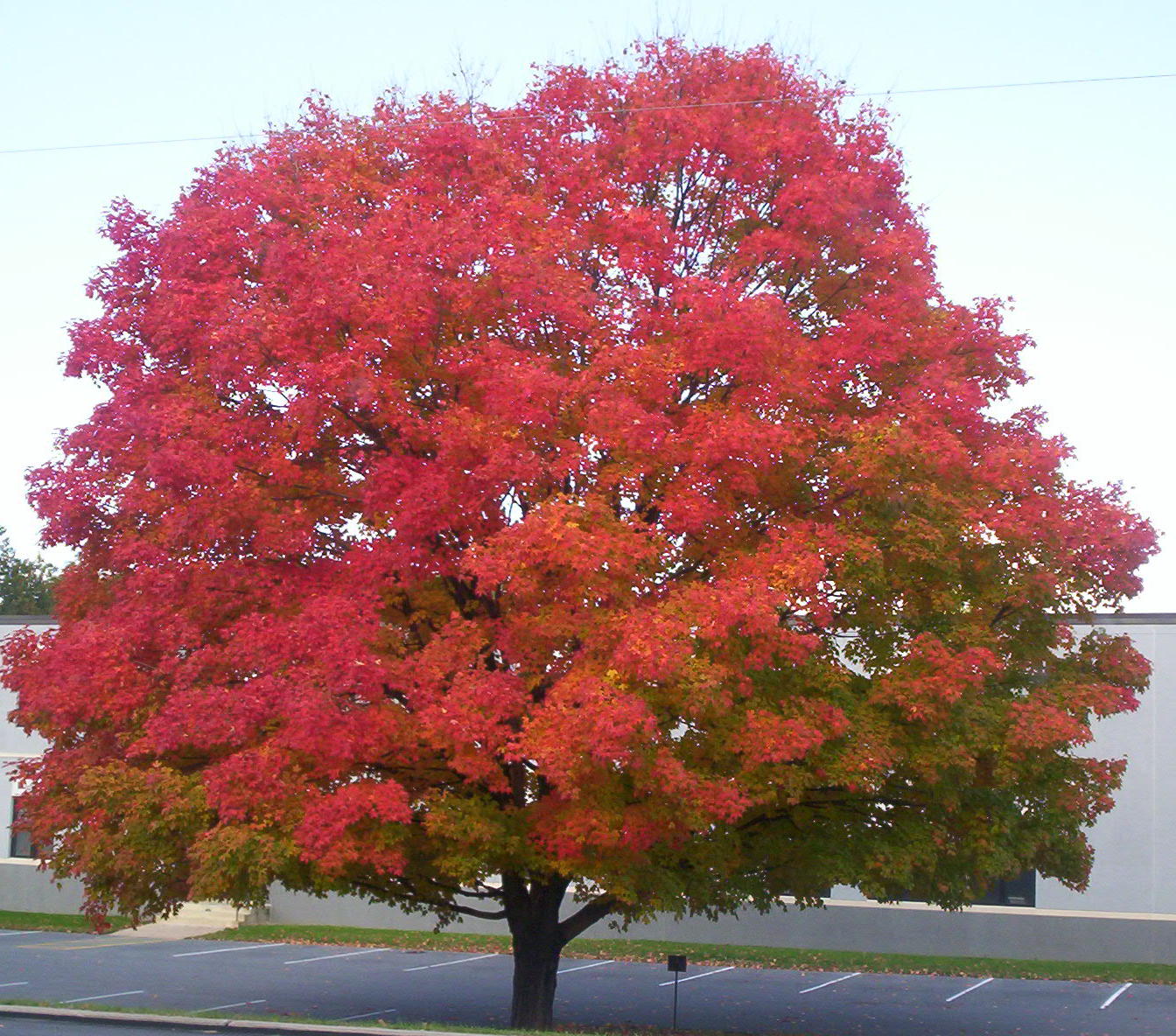
Photo by: B.Gini ©2006
(Tree at Cornwall Inn) 
I love taking walks in the woods this time of year. The colors of the foliage is absolutely beautiful and so restorative & healing to me. My daughter often refers to this time of year as "Living in Color". 

I remember once taking my daughter for a walk in the woods near our old home in NJ and helping her collect pine cones & leaves-of all different colors. We took her treasures home and made a colorful collage out of them. "The colors make me feel happy", she said to me when we hung it up on her wall. Was she referring to the activity we did or does color really have the power to affect our mood?

Everything around us is energy. If you have ever felt the vibrant energy of the colorful fall leaves-or that of a vegetable, herb or flower garden surrounding you, then you have felt that connection not only with your physical and emotional senses, but also with that part of yourself that we refer to as our spirit.

Color is a form of non-verbal communication. Colors say something to us when we look at them. What colors make you feel happy? Agitated? Color consists of many different energy patterns which vibrate at different frequencies. The reason we see color and the reason it makes us feel a certain way is because these vibrations are received by the color receptors (cones) of the eye, which then translates that pattern into a color & sends that data to the brain. The brain then begins the release of hormones and chemicals depending on the messages it receives & interprets. When the energy in one part of the body is out of balance, a chain reaction will begin leading to changes in all systems and organs as the body tries to restore balance. By surrounding ourselves with and looking at a particular color we may stimulate or suppress pituitary and pineal glands (located in the center of the cranium). These glands regulate the hormones for metabolism and growth of the body, sleep patterns and blood pressure functions, appetite and thirst sensations.

Since ancient times, every culture has used color for various art, customary rituals and clothing. It has long been known that light and color can have an effect on the body, the mind and the emotions. Colors on the walls, in art, in clothing and on furniture can energize calm, uplift, depress, irritate, anger and even heal. The use of light & color has been explored as its own form of holistic healing called Color Therapy or Chromotherapy. Although it has been deemed pseudoscience by its critics, citing the placebo effect, many therapists & educators feel that there is some use for color as a practical tool in daily living. It can provide a simple way to enhance the environment of adults & children, whether it be in a traditional classroom, and afterschool program or in a yoga class.

The origins of Color Therapy dates back to the Egyptians. The vibrant colors of nature were reflected in all aspects of their lives: floors of temples were green or blue (grass and water). They believed that red, yellow, and blue affected the body, soul, and spirit, respectively and used colored gemstones and crystals as remedies for many diseases. The cure was believed to come from the activated energy of the color of light reflected by sunlight.

Ayurveda refers to the Chakras as sources of subtle energy. Chakras represent the Life Force and energy of the entire body and are depicted as 7 circular areas that form a vertical line from the base of the spine to the top of the head. Each of the centers corresponds to a color and in turn an emotion as well as an organ, system or gland.

Color therapy is also applied in the practice of Feng Shui which uses the placement of furniture, plants & objects by shape, element and color encourage & ensure harmony & balance.

During the early 20th century, Rudolph Steiner, an Austrian philosopher, related color to form, shape, and sound suggesting that certain combinations of color and shape have either destructive or regenerative effects on living organisms. Steiner’s work was continued by many researchers all finding evidence that color preferences demonstrate states of mind and have measurable and predictable effects on the nervous system.

While more controlled research needs to be done, early studies are encouraging. In one study, 98 percent (49 out of 50) of participants with migraine headaches reported relief after being treated with goggles that alternately illuminated the right and left eyes with red light. (The Journal Headache, July, 2008)

The most clinically supported use of Color and Light Therapy includes the use of light boxes in the treatment of Seasonal Affective Disorder (SAD) & other mood, sleep & stress-related disorders.

Using Color in daily life can involve exposure to colored lights, art, furniture, plants & using imagery. This can help calm disrupted energy within the body and bring it back into balance. (Practitioners use this for both physical and emotional challenges, treating the body as a whole, rather than just addressing symptoms.)

In traditional or yoga, education or therapy, (OT, PT, SLP) or even at home, using colors strategically can help enhance the learning environment & the effects of the activity, lesson or therapy you are administering. Since each color has a different effect or association, try to match this with your expected outcome of the lesson or session. For example, if your student is lethargic, surround him/her in red or violet to envigorate re-energize and shift the mood into a positive direction. If your student seems anxious, restless and can’t seem to find concentration, Blue, Green and Indigo will calm & ease physical, emotional and mental tension and bring improved awareness and better concentration. Try accenting the sensory room with soft colored lights, mats, shawls, gems, candles, paintings, tapestries, plants, table cloths, shades, etc. (See Color Meanings Below)

Another easy way to incorporate color is to use imagery. Ask your student to close their eyes & imagine for a minute that he/she is a tiny balloon. Each time he breathes in he gets bigger and floats higher and each time he breathes out he releases some of that beautiful color into the sky. You can assign each child a specific color based on the effect you want the imagery to have or let them imagine their own favorite color. (Always prepare them to be brought out of the imagery gently and gradually by suggesting they imagine they land gently on the ground, wiggle fingers, toes and on the count of three, they can open their eyes.)

The Meaning of Colors:
In each category, consider all degrees of color and shades in that group, from jewel tones to pastels. Experiment & see what works.

RED: is beleived to stimulate brain wave activity, increase heart rate, respirations, blood pressure, and adrenal glands. It warms us and awakens us physically and has been applied to improve circulation. It is a good color to wear when we have low energy due to colds and poor circulation. (CAUTION: Too much red can over stimulate, agitate and make the illness feel worse.)

ORANGE: is the color of joy, creative energy and internal connection. It is believed to stimulate appetite and it is a good color for improving creative problem solving, clearing the lungs & balancing hormones.

YELLOW: is the color of wisdom, personal power, intuition and emotions. It energizes, uplifts, relieves depression, improves memory, stimulates appetite and has been applied to help with digestive problems.

GREEN: has a calming, balancing effect on the nervous system. Green sooths and relaxes, eases depression, anxiety & nervousness. (Since green is associated with and said to stimulate growth, it is suggested to be avoided in cancers and other tumors.)

BLUE: is calming and cooling & is often used to counteract stress & hypertension. It is the color for overall health and connects us to our higher thought and make us open to learning new things. (Too much blue can overwhelm and depress the system.)

INDIGO: is the color for healing. It is said to enhance immunity and connect us to our unconscious self.

VIOLET: is cleansing, strengthening, and awakening. It has been used to suppress appetite & in restoring a peaceful environment. It is supposed to affect the bones and has been applied to improve auto-immune conditions, cancerous illnesses, and arthritis. It has proven to be an excellent color for relief of eye strain, headaches and migraines.

WHITE: The color of Spirituality, softness, purity and Peace. Has been used to neutralize negative thoughts/emotions. (Too much white can be over stimulating, blinding & cause headaches. Substitute more subdued crèmes, beige or ivory shades if this is the case.)

BLACK: Black is the absence of color. It conveys mystery, mourning & rebellion. It is also grounding and calming to some, especially sensory challenged children and teens. Incorporate or simulate black by using softer lighting. (Use sparingly! Be sure to balance the use of black with other uplifting & energizing colors.)


• Use for Calming:  Blue, Green, Turquoise, Silver

• Use for Alerting:  Red, Pink, Yellow, Gold, Orange

• Use for Maintaining Balance:  Purple, Lavender, Green, Turquoise

• Use to Neutralize or Unify:  Brown, Beige, Ivory, Gray, Black, White


*What are some of the creative ways that you "Live in Color" and have used at home or in the clasroom? We would love to hear about your experiences! Please leave a comment in the space below.
 

Contact Barbara at: www.bodylogique.com

.

Friday, February 18, 2011

Got Nature?

I go to nature to be soothed and healed, and to have my senses put in order. ~John Burroughs

Human beings crave nature. From gardening, to walking barefoot in the sand or grass, to star gazing & hiking through mountains, so many have found solace in nature for centuries. Realizing & understanding that we are an essential part of this much larger environment supplies us with a sense of wonder, purpose and belonging.

Some of the most memorable and enjoyable times I can remember from my childhood were the ones where I spent them outdoors: on vacation with my family in the Poconos, hiking, gathering rocks, exploring caves & underwater lakes; at Niagara, Canada overlooking the incredible beauty & understanding the power of nature through the waterfall; at the beach in NJ & Florida, sculpting in the sand, gathering seashells and fishing; in my grandparents yard-filled with abundant vegetable gardens, stunning rose beds, delicious cherries and other fruit trees, catching & releasing fireflies in the summer evenings with my brother; and  in the creek behind my house, watching frogs & snakes, discovering strange plant life, examining bird nests and even accidentally disrupting an occasional beehive.

These experiences taught me boundaries, and creative problem solving-how to be alone with my thoughts & how to move, play, respect & care for nature. I am grateful for these times and still do my best to walk in the woods and climb the rocks near my home daily. Whenever I am feeling too "plugged in", out of balance and overwhelmed with Life, I retreat to the woods or to the beach. I have done my best to instill these experiences in my children & encourage all parents to do the same for theirs.

There is a strong body of research that tells us direct contact with nature improves mental health as well as psychological and spiritual health. A challenging climb over rocky terrain or a hike through mountains or desert, or turning over & weeding a garden can represent both a physical journey and a journey of self. Spending time by water or in nature's silence helps us find & connect with our own thoughts and feelings, giving us a sense of calm and inner peace. One of my favorite activities to do outside, with my students weather permitting, or alone as the morning sun rises over the hills, is yoga. In fact, just being outdoors with the kids to me is the ultimate yoga - an active, multi-sensory experience that cannot be duplicated in any passive activity, classroom, gym, office, living room or studio.

Stress reduction, coherence, belonging, improved self-confidence, self-discipline & a broader sense of environment are just a few of the positive benefits of playing, exercising, exploring, & moving in & through nature.

However, with a shortage of open spaces, extended work schedules, fear of "stranger-danger", limited outdoor playtime due to homework and after school programs, coupled with winter weather, a deteriorating environment and a culture of people preoccupied with technology, our American life is highlighted by a disconnect with the world around us caused by a deprivation of exposure to natural surroundings. There are many reasons to make a concentrated effort to make 'outdoors' a part of our every day life.

The top reason is Stress Reduction. More than 100 research studies have shown that regular exposure to outdoor activities & recreation reduces stress. By observing the ever-changing environments of nature, we can cultivate a positive attitude, renew energy, improve mindfulness and sensory awareness. In the words of renowned naturalist and essayist John Burroughs (1837-1921), "I go to nature to be soothed and healed, and to have my senses put in order.


Natural spaces stimulate our imaginations, especially children's imaginations and creativity. Playing outdoors enhances sensory integration, cognitive flexibility, problem-solving ability, and self-discipline. In spite of these benefits, there was a decline of 50 percent in the number of children ages 9 to 12 who spent time doing outside activities like hiking, walking, and playing at the beach from 1997 to 2003.  A survey from Hofstra University revealed that while 70 percent of mothers reported playing outdoors every day when they were young, only 31 percent of their children do. Fifty-six percent of mothers reported that, when they were children, they stayed outside for three hours at a time or longer, compared with only 22 percent of their children currently.


For many children, quality playtime outdoors has been replaced by televisions and computers indoors. Sadly, many children under the ages of 7 spend an average of 2 hours a day with electronic media, and youth between the ages of 8 and 18 spend about of 6.5 hours a day with electronic media, totaling more than 45 hours a week.

Scientists & health care providers now recognize the therapeutic benefits of nature for treating conditions such as depression & attention disorders. In a UK study released in April 2007, a majority of people with mental health disorders reported that taking a "green walk" decreased their depression (71%), reduced their tension (50%), and increased their self-esteem (90%). Researchers at the University of Illinois have shown that the greener a child's everyday environment, the more manageable their symptoms of attention-deficit disorder.

In nature, we also learn that challenge is actually the opportunity to improve oneself, develop an inner focus & sense of control, and build confidence. We learn to trust our innate ability to overcome both expected and unexpected obstacles and to appreciate that things work out even if we aren't in complete control. We learn to cope with whatever comes our way, which in turn builds confidence, self-reliance and achievement. For this reason, many parents are choosing wilderness camps and other similar programs to help their troubled teens.

Adolescence, is a volatile period of self-discovery. For some who may exhibit opposition/defiance, experimentation, poor school performance, drug/alcohol abuse & other at-risk behaviors, its an ideal time to discover the lessons in nature. When a teen is placed in a wilderness experience, they leave their family, their familiar community and environment and roles they have adopted, to try out new roles & learn & apply new skills. This allows a chance to develop a new self-image, a new way of relating to others and new ways to respond to the challenges of daily life.

Getting kids outside increases their exposure to sun & natural production of vitamin D which is vital for growth & development. We receive almost 90% of our vitamin D from the sun as it is nearly impossible to get an adequate amount from food and vitamins alone.

Vitamin D helps us absorb protein associated with regulating blood pressure, utilize calcium for bone development, control digestive function, neuro- muscular and immune function, and reduction of inflammation. Strong evidence also indicates that vitamin D plays a role in the prevention of some forms of cancer, diabetes, hypertension, glucose intolerance, multiple sclerosis and many other medical conditions.
Studies show that nature even in small & simple forms, such as a small fish tank or bowl, a plant on the desk at work or trees in front of an apartment window have significant benefits to help reduce stress, improve outlook, enhance coping skills, spark creativity and develop self-discipline.

Although quality time in nature may be a challenge to arrange, the numerous benefits overwhelmingly compel us to try harder to make the time. We are not here to passively watch or merely connect to nature, we are nature.  We belong there.

Got Nature? I encourage you to get some now.

Fore more information on School, camp & Family Spring & Summer Outdoor Yoga programs please contact us:  barbara@bodylogique.com


Subscribe to S.M.Art Kids / Healthy Kids by Email
.