Showing posts with label compassion. Show all posts

Monday, April 8, 2013

Loss, Compassion & Gratitude: Good People Everywhere

Photo: Expressive Arts Therapy Institute
Below is a link to a great post by my friend & fellow yoga teacher Angela at OMazing Kids yoga.

Recently, a teacher from Mexico City wrote to her and mentioned that all of her kid's yoga materials had been stolen from her car trunk, and that she had hoped to win a giveaway that Angela had written about, so she could begin to replace the (3 years worth) of lost items.

I received an e-mail from Angela asking if there was anything I could donate to help the teacher out, and I replied that I would be happy to donate one copy of each of my books, plus a downloadable copy of The 4B's Self-Calming Cards. All in all, Angela's post managed to gather more than 30 items,and counting, from the yoga community to help this teacher build her library and materials up again!

Its a good story and reminder for all of us, no matter what community you are in, because ultimately we are all in the Community of Humanity. Whether we like it or not, sometimes we depend on someone and other times, people depend on us. This is something that is vital for our kids to know, understand and to practice. Its important for them to know that there are Good People Everywhere.

What we need to remember is that no matter what your personal beliefs are, inside of every human is a spirit and a soul-the essence of that human. Our actions express that soul/essence. We are our most powerful selves, when we express ourselves through our compassionate actions-not by wielding our "awesomeness"- but by simply using it to help others when they need it; and by expressing gratitude when we need help and receive it. If there is any lesson more important to teach our kids, I can't think of one right now.

We have lost this somewhere along our evolution: getting too attached to our losses, and not expressing gratitude sincerely when its warranted. We have come to feel that there is no more good in the world & that we are entitled to things without reciprocity. We need to reverse this trend for the good of all people everywhere.

We live in a world where the media bombards us minute by minute with what they call 'news' that places a focus on all the "bad stuff" that happens around us-some of it is true and downright scary, and some of it is manipulated, manufactured and designed to test us, but what they rarely tell us is that there are absolutely (as the book says) Good People Everywhere, and I personally am grateful to have many of them in my life.

Read Angela's Post Here:
Gratitude & Loss: Blessing in the Kids Yoga Community


Contact Barbara: bodylogique.info@gmail.com 


Tuesday, March 19, 2013

Teaching Resilience with Lorraine Hirst

Photo: Way2Be.Me

Resilience can be best described as a process, rather than a trait. It is an individual's ability to cope with and surmount obstacles, stress and adversity and "bouncing back" to a previous state of normal functioning, or simply not showing negative effects of turmoil. 

For many educators, parents and caregivers, helping children bounce back from defeat can be a huge challenge.

Lorraine Hirst, emotional intelligence and resilience expert, says that  a child's inability to cope can manifest as inhibited social skills, inability to manage emotions, impulsiveness and low self-esteem. She says that helping children get a grip on their emotions is key. 

Lorraine has founded & designed the Way 2 Be Me program specifically to build resilience, emotional well-being, self-esteem and confidence, and to help give kids a "bounce forward" factor. She was recently interviewed by Michelle at the E-Nanny Source on the topic of resilience and I have been invited to share Lorraine's expert insights and suggestions with you today.


Expert Insights:  (E-Nanny Source Blog)

Talking About Resilience with Lorraine Hirst of Way2be.me

by Michelle LaRowe Editor in Chief, E-Nanny Source.com

Find original article here


For many parents and caregivers, helping their children bounce back from defeat is a real challenge, so I reached out to Lorraine Hirst, emotional intelligence and resilience expert, to see how parents and nannies can help children develop their bounce-back factor and foster resilience. Here’s what she had to share.

eNannySource:  Why is resilience important?

Lorraine: There are some children who don’t seem to recover quickly from problems or don’t seem to want to keep trying, i.e. they lack resilience. Resilience, known as the ‘bounce-back’ factor, is a character trait that is argued to be more vital than IQ and of more value to employers than good math and literacy. School teachers and other caregivers can tell you in a few seconds which children these are. They are the ones lacking in self-esteem, who may be victims of bullying, don’t join in group activities or clubs, and seem a bit vulnerable, and despite possibly receiving some additional academic support, they are not quite reaching their potential or coping as well as they could.

In younger children it can manifest as lack of social skills, inability to manage their emotions, lack of impulse control and so on. Having said this, they are still young, so these are the things we help them with as they grow!   As these children get older, they can become more vulnerable to risks such as problems with transition to secondary school, alcohol abuse (and there’s growing evidence that young binge drinking is on the increase, especially in the UK), drugs, self-harm, eating disorders, other mental health problems and even teenage pregnancy. Underlying problems such as anxiety and behavioral issues can be compounded by a lack of emotional resilience.

eNannySource:  How can parents and caregivers help a child become more resilient?

Lorraine: Helping children deal with their emotions is key. This is often called, ‘emotional coaching.’ That’s doesn’t mean dismissing problems, i.e. ‘don’t cry about that, be strong.’ These messages are not helpful. They suppress the emotion. The opposite is also unhelpful, i.e. to over-react, rush in or ‘marshmallow’ the child. This gives the child the message that they are helpless, an opposite trait if you trying to foster resilience. A hug or arm on a shoulder goes a long way to helping a child (or adult!) deal with the stress hormones that follow physical or emotional incidents. Secondly, acknowledge what a child is experiencing. If they can’t articulate what they are feeling, then do that for them, e.g. ‘you must be feeling really sad about that’ or ‘I expect you feel angry right now.’ Offering a magical solution, such as, ‘I wish we didn’t have to do homework or that there weren’t any bullies in the world,’ quickly followed by some adult reality, e.g. ‘sometimes there are some things we have to do or there are some people in life who don’t like us and want to make us feel bad.’ When the child is calm, they often come up with their own solutions to a problem (or you offer some solutions to a younger child, structuring the aftermath). Often, a child who is nurtured in this way will simply get on with what you wanted them to move onto in the first place.

Self-esteem is often linked to resilience, although resilience (also known as the ability to thrive) can be present when low self-esteem is also experienced, studies have shown. Having said this, healthy self-esteem can aid resilience as it can support a ‘can do’ attitude. Self-esteem is learned from adults around us, according to many experts, therefore building children’s self-esteem alone, without addressing your own, is often quite difficult and a whole other topic on its own. Whilst there are many other ways to build resilience in children, including taking up a hobby, praising the effort and not the end result of a task, moderating language that creates limiting beliefs and many more, the emotional coaching would be my number one.

eNannySource:  What is self-compassion?

Lorraine: The point about self-esteem and resilience leads me directly to the issue of self-compassion. Quite simply, I think of this as, ‘giving yourself a break!’ I don’t mean a chocolate (although those can be useful in moderation!), but not being so self-critical. It’s about forgiving ourselves when we mess up. We, including myself, can often hear ourselves saying the ‘should’, ‘must’, ‘ought’ words in our own minds. E.g. I ‘ought’ to be able to do this.’ ‘I ‘should’ be working right now.’ Worse are the voices that tell us we’re not capable, that we are silly, stupid, etc. I’m not talking about real voices but the critical parent in our own minds.

Self-compassion is a willingness to look at your own mistakes and shortcomings with kindness and understanding – it’s embracing the fact that to err is indeed human. When we are self-compassionate in the face of difficulty, we neither judge ourselves harshly, nor feel the need to defensively focus on all our awesome qualities to protect our fragile egos. Studies have shown that having a good dollop of self-compassion leads to higher levels of personal well-being, optimism and happiness, and to less anxiety and depression.

eNannySource:  Why is it important?

Lorraine: Lack of self-compassion may explain why some confident, bright individuals sometimes have less resilience than other people, i.e. they don’t take changes or constructive criticism very well, possibly due to their high expectations of themselves or lack of true self-worth. Ultimately, children (and adults) are more likely to have resilience and be able to ‘bounce back’ if they are willing to see their own weaknesses as changeable things they can correct, to move on from mistakes, committed to learning and improving. Everyone makes mistakes, but resilient people learn and move forward because they know how to forgive themselves first.

eNannySource:  How can parents and caregivers foster it?

Lorraine: In addition to helping children deal with their emotions and view mistakes as learning, it’s important to emphasize that it is entirely normal to feel sad, jealous, angry, etcetera, sometimes. There is no inner state or utopia where we are 100% immune to these feelings.
Modeling self-compassion is probably the key way to teach this skill. This is about not being too hard on yourself when things go wrong or, if you catch yourself being self-critical, such as saying out loud, ‘Bah, I’m such an idiot,’ we can rephrase this and say something like, ‘Well, that was a bit silly but it happened. I wonder what I can do now?’

We can judge the behavior, not the child. For instance, we can say, ‘That was an unkind thing you did,’ rather than, ‘You are disrespectful.’ The former describes the behavior and leaves some room for improvement, while the latter is rather judgmental and can set up a negative view of himself/herself in the child. Also, praise the task, don’t over-praise the child, i.e. ‘That was a clever idea’ is better than saying ‘you are brilliant.’ This is because the latter sets up an expectation, which may be difficult to maintain and then effects the child’s self-worth when they do something which is not so perfect.

Focus on positive behavior and changes, rather than harshly punishing the past. Yes, it’s important to teach children good behaviors, but they need to feel that they have some say in how to find better solutions. That way, they build the ability to reflect, learn from mistakes and move on. For instance, if a child hurts another child’s feelings, s/he can be invited to reflect on the effect of his/her actions (or given some suggestions, if the child is younger) or you can say, ‘How do you think you can behave in future?’

Ultimately, my hope is to explain that self-compassion is NOT about instilling a huge sense of awesomeness, as this is the road to narcissism and potential heightened self-criticism. (An ‘I’m OK, you’re not OK’ life position isn’t very helpful to building a cohesive society.) Parents and caregivers can sometimes overdo the self-esteem angle, which is a form of over-indulgence in itself. It is not realistic to think we can all be rock stars, for instance. Firstly, though, a look at our own inner critic is a good starting place for parents and caregivers. If we have self-compassion, then our compassion for others or ability to nurture children in this important life skill will naturally flow.


Lorraine Hirst lives in the middle of the UK with her family and she loves helping people explore their own inner resilience. Lorraine’s most recent work has been the development of www.Way2be.me programs, which are a series of lessons for children and sessions for parents and caregivers that are tailored to their needs, but that focus broadly on emotional resilience and other essential life skills. 

Lorraine holds a Masters in Public Policy & Management of Care Services. True to her core values, Lorraine has always worked in the areas of early intervention and prevention. Her motto, borrowed from Jean I Clarke, is ‘Take care of the needs of the parents and you take care of the needs of the child.’


A free fact sheet and a regular newsletter are available from www.way2be.me  for those who would like more information on resilience, self-esteem and self-compassion.


.

Friday, October 5, 2012

In Case You Missed It: Assorted Topic Links - October 1-5

Photo: Barbara Gini ©2012
Happy Friday everyone!

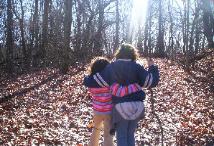
What an incredible week I've had, beginning with an awesome workshop with 12 OT's, PT's and COTA's; the launch of our distance Learning Program (details being added to our website today!); One to One work with 3 wonderful adaptive yoga teachers-in-(distance)-training; helping a client build a new website and several incredible walks in the woods near my home. I snapped this photo above with my cell phone while I was walking near a  bunch of fallen trees. (So much to see on a walk! If you are paying attention.)

The week is winding down with visit from family from North Carolina & the 2 day birthday festivities for my love, and my best friend who turns 50 years young today. Every single day I still discover something new about him. He has supported me and the work I am doing in every way possible for the last four years and today I celebrate his life, his patience, honesty and integrity by wishing him & everyone reading this all of the love, support, humor, happiness and new experiences that he has given me.

Wishing Happy Birthdays to everyone celebrating this season!

~Barbara


Here are your links for this week:


National Sensory Awareness Month: "Faces of SPD" project

Learning About Friendships at every Grade Level

Montessori Inspired Solar System Unit-World Space Week 

Vision & Learning Go Hand in Hand

Families Bypass Junk Food & Focus on Eating Healthy

Common Core in Children's Yoga

Physical Activity and the Brain: Exercise After Stroke Helps Improve Memory

Bullying is Portrayed in 92% of Children's Shows

Compassionate Meditation Can Boost Empathy

School Garden Grants Program


Visit our website for more articles, games, activities, and more!
Contact: barbara@bodylogique.com


Monday, September 10, 2012

Three Questions

Photo: "The Three Questions" by Jon Muth
"Mom, spending the weekend in the hospital really changes the way you look at and think about things. There were so many people in pain-in their bodies and in their minds... and then the lady in the bed next to Nonnie ['grandmother' in Italian]  was confused and scared and didn't know where she was. She tried to escape and she was yelling at the nurse who was guarding her. She just kept trying to run away. It was so sad I wanted to help her but didn't know how. I wanted to cry for her."

This is what my 12 year old daughter said to me last night after having a falling out with a girl friend (via text messages) over the issue of  "minding one's own business."  Lauren had just come home from visiting her grandmother in the hospital over the weekend (Her dad's mother is having triple bypass surgery on this week.) and began this discussion unprompted after her friend told her that she did something on my daughter's behalf, without asking my daughter's permission.

"What hurts most is that she [her friend] knew where I was all weekend and she didn't even ask me once how Nonnie was feeling...she just started telling me about herself and what she did this weekend - and then she got mad at me for being mad at her for not asking my permission...UGH!! "

Lauren added: "Mom, I'm so tired of the arguing and the girl drama... If everyone [her classmates] would just stay out of what isn't their business and stop worrying about what everyone else is doing and saying, and if they could just show a little more care and respect for themselves and each other, then none of us would fight anymore. Everyone would stop stressing over the littlest, stupidest things, and only focus on what's really important."

I was at a loss for words for her, and humbled by her mature observations.

It reminded me of a story I used to tell her, and that I now use for yoga class work. Its called "The Three Questions".

In this adaptation of a a short story by Tolstoy, a young boy looks for the answers to his three questions about how to be a good person. He meets a monkey, a bird, a dog and a turtle and asks them his questions, but finds his answers unexpectedly through doing a heroic good deed.

The Boy's questions are:

  • What is the best time to do things?
  • Who is the most important person?
  • What is the right thing to do?

There are many  themes and lessons in this story, for both young and old and it can be a creative tool for character education & social-emotional learning: to help children understand & remember the most important time, people and reasons that we are all in each other's lives.


Contact: barbara@bodylogique.com


Monday, April 2, 2012

What Comes After Awareness?

Photo: Mind.org

As you’ve probably heard, April is Autism Awareness Month. I've been asked to walk, write an article and help at several awareness events this month, and I have decided to not to participate in any of these events or activities.


To those of you who don't know me, this will sound contradictory to the work I do. It might even confuse or offend but before you un-join my blog or de-friend my Facebook page in protest, let me explain why I will not be raising any more awareness for any causes.

I feel as if the time & energy spent ‘raising awareness’, debating vaccines, medications and the political correctness of the phrase ‘autistic child” & re-reading & quoting the statistics (which are from old data), could be put to better use. Over focusing on these things only stirs up fear, misunderstanding and other un-useful emotions and deters us from taking more effective actions. I'm leery of people, organizations & corporations who use this fear and misunderstanding to exploit families and push emotional buttons for the purpose of self- promotion & financial gain.

Awareness initiatives were useful at first. It got people to pay attention and it helped them understand better. But as time has passed, they have become less about education & more about promotion. There are awareness and acceptance campaigns for everything and instead of building bridges of understanding, I see people starting to filter and tune it all out. The messages have gotten lost and I see 'awareness' becoming less helpful & more of an excuse for inaction.

The truth is that parents and families of the “1 in 88” have more awareness than any walk or press conference could ever raise. If you want awareness, spend some quality time with an autism family. That is real awareness. Those who don't know what autism is, or don't need to know (because it doesn't affect them) will remain unaware & won't seek out the information that is out there until they have to.

Awareness alone will not cure, eliminate or solve anyone’s problems, and is of no use if you don’t take action with what you know. Discussing, debating & perpetuating the same emotional upheaval will never help a single child. It’s not what is needed. Action is what is needed.

Action cannot be effective as long as there is time spent getting stuck on statistics. Numbers will change, depending on who is reporting them and what their agenda is. The numbers are not going to give us any clues, ideas or answers. We cannot help thousands of children at a time or even 88 at a time, only the one or two who are closest at any given moment. We need to fully focus on each individual and take those actions needed. We need to start with the individual if any children are to be helped.

Start with the child nearest to you. Parents, professionals & support staff need to get on the same page and instead of spending time being enemies, put that time to better use. We are all on the same side, or are supposed to be. Communicate & think outside of the lesson plan, IEP and core standards and get creative in devising & implement challenging, self-affirming experiences that teach and assist kids to be more self-reliant at school, at home and in life. Help them learn skills that will give them the best opportunities for functioning in a world that may or may not be aware, & may or may not accept, support and adapt to them like their families are hoping and expecting it to. Teach them that not everyone will include nor accept them, and that is okay. It never makes them less. Sometimes they will have to be the ones who need to accept and adjust to others.


I’m not involved this year in any walks or events promoting awareness. Not because I don’t want to help, but because I know my strengths and my limitations. I know that helping raise awareness is not the best I can offer. I know that as long as I debate, discuss & promote, I am not taking action. I can offer families and professionals so much more and for long as I can, I will. So, I will continue to support children, parents and professionals through adaptive movement & yoga-based education as I have been for the last 12 years.

Its time to think beyond awareness and take action; not just for autism, but for all the other challenges and
"-isms" out there. Not just for a month or a day, but every day.

Action is what will always have the biggest impact.


*What actions will you take that will have the greatest impact?


Contact: barbara@bodylogique.com


Tuesday, January 24, 2012

Labels, Limits & Lessons

*NOTE: This is quite a long post that I wrote years ago before I had a blog. It was intended for a book I began and then later decided to not prusue. I've edited & updated some, but left it mostly in entirety. I think as teachers, its a relevant situation. I hope you enjoy!


I have been a Children's Yoga Teacher for 11 years. I love what I do because no matter where I go, I learn something new. Most of what I learn is the result of direct interaction with my students. One of my greatest learning experiences was one summer when I was invited to a teen shelter that housed at-risk youth age 12 to 17. I was asked by Kate, a former student, to help her with her Girl Scout service project. My role was to present on two different days, a Dance/World Music class to the girls & a yoga class to the boys. I was touched that she thought of me.

I was experienced at working with women and girls & I had several ideas for that class, but as I contemplated a presentation for the boy’s class I came up blank. I felt strong resistance to this assignment.

After a few days of making excuse, (I was not in their world…they would not relate to or engage in what I was saying/doing…I was not experienced enough with this population, etc.) I convinced myself that I could not do the boy’s class.

I felt a responsibility to Kate, so I suggested (what I thought was) a more suitable activity: karate. I asked my daughter's Sensei if he would be interested in visiting the shelter & he was happy to do it. A weight was lifted from me & I called Kate to tell her. She was very excited & called the karate teacher right away to set it up. I smiled all day, "patting myself on the back" at my ability to bring people together & solve dilemmas.

Later that same day, I received a phone call from Kate. She told me that she felt that the boys needed a more calm way to focus and relax & Yoga would be great in addition to  the karate class. (Suddenly, I was not feeling so smart and skilled.) As I hung up the phone, all my insecurities & fears came up to the surface. Why?

It wasn’t about my qualifications. I am qualified & experienced. When I sat (and sulked) & observed my gut for a bit, I had to be honest. It was more about judgment than anything else. No one likes to be judged, and I had been judged for being different and thinking differently my whole life. I believed that this would turn out the same way and these students would reject what I was teaching and in effect, reject me. I thought I had put this issue to rest, but here it was & I knew I had no choice but to fact it if I was to move beyond it.

I was to do the girl's class on a Tuesday, and the boy’s class on Thursday. (Karate was on Wednesday.) Monday, instead of preparing something for the boy's class that would be special for them, I wallowed in my angst, procrastinated, questioned the Universe, yelled at God (and every other deity I could think of) for "doing this to me". I finally gave up & decided that I would teach the girls knowing I had two more days to work on the other class.

When I arrived at the shelter on Tuesday, what greeted me in the community room was 12 teenage boys patiently waiting on a large room-sized mat. Panic seized me- and I heard those deities laughing. I found out that Kate was not coming & there was a scheduling mix up. They were expecting me to do a boys class. Girls were Thursday. End of story and that was that. I had to figure out (very quickly) how to present this boy's Yoga Class with the15 colorful silk hip scarves, finger cymbals and Belly Dance Music I had brought. I excused myself back to my car “to get something” and nearly cried, partly because I truly wanted to present a useful class but mostly because I felt sorry for myself. The very thing I had resisted had materialized. I had some "spare" music in my car that I hoped would work & at this point it would have to. I composed myself, grabbed the CD and ran back inside.

I introduced myself & I began to talk about yoga. I was spontaneously inspired by a thought (that seemed to come to me as if it was not my own) to talk to them in terms of sports. I did, and I had their attention. They (and I) had playing sports in common. This was my key, and they were allowing me to open a door with it; body language keeping at a distance, but still asking questions & commenting.

We talked about sports, nutrition & exercise. They talked about Sensei Nick's karate & how they loved it. They let me open that door a bit wider when I told them that I knew him (Thank you Sensei!) We talked about what real power and strength was vs. physical force. We discussed stress management, anger control, imagery and being "in your game". They were polite, interested and extremely intelligent.

As I began to relax I saw that it had been me judging them instead of the other way around. In my teacher's mind, I thought I knew what they would understand and what they would respond to and as it turned out, I did not. I judged them instead of listening to them, and imposed limits in my own mind. That in turn placed a limit on myself, stopping me from seeing ways to support them. I felt very humbled at that moment and accepted that it was exactly where I needed to be, for my own learning as for theirs. We talked about judging & labeling ourselves & others and how it confines us. In spite of never having been exposed to yoga before, these young men had an uncanny grasp of the intangible spiritual concepts of yoga, of life & what I was teaching them. I saw a light in each one of them, and they ignited one in me.

We continued the class with Sun Salutations moving to the music I brought from the car. My instinct to bring in this particular CD proved correct. Salio El Sol, (The Sun Came Out) by Don Omar was something they all related to. The energy and the rhythm of the reggaton spoke to them as they moved into each posture. Three of them were embarrassed at first and the others challenged them. When they saw how much focus, strength and balance they needed to do the exercises, they got into it and moved with the music. One young man even put his own ‘flair’ and moved as if the music were moving him.

I told them how yoga can improve concentration, manage anger, improve their performance in sports, in school, in relationships, and in making better Life decisions. Soon, they were all moving and breathing as one as if they had done this their whole life. I could see by their faces, their breath, their movements they got it and they loved it. I saw years melt away and their youthful energy come out. I saw them as boys-someone's brother, someone's child, so lost & scared, and trying to be tough so no one knew the real them. It took an incredible amount of trust for them to let me in & do what I was asking them. I felt overwhelming compassion & understanding-real understanding for each one of them, no matter what they had done to get there.

At the end of the class I showed them Mudra-(hand gestures). The 3 gestures came from Reiki: Cho, Ku, & Rei. They mean: "May my energy be aligned with the Universe; May my energy be aligned with the people around me; May my energy be used for the highest good." I suggested this is an intention to set every morning and when faced with a difficult person or situation. The boys liked this idea prompting me to repeat it several times so they would remember. I told them that their thoughts & actions reach out and touches everyone, then flows back to them & to be aware of what they are projecting at all times. The Cho, Ku, Rei Mudra helps us to remember and activate this and can be done discretely if needed.

One young man smiled and remarked. "Yeah-that's how it’s gonna be now Ms. Barbara, All my energies used for my highest good." Judging by how his intense, radiant smile smoothed away the roughness of his street life, I believed he would do just that.

Someone once told me that you cannot help someone as long as you are judging them. Maybe my being there was for me to understand this, release my judgment, love them as they were & learn from them so I could get out of my own way & actually help them (and others) better. I can only hope that I had as much of an impact on them as they had on me. I send each one of them Love & Gratitude for their trust, and the lessons they taught me that day, about labels and limits, that I will never forget.
Cho, Ku, Rei


©2007, Visionary Publishing
Originally Published May, 2007
Edited and Re-Published January 24, 2012

Tuesday, February 1, 2011

Celebrate Love

Dear Parents & other Educators,

My grandmother Helen used to say, (as my mother told me) that you cannot hate a quality in another person without also hating that quality in yourself. We tend to see the differences, flaws & imperfections in others so clearly sometimes, and yet are blind to our own flaws.  In contrast, some find & focus on the flaws in themselves to the point where they feel they have no purpose or value in Life, when the truth is, everyone has value & purpose regardless of their abilities or dis-abilities.

This month is the month we celebrate Love. The Buddhists teach us of 5 kinds of Love: love for a family member, love for a spouse, love for someone  who is hurting, love for ourselves and love for those we don't know. The general themes in all of my children's Yoga classes this month revolve around some form of love; kindness, friendship, compassion, empathy, understanding, inclusion, etc.

I emphasize to the students that there is something unique and special to love in each of us even though it may be a challenge to find those positive qualities in some. We all have different abilities and all are important in the whole picture of Life. We can improve most interactions by first, learning to love ourselves as we are-flawed and imperfect- and second by recognizing that others are flawed & imperfect too, and that is exactly what makes us so beautiful.

By focusing instead on our strengths- and the power of friendship, love & compassion & the way we react, respond & navigate through friendships & relationships with others, we can still care for & send compassion to all people, even though we don't understand, accept or agree with the way they look, speak and act towards us or others.

Its important to note that along with compassion for the flaws in others, its more important to teach our children how to embrace and love the flaws in themselves and work on using their gifts and talents. This is learned best by following our example. If you show love, patience and compasion towards yourself, & your child, your child will learn to do this too.

Our perceived flaws are just that-perceptions. They represent personal challenges & a way to learn about & understand the people & the world around us. Practicing compassion for ourselves & others can give us new insight, new skills and a new appreciation for our flaws as well as our talents.

I strongly encourage you to guide your children to identify the unique qualities they possess and how they can use that talent to help themselves & the people around them. A notebook or journal or even a vision board is a great way to help create focus around this idea.

Take 15 minutes each day this month-whether at dinnertime, before school or before bed, to talk about using our kindness & talents well & encouraging others to do the same. No child-or adult- is too young-nor too old-to begin learning this important practice.

Our story, activity & pose themes this month will reflect the qualities of love, compassion & kindness towards ourselves & others.

Our story of the month,  "The Cracked Pot" is an ancient tale from India and holds so many messages for children and adults alike about kindness & compassion.

This beautiful story speaks to all of us-children & adults of all abilities.

We hope you & your child enjoy it as well!


~Barbara