Showing posts with label anxiety. Show all posts

Tuesday, March 19, 2013

Teaching Resilience with Lorraine Hirst

Photo: Way2Be.Me

Resilience can be best described as a process, rather than a trait. It is an individual's ability to cope with and surmount obstacles, stress and adversity and "bouncing back" to a previous state of normal functioning, or simply not showing negative effects of turmoil. 

For many educators, parents and caregivers, helping children bounce back from defeat can be a huge challenge.

Lorraine Hirst, emotional intelligence and resilience expert, says that  a child's inability to cope can manifest as inhibited social skills, inability to manage emotions, impulsiveness and low self-esteem. She says that helping children get a grip on their emotions is key. 

Lorraine has founded & designed the Way 2 Be Me program specifically to build resilience, emotional well-being, self-esteem and confidence, and to help give kids a "bounce forward" factor. She was recently interviewed by Michelle at the E-Nanny Source on the topic of resilience and I have been invited to share Lorraine's expert insights and suggestions with you today.


Expert Insights:  (E-Nanny Source Blog)

Talking About Resilience with Lorraine Hirst of Way2be.me

by Michelle LaRowe Editor in Chief, E-Nanny Source.com

Find original article here


For many parents and caregivers, helping their children bounce back from defeat is a real challenge, so I reached out to Lorraine Hirst, emotional intelligence and resilience expert, to see how parents and nannies can help children develop their bounce-back factor and foster resilience. Here’s what she had to share.

eNannySource:  Why is resilience important?

Lorraine: There are some children who don’t seem to recover quickly from problems or don’t seem to want to keep trying, i.e. they lack resilience. Resilience, known as the ‘bounce-back’ factor, is a character trait that is argued to be more vital than IQ and of more value to employers than good math and literacy. School teachers and other caregivers can tell you in a few seconds which children these are. They are the ones lacking in self-esteem, who may be victims of bullying, don’t join in group activities or clubs, and seem a bit vulnerable, and despite possibly receiving some additional academic support, they are not quite reaching their potential or coping as well as they could.

In younger children it can manifest as lack of social skills, inability to manage their emotions, lack of impulse control and so on. Having said this, they are still young, so these are the things we help them with as they grow!   As these children get older, they can become more vulnerable to risks such as problems with transition to secondary school, alcohol abuse (and there’s growing evidence that young binge drinking is on the increase, especially in the UK), drugs, self-harm, eating disorders, other mental health problems and even teenage pregnancy. Underlying problems such as anxiety and behavioral issues can be compounded by a lack of emotional resilience.

eNannySource:  How can parents and caregivers help a child become more resilient?

Lorraine: Helping children deal with their emotions is key. This is often called, ‘emotional coaching.’ That’s doesn’t mean dismissing problems, i.e. ‘don’t cry about that, be strong.’ These messages are not helpful. They suppress the emotion. The opposite is also unhelpful, i.e. to over-react, rush in or ‘marshmallow’ the child. This gives the child the message that they are helpless, an opposite trait if you trying to foster resilience. A hug or arm on a shoulder goes a long way to helping a child (or adult!) deal with the stress hormones that follow physical or emotional incidents. Secondly, acknowledge what a child is experiencing. If they can’t articulate what they are feeling, then do that for them, e.g. ‘you must be feeling really sad about that’ or ‘I expect you feel angry right now.’ Offering a magical solution, such as, ‘I wish we didn’t have to do homework or that there weren’t any bullies in the world,’ quickly followed by some adult reality, e.g. ‘sometimes there are some things we have to do or there are some people in life who don’t like us and want to make us feel bad.’ When the child is calm, they often come up with their own solutions to a problem (or you offer some solutions to a younger child, structuring the aftermath). Often, a child who is nurtured in this way will simply get on with what you wanted them to move onto in the first place.

Self-esteem is often linked to resilience, although resilience (also known as the ability to thrive) can be present when low self-esteem is also experienced, studies have shown. Having said this, healthy self-esteem can aid resilience as it can support a ‘can do’ attitude. Self-esteem is learned from adults around us, according to many experts, therefore building children’s self-esteem alone, without addressing your own, is often quite difficult and a whole other topic on its own. Whilst there are many other ways to build resilience in children, including taking up a hobby, praising the effort and not the end result of a task, moderating language that creates limiting beliefs and many more, the emotional coaching would be my number one.

eNannySource:  What is self-compassion?

Lorraine: The point about self-esteem and resilience leads me directly to the issue of self-compassion. Quite simply, I think of this as, ‘giving yourself a break!’ I don’t mean a chocolate (although those can be useful in moderation!), but not being so self-critical. It’s about forgiving ourselves when we mess up. We, including myself, can often hear ourselves saying the ‘should’, ‘must’, ‘ought’ words in our own minds. E.g. I ‘ought’ to be able to do this.’ ‘I ‘should’ be working right now.’ Worse are the voices that tell us we’re not capable, that we are silly, stupid, etc. I’m not talking about real voices but the critical parent in our own minds.

Self-compassion is a willingness to look at your own mistakes and shortcomings with kindness and understanding – it’s embracing the fact that to err is indeed human. When we are self-compassionate in the face of difficulty, we neither judge ourselves harshly, nor feel the need to defensively focus on all our awesome qualities to protect our fragile egos. Studies have shown that having a good dollop of self-compassion leads to higher levels of personal well-being, optimism and happiness, and to less anxiety and depression.

eNannySource:  Why is it important?

Lorraine: Lack of self-compassion may explain why some confident, bright individuals sometimes have less resilience than other people, i.e. they don’t take changes or constructive criticism very well, possibly due to their high expectations of themselves or lack of true self-worth. Ultimately, children (and adults) are more likely to have resilience and be able to ‘bounce back’ if they are willing to see their own weaknesses as changeable things they can correct, to move on from mistakes, committed to learning and improving. Everyone makes mistakes, but resilient people learn and move forward because they know how to forgive themselves first.

eNannySource:  How can parents and caregivers foster it?

Lorraine: In addition to helping children deal with their emotions and view mistakes as learning, it’s important to emphasize that it is entirely normal to feel sad, jealous, angry, etcetera, sometimes. There is no inner state or utopia where we are 100% immune to these feelings.
Modeling self-compassion is probably the key way to teach this skill. This is about not being too hard on yourself when things go wrong or, if you catch yourself being self-critical, such as saying out loud, ‘Bah, I’m such an idiot,’ we can rephrase this and say something like, ‘Well, that was a bit silly but it happened. I wonder what I can do now?’

We can judge the behavior, not the child. For instance, we can say, ‘That was an unkind thing you did,’ rather than, ‘You are disrespectful.’ The former describes the behavior and leaves some room for improvement, while the latter is rather judgmental and can set up a negative view of himself/herself in the child. Also, praise the task, don’t over-praise the child, i.e. ‘That was a clever idea’ is better than saying ‘you are brilliant.’ This is because the latter sets up an expectation, which may be difficult to maintain and then effects the child’s self-worth when they do something which is not so perfect.

Focus on positive behavior and changes, rather than harshly punishing the past. Yes, it’s important to teach children good behaviors, but they need to feel that they have some say in how to find better solutions. That way, they build the ability to reflect, learn from mistakes and move on. For instance, if a child hurts another child’s feelings, s/he can be invited to reflect on the effect of his/her actions (or given some suggestions, if the child is younger) or you can say, ‘How do you think you can behave in future?’

Ultimately, my hope is to explain that self-compassion is NOT about instilling a huge sense of awesomeness, as this is the road to narcissism and potential heightened self-criticism. (An ‘I’m OK, you’re not OK’ life position isn’t very helpful to building a cohesive society.) Parents and caregivers can sometimes overdo the self-esteem angle, which is a form of over-indulgence in itself. It is not realistic to think we can all be rock stars, for instance. Firstly, though, a look at our own inner critic is a good starting place for parents and caregivers. If we have self-compassion, then our compassion for others or ability to nurture children in this important life skill will naturally flow.


Lorraine Hirst lives in the middle of the UK with her family and she loves helping people explore their own inner resilience. Lorraine’s most recent work has been the development of www.Way2be.me programs, which are a series of lessons for children and sessions for parents and caregivers that are tailored to their needs, but that focus broadly on emotional resilience and other essential life skills. 

Lorraine holds a Masters in Public Policy & Management of Care Services. True to her core values, Lorraine has always worked in the areas of early intervention and prevention. Her motto, borrowed from Jean I Clarke, is ‘Take care of the needs of the parents and you take care of the needs of the child.’


A free fact sheet and a regular newsletter are available from www.way2be.me  for those who would like more information on resilience, self-esteem and self-compassion.


.

Wednesday, August 15, 2012

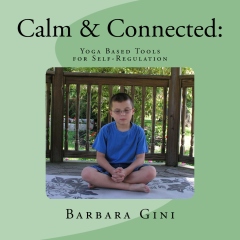
Calm & Connected: Yoga-Based Tools for Self Regulation

Calm & Connected
We live in stressful times. Societies are changing. Transitions are scary for kids & they react differently to them than adults do. It’s easy to overlook signals. 

More and more children and teens of all ages & abilities are being affected by stress each day, with devastating results. Whatever age you are, stress interrupts our ability to learn, heal, form healthy relationships and function optimally.


In a recent survey, 20%-40% of children age 8-12 reported being stressed & worried over something - yet only 8%-17% of parents & educators were even aware that children were feeling stressed. One of the proactive things we can do is to pay better attention to the outward stress signals children send us.

Children with special needs are even more sensitive to changes in their home & school environments and may show signs as well: crying, aggression, trouble sleeping, food cravings or other changes in eating habits, headaches, teeth grinding, constipation, & chronic illness could all be outward signals of stress.

Preview
More and more parents and educators are asking "What can we do to help?"

You can become aware and observe the children you love, care for and work with. Watch for those outward signals especially during times of turmoil, transition or life changes. By teaching kids to recognize the signs of stress, along with easy strategies for them to use to self-regulate, you can help them respond to outer turmoil by creating a calm more grounded inner environment when they need it most.

Calm & Connected shows you, the parent, educator or professional to guide children in recognizing and responding to stressors and to manage stress in a healthy, resilient manner. The best part is, ANYONE can use this book. You do not need any yoga background to teach these simple techniques effectively. Just follow our easy, illustrated instructions.
Preview

Inside these 87 color pages, you will find more than 3 dozen kid and school friendly, yoga-based tools, techniques, games, activities and more, all aimed at helping children recognize stress & self-regulate. By learning to use them, kids age 3 and up can begin to effectively recognize stress, create a calmer connection to themselves and others, effectively manage stress, reduce anxiety, improve focus connect with their inner calm, minimize anxiety improve concentration & enjoy life more.  In addition they will learn to make better choices for themselves in every situation. This information is a must-have for any home or school health & wellness library.

Preview
The techniques are effective as an intervention or re-direction method but are most effective when practiced consistently:  it’s crucial that they are re-enforced every day for all kids-in school, at home, on the field or stage and in the therapy room. After initial instruction, children will be able to do these techniques independently. 

Bad habits are formed over time and good habits will also take time. A stress response is simply a habit of responding a certain way to sensory input. So is a relaxation response. Children need to be taught that they do have a choice as to how to respond to stressors. They need to know what tools they can use if they are in pain, scared or their senses are overloaded and they feel confused and as if they are losing control.

Calm & Connected will help you show them what do to.


Order Your Print Copy of Calm & Connected here

*Now Available on Kindle


*Calm & Connected is part of our R.E.A.Ch™ Programming (Relaxation Education for Adults & Children) Find out more here: R.E.A.Ch Programming


Contact: barbara@bodylogique.com


.

Monday, April 2, 2012

Self Calming in the Peace Garden

Photo: Anita Martinz

Spring is here and for many families it may be filled with more activity than usual. Families visiting, spring festivals, outdoor events and gatherings are added in to the mix of the regular work, family and personal obligations.


While the approaching spring season and the break from school is a time of outdoor fun, vacation & renewal for some, for others it means more pressure, fuller schedules & new situations to manage.

If you are the parent or family member of a sensory challenged child, not only can the time change, longer days, new activities & events be a bit stressful, but so is the anticipation and concern over how your child might read, transition and respond to the new schedule, warmer temperatures & the break away from peers & educational and therapeutic support.

One of my favorite techniques for counteracting stressful transitions is Imagery. It’s easy and effective and anyone can learn it for personal use without any equipment or extensive training.

Imagery is used by counselors, doctors, athletes and everyday people. It is simply creating a detailed picture  in your mind's imagination. Imagery can be of an object, a word, a place or a situation. We use this simple yet powerful tool all the time without even knowing it to create positive calming images as well as stressful ones. Every time we relay a story about someone who helped us (or who hurt us) we are re-creating that experience in our and other's minds. However we responded to it in real life will be exactly how we (our bodies, minds and emotions) respond to it in imagery. The more frequently we can create and hold calming, positive images in our mind, the calmer and in control we will feel when our world is a little uncertain.

One fourth of the brain is involved in visual processing; more than any other sense. This is why Imagery is such a powerful tool. Seeing something is the best way that we take in information and learn. This is especially true for children. It doesn't matter if we actually see it or if we create an image in our mind's eye. The brain can't tell if its 'real' or imagined & the effect is still the same. Children can use this technique very well once taught.

Imagery can be guided verbally or facilitated with photos & quiet instrumental music. The child can sit on the floor, on a cushion or a comfortable chair or even lie down. Ask the child to close her eyes and listen to her breathing. Speak softly and slowly and allow momentary pauses in between sentences to allow the child to form a picture in her mind.

Here is a simple imagery to get you started:


My Peace Garden:

Close your eyes. Take 3 slow, quiet breaths. We are going to get ready to go on a visit- to a beautiful place that belongs just to you. This visit will take place in your own thoughts and you can go there anytime you want-when you are sad or angry or when things get hectic & you just want to go to a safe place for some quiet time to yourself.
Now, take a big slow breath & imagine that you are walking outside-along a path. It’s a beautiful sunny day and you can see the blue sky, the clouds & hear the rocks and the gravel crunching under your feet.  As you are walking you feel safe & happy !

As you walk a little more you come to a beautiful garden! See this garden in your mind. It has so many beautiful flowers of all of your favorite colors. What colors do you see? Can you small them? There are many butterflies fluttering around in the flowers.  As you walk more into the garden you can see apple, pear and cherry trees and hear colorful birds tweeting in the branches. There are so many kinds of amazing plants and animals!  What kinds of animals do you see? There is also a very special [chair, rock, swing, mushroom, etc] for you to sit on while you are visiting.  As you see all the flowers and all the animals you feel so safe and happy and you know this is a special place! This is your Peace Garden.  Whenever you come here, to relax or to think, you will feel safe, happy, and peaceful.

In a few minutes, it will be time to say goodbye., but remember that you can come back again to your Peace Garden soon for a visit.

Get ready to take a big breath and on the count of 3, you can open your eyes. 1-2-3...


Its important to allow a block of undisturbed time-no cell phones or interruptions. This process should never be rushed. If you decide to do it for 3 minutes that's fine. 30 minutes is also fine. It depends on what the situation is and how long of a break your child needs.

When ending this activity, bring the child gently & gradually out of the imagery or it could have a jarring, unbalancing effect on the child. Have them sit and talk for a few minutes about what they 'saw' in their garden. If they are non-verbal have them color for a few minutes before resuming other activities.

For children with diminished receptive language skills, make a small collage (preferred technique), scrapbook or photo album and include color photos or drawings to set your imagery theme (Example: garden, beach, animals, the woods, etc.) Include a few photos of the child in these places & doing activities. Allow them to look at the images while quiet music plays. Talk to them in a quiet voice about the images and how calm the pictures make them feel.

The best way to learn to guide your child through this process is to practice this yourself first. Children learn from our own example. Be willing to manage your own stress & look for signs of stress in your child. It’s a good idea to introduce imagery at a time when the child is already calm and practice a little bit every day to make ‘calm’ a habit. Teach children to recognize stress too and when they do, go to a quiet place and use this imagination technique before stressful feelings get out of hand.

To learn more about how guided imagery can help you and your child read the Care for Caregivers Blog:

Its All in Your Head: Using Imagery to Improve Health

or contact: barbara@bodylogique.com


Monday, March 12, 2012

Respect Every Child, Every Day


This week, my daughter's school is having some standardized testing. I have always told my kids to not be worried about these tests any more than they would a regular spelling or science test. After almost 30 years of parenting, my response to my daughter is even more laid back than it was to my sons when they were her age. I have always encouraged them to simply do their best.

 I understand that most of these tests are designed to measure the school's (translation: 'the teacher's') effectiveness and have nothing to do with or any child's future success in life. My personal sense is that they cause unnecessary stress and burden on students and staff and take away from what the teacher is trying to do in the classroom.

Each day last week my daughter came home with the verbal  list of "tips" staff were giving the kids. They even had an assembly to "go over a few things: "Make sure you eat breakfast; be sure you get enough sleep; bring a bag of peppermints; bring a bottle of water...etc."

Last year, the school administration went so far as to have guidance go into classrooms and teach them *Brain Gym  movements & send home a note that parents were expected to sign with a list of "rules" and "suggestions", among them being "tell your child he/she is awesome..." so that our child can "do well" on this test.

Incidentally, the peppermints are allowed to be eaten during testing as an application of aromatherapy-mint being an herb that is used for its anti-depressant, anti-anxiety and concentration improving properties. All the other days of school the kids are not permitted water, gum or candy in class.

I support educators, I am an advocate for a proper education for all children and adults, and am all for encouraging my kids (and every child) to do their best in every situation, but I have to draw the line when we are told by a school administrator that she should take a shower in the morning so she feels "awake" and "fresh".

Stop already!

Maybe I have missed something, but this is a blatant hypocrisy, disguised as "caring".  It  translates to "disrespect"- for both me and my child. I ask myself if I am the only parent who is irritated by this. Why the sudden interest in children's hydration, amount of sleep, and showering habits the week before standardized testing time? Why do administrators suddenly care whether or not I encourage my child and tell her how loved she is? Why are they so afraid of what those tests scores will reflect?

Part of me takes offense to the invasion into my parent/child relationship and parenting 'technique', and to the manner in which this whole "we want you to do well" routine is only applied when its important to the school. The other part of me understands that some kids don't get the love, attention and care that mine and many others do. Do they really think sending a note home with a "contract" will change that by helping those parents love or encourage their kids any more? Will that suddenly motivate them to be a more involved and attentive parent? Will it really make any difference in that child's life?

This is not the way to help kids succeed. But we know standardized testing is not and was never about helping kids succeed.

Why are we not expected to do that list of things every day for every child? The loved, the unloved and all of those in between?

Kids know when they are being played and they know when they are being used by adults. They can smell insincerity a mile away. If you want cooperation from them, show them respect all of the time, not just when you want something from them. Isn't that what we tell them?

Those of us in positions of authority: educators, administrators, therapists, clergy, yoga teachers, coaches, parents and others, need to hold ourselves to the same standard we expect from the children & students we guide. If we all did, and did it with sincerity & respect, we would not have to use standardized tests to see how effective schools are. We would be able to see the effect very clearly in the actions, interactions and success of all children.

A little respect goes a long way for every child-every day. ~B. Gini


Your comments and feedback are welcome!


To Receive our informative weekly posts directly in your inbox, fill out the "Follow by E-Mail" box in the right column.


*Brain Gym: (To clarify, Brain Gym is a series of movements, much like the yoga program I use, that are targeted to help both hemispheres of the brain communicate and work together. The flaw in the school's application of it is that it was done for about 15 minutes and only for testing purposes. Dr. Dennison, the Brain Gym founder, specifically discourages the program being used prescriptively. Its designed to be a daily discipline. In order for ANY brain-based movement program to be effective it needs to be fun, simple and practiced consistently as a group!)


.

Wednesday, August 3, 2011

No One You-er Than You


“Today you are You, that is truer than true. There is no one alive who is Youer than You.”  ~Dr. Seuss

So this evening at yoga, we misplaced one of the children's name tags. (The child happens to be the only boy in the class. ) The others were helping me look for it and we couldn't find it. So I apologized & jokingly offered him MY name tag and asked him if he wanted to be me for the night.

He shook his head, said "No way!" and quickly gave me back my name tag.
 
One of the other students said she would like to be me-because I know so much about Yoga. Then another said she'd like to be me too because I'm kind of funny. Another said I'm very funny and then another argued that I am silly rather than funny.
 
The banter went on until the young boy spoke up again. He said "I want to be me-but I still think you're cute!" ( As you can see, this one is a charmer-he knows just when to give a compliment. Its not easy being the only 6 year old boy in the yoga class!)
This exchange was so telling. It tells me that first, they are really paying attention even when you think they are not. It also re-enforces how important an adult's influence can be on a young child, and that we as educators cannot ever take that responsibility lightly.
 
It also drives home the importance of allowing children to develop self-confidence & to be their own person. The way that we do that the most effectively? By allowing them to do things-to succeed- and also to fail-and to learn from their mistakes. This helps build not only confidence, but characteristics they can identify with.
 
Too many times we are quick to "help" our kids avoid pain or circumvent uncomfortable situations. We let them win at games, do not allow them to experience consequences and do not effectively teach them how to handle anger & conflict.
 
The truth is, the world is not always a friendly place. There is competition, corruption and lots of frustrated people running around looking for a target to vent on. We can implement all the Anti-Bullying and Character Ed programs we want-but this will not ever teach them how to be confident in themselves. It will teach them the concepts-but not the lesson. The lessons are learned and character is built only through experience.
 
We cannot protect our students & children from or isolate them from every last bully, bad influence or friend who will use them. Instead, we have to be right beside them & give them skills to confidently navigate through the unpleasantness they will experience; we have to let them know we trust them to make choices and to set boundaries and if they make a bad choice they can change it. At the same time, we need to remember to show them how to still embrace, appreciate and look for the fun, adventure & beauty of Life.


They need to know that we are there to help if they need it and we will come to a point where we will have to be brave enough to let go and let them fly. If we show fear & frustration they will only learn to be afraid & frustrated. If we show confidence, then they will learn to be confident.
 
Tonight, every child who said they'd like to be me, for the reasons they perceived to be fun, or as good qualities, also told me that they would only want to be me for maybe just the class or maybe a day, and then go back to being themselves. I'm so glad they said that. That shows that they are supported & that they "get it."
 
And I'm thinking I would like to be more like them when I grow up.


.

Wednesday, February 9, 2011

Helping Children Cope With Anxiety

For those of you who know me, you will probably agree that a good majority of the work I do is based on positive, empowering movement art & imagery. I'm going to do something a little different today in the interest of education, so bear with me.

In today's imagery you are going to imagine for a moment that today, your workday is full of confusion, frustration & failure. Imagine that no matter how hard you try, you fail at almost every task you attempt; that your co-workers misunderstand, tease or ignore you and don't help or support you; your superiors are impatient, irate and mistreat you. Imagine that you feel like you don't fit in and the deep sadness, humiliation, and isolation you would feel. No doubt, it would be nearly impossible to maintain a happy outlook, positive self image or a cooperative attitude in this type of environment.

Let's further imagine that you have a similar experience in the cafeteria, in the train or carpool commute, and then all over again at home interacting with your family. Surely you would eventually respond by becoming moody, withdrawn, depressed, uncommunicative or even combative.

This is how it feels to live a typical day in the life of a child with cognitive, sensory or social challenges.

You can choose to stop the imagery now, but for a child with these challenges the imagery continues. A child goes to school for a living for 6 hours a day or sometimes more if you add in before and after school care. Its his or her  'job'. This job is a very difficult one. He is often unable to leave the day behind him when he gets home because the same behavior patterns & reactions repeat there too.

Children with these challenges are highly susceptible & reactive to stress & experience serious emotional effects to this cycle of school & social failure. They become fearful of & react abnormally to  typical everyday situations. They respond with fear & worry, more accurately called anxiety and it can complicate the lives and compromise the well being of so many children with learning challenges.

There is sometimes a misunderstanding between the definitions of anxiety & depression: depression is worrying about the past; anxiety is worrying about the future.These "what if..." obsessions with future events may be real, perceived or imagined, but the effect on the child is just as paralyzing especially during times of upheaval or transition. It causes extreme difficulty with the child's ability to concentrate and interact appropriately. It affects the child's ability to cope & in some cases, it results in chronic irritability.

Authority conflicts are common with children suffering from anxiety. This makes complete sense when you consider that the child is fearful of any changes in his environment and doubts his or her own ability to handle the transitions effectively. We call the resulting behaviors defiant, avoidant, argumentative, stubborn, rebellious, etc. however, it is important to remember that the child is not behaving out of rebelliousness or oppositional behavior, but out of genuine fear. The behavior is his best strategy for coping with the anxiety he is feeling at that moment.

The effects of anxiety in children can be grossly underestimated. We casually refer to these children as "high strung" or as "old souls". We often minimize anxiety by telling them to "stop worrying", as if they really had the power to stop instantly just because we say so. Be careful to not belittle or ridicule the anxiety. The fears are very real to the child and should always be taken seriously. Science tells us that anxiety has both a physical and a psychological cause. It is of no use to punish anxious behaviors just as it is no use to punish a child who has a fever. It is vitally important to remember this when working with children experiencing anxiety. They do not know why they are anxious or where it is coming from They cannot help themselves. Parents, teachers, therapists need to compassionately & actively teach usable coping strategies & guide them through how and when to use them!

There are many different types of anxiety disorders and many ways to treat them. Some involve medications and some do not. (Parent's should consult with the child's psychologist & pediatrician regarding use of medication.)

It is a widely accepted practice to have the child engage in pillow punching or some other unstructured physical activity to relieve stress and anxiety, however many experts will discourage this. These practices have no point and do little to release anxiety and can actually increase the tension level. Rather, have the child engage in an activity that has a specific beginning, ending with definable & measurable goals. (Example: take 10 deep breaths; shoot 12 baskets; run 5 times around the back yard, etc)

Below are some simple (non-medical) yoga based techniques that will help a child cope with anxiety. While these techniques do not replace  professional diagnosis and treatment, they will offer some tools for parents & teachers as well as reassurance & relief for the anxious child.

1-Design a positive, reassuring  & affirming word or phrase, (in yoga we call this a "mantra" ) to use during periods of anxiety that will comfort & reduce fear. (Example: "Things are getting better all the time", "Breathe" or "My body is calm/safe". )

2- Practice Deep Breathing. Deep breathing brings oxygen rich blood to the brain and improves focus. It also has a grounding, calming effect on the central nervous system if done correctly. I often use a "Breathing Ball" (pictured at left) to illustrate this and to give a point of focus. This ball expands to show is how our body is taking in air and collapses back again to send out air. To learn the technique, click here.

3- Movement & exercise can be a physical, fun & enjoyable way to release tension. A game of tag, soccer, a hike or riding a bicycle will relax the muscles and release endorphins (a neurochemical that has a tranquilizing effect) into the body. If it is not possible to go outdoors, then try the "Sun Stretch" which can be done anywhere indoors or out.

4- Squeezing Lemons is a fun exercise/imagery that I use that is also a progressive muscle relaxation technique. Start by holding an imaginary lemon in your open hand-(sometimes I have the children hold a pink lemon in one hand and a yellow lemon in the other-to make both kids of lemonade.) Now squeeze the lemons (into an imaginary glass) with your hands and get all the juice out. Next squeeze those lemons with your elbows (by placing it in your elbow and bending your arm.) Next squeeze with your armpits. (by now the children will probably be saying "Ewwwww" or giggling, which is also a way to release anxiety/tension.) Continue squeezing lemons with knees, toes, chin, chest, shoulders, back & face.

5- Practice Enhanced Focus. It is a common understanding that focus can be enhanced by allowing your mind to "go blank". However, the purpose of our mind is to think-so its very confusing and hard even for the most disciplined person to "go blank" and think of nothing. A better approach is to focus intensely on one simple object or image. (This is referred to in Yoga as "meditation" ) Children can do this with a little bit of guidance and maybe a photo or picture of a flower, and animal or a relaxing scene from a magazine to focus on. Focus can also be enhanced by a repetitive activity such as zipping and unzipping a pencil case, doing a maze puzzle, or drawing circles, numbers or "Sleepy 8s" on a piece of paper.

Try this activity for decreased anxiety right before a stress producing event such as a test or a doctor's appointment: Find 2 items or surfaces of different textures such as the car seat and a notebook cover. Place on hand on one surface, and the other hand on the other. With your fingertips make circular motions on both surfaces at the same time. You can switch hands and do the exercise again for a few minutes.

Anxious children respond well to reinforcement & praise. Be sure to tell them how proud you are when they are brave in the face of anxiety. (Example: "I know how that you were nervous about going to the doctor, and I am so proud of the way you handled it! )  Reinforced behavior will be repeated and the child will gradually gain confidence in themselves as they are learning to handle new situations.

Above all, remember to communicate the child's needs and strategies with the rest of the child's support system: family members, babysitters & caretakers, teachers, instructional assistants, bus drivers, therapists, etc. The more that we are all involved, compassionate and consistent with our interventions, the better it will support and empower the child coping with anxiety.


.

Tuesday, February 2, 2010

Children's Anxious Lives

Much of the work I do involves children with learning challenges and their families. The one request I get on a regular basis are tips for stress management & self-calming.

Stressful feelings in children & adults can arise during times of transition, chaos & over stimulation, illness, test taking, hectic daily schedules or therapies & during fear based learning. When a child becomes overstimulated &  confused he cannot take in & process the information the brain is receiving. These situations & feelings cause a "fight or flight" reaction in the body and is the same type of response that occurs if that child were in danger of being harmed. The primative brain cannot tell the difference between mildly stressful situations & dangerous ones-or if the event is actually happening or is being imaged (as when playing video games or watching TV). This is a subconscious function & is our body's way of protecting itself from real danger.

During stressful events and activities,when this reaction or "stress response" happens, adrenalin flows directly into the brain and shuts down all functions except the survival functions. This blocks it completely from receiving/processing any other information. It does this in order to "survive". All it can remember to do at that point is "fight" or "flee". Once this survival or stress response occurs the child is not capable of processing any information much less learning. In children with autism, SPD's or other challenges this is the time when "meltdown" will most likely occur.

Along with emphasizing a varied & proper diet & constant hydration, one of the techniques I repeatedly focus on is using breathing with imagery to stay calm. This not only applies to the students, but to the teachers, support staff, peers, siblings and parents as well. It is always in everyone's best interest, especially in the home & in learning environments that everyone adapt  a "realxation response" as a way to combat stressful situations.The statistics on childhood stress are alarming, not just for children with learning challenges, but for neurotypical children as well. The most alarming statistic is how many parents & caregivers did not realize that their children were showing symptoms of stress:

Stress in Children (and the disconnect with parents)


•45% of teens (ages 13-17) said that they were more worried in 2009. However, only 28% of parents thought their teen's stress had increased.

•26% of tweens (ages 8-12) said that they were more worried in 2009. However, only 17% of parents thought that their children's stress had increased.

•30% of children reported being worried about the family's financial situation. However, only 18% of parents thought that their finances were a cause of their children's stress.

Possible Effects of Stress in Children

•30% of tweens and 42% of teens say they get headaches. However, only 13% of parents reported being aware of their children having headaches.

•39% of tweens and 49% of teens report difficulty sleeping. However, only 13% of parents reported being aware of their children having trouble sleeping.

•25% of tweens and 39% of teens reported eating too much or too little due to stress. However, only 8% of parents reported being aware of this issue.
(All of the above stress statistics related to children and their parents were reported by a 2009 survey conducted by the American Psychological Association (APA).)

The (slightly long) article below is a re-post from "Natural Awakenings" Magazine. I found it to be informative and I am sharing it with you here. It is imperative that we as parents and educators teach our children (of ALL abilities) techniques for self-calming not only through telling & teaching them but by setting an example and showing them. Children learn stress reactions from the people they are around most-peers, parents and teachers. When we learn how to properly recognize & manage our own stress, our children will learn to follow our lead.

Wishing you a Peaceful day!

~Barb


Calming Anxious Lives...

Re post:Original article by Lisa Marshall
for Natural Awakenings Magazine-Lehigh Valley Ed.


For fourth-grader Skylar Shumate, a typical Tuesday looks like this. Rise at dawn for some toaster waffles and juice before sprinting to the bus at 7:15 a.m. Study for spelling en route to school. Embark on a seven-hour school day, filled with classes and quizzes. Head to cheerleading at 3:15 p.m., hip-hop class at 5 p.m., then return home to practice piano and do homework before grabbing dinner and heading to bed.

In all, Skylar reports, she is a happy kid. “But sometimes, if I’m super stressed, I’ll go cry in my room,” she confesses. “I sometimes just wish there wasn’t so much pressure.”

Such a statement from a child is particularly chilling. But, according to a growing body of research and legions of concerned child development experts, Skylar is not alone.


Troubling Trends

According to a study by the California-based Lucile Packard Foundation for Children’s Health, up to 70 percent of parents report that their 9- to 13-year-old children experience moderate to high levels of stress. In a recent poll of high school students by Stanford University, 65 percent admitted they were often or always stressed out. According to the National Mental Health Information Center, anxiety disorders affect 13 out of every 100 children ages 9 to 17.

Nationwide, healthcare providers report an increase in stress-related health problems like stomach aches, teeth grinding, sleep disorders and behavioral problems in children as young as preschool age. Some anxiety can be attributed to trouble at home, such as abuse or personal tragedy. But a more insidious culprit appears to have emerged: a culture of hyper-parenting, in which kids are overscheduled and academically overloaded, and adult role models—concerned about everything from terrorism to pandemics and the economy—are more stressed than ever.

“We have stumbled into a unique moment in the history of childhood, a cocktail of cultural and historical trends that have intersected to create a perfect storm,” says Carl Honoré, a 41-year-old father of two and author of Under Pressure: Rescuing our Children from the Culture of Hyper-Parenting.

He notes how anxious parents are feeling the need to prepare their kids for a tough job market. They have money to afford extracurricular activities, and because they are becoming parents later in life and raising fewer children, they have a tendency to dote on them and expect great things. “Children are the target of more adult anxiety and intervention today than at any time in history,” says Honore.

Most troubling is the realization that too much childhood stress can have lifelong health consequences.

Read full article here


Lisa Marshall is a freelance writer and mother of four in Colorado

Original Source:
http://www.naturalawakeningsmag.com/natural-library/august-2009/calming-anxious-lives


.