This week winds down the Wanna Play Summer Social Skills Camp. The theme of "Beach Yoga" worked so well the first week that I have used it with all 4 groups for the entire 6 weeks. The children have responded well and for the most part have been very willing to interact with all the other children & other activities.
The format was the same each week to create a familiar routine: Get mats, sit down, take off shoes, practice breathing, "surfing" warmup, story or topic with poses, movement games and then finally an art project. The kids in my Tuesday class have been asking "Ms. Barb, are we doing art today?" for the last 3 weeks. The art has not only become a therapeutic outlet for self expression as well as a tangible symbol of the concepts they are being taught & shown, but also has become a motivator and a stress management tool.
Art has been used therapeutically since the 1940's. Art therapy is very different than other forms of therapy in that it utilizes and strengthens the creative process and is more accessable to everyone becuae we all, young or old, can be creative in some form or another! (See the article " Every Brain is A Creative Brain". ). Art therapy can be very beneficial to children as they have a harder time verbally expressing what they are expereincing & feeling as opposed to adults. They may feel "safer" and have an easier time expressing themselves through simple art projects.
Art can also aid a child in cultivating self-awareness, releiving stress or anxiety, integrating the sensory system & overcoming the challenges of learning disorders, autism, and other traumatic experiences. When a group art project (such as a mural) is planned, it can be a fantastic opportunity for refining social skills as well.
One of the first programs I worked with that recognized & embraced this concept of using art therapeutically as a form of communication & expression was the HeArts For Autsim Program.
This innovative monthy program is directed for children with autism and their siblings. Monthly activities are planned around a central theme and an art activity that is facilitated by volunteers.
I was asked to facilitate a yoga program for HeArts last year, and helped to establish the adaptive yoga program they are now using. We used the art activities along with yoga movement in a similar way that art is used in therapeutic environments, and it seems to be teaching skills and working in ways I never expected!
The other aspect of art is the unique interpretations and insights the children have.
The Starfish project was a favorite-and can be used to teach many concepts. I used the imagery of a starfish-and the body in "Starfish Pose" (corpse pose or "savasana") as a relaxation technique. The starfish rests under the water-(weightless-cool) sinking deeper into the sand (safe-supported ) -where its quiet (rest-relaxation). Surrounded by beauty (visual processing-imagination) and kept company by other sea creatures (friendship-diversity) .
This week's Jelly Fish Project was well received too. I explained to the children that JellyFish are made of mostly water, have no bones, and no muscles so they are very floppy & can't move very well by themselves. They need to "suck in" and "blow out" the water to push them through and they need the Ocean currents to move them around-near food and shelter.
We rested in Jellyfish pose-Played Pass the Sea Urchin (a modified version of 'Funny Football" ) Played "The JellyFish Game" and made our own Art JellyFish to do the "JellyFish Dance" with.
I think I am all Jelly-Fished out!
Friday will be my day off-I am taking a trip with my daughter and some great friends to the actual beach. I am remembering the time that my (then 4 year old daughter) came running up to me excited by the "treasure she had found: to her it looked like a "tatoo necklace" so she picked it up and put it around her neck. I was horrified when I looked closer and saw that it was actually jellyfish tentacles! (Thankfully she was not stung-and we still laugh about this everytime we see "JellyFish Necklaces" at the beach!)
Maybe I will come up with some more beach adventures & ideas for you while I am there!
Love & Laughter!
~Barbara
*Go to this link to order the complete beach themed S.M.Art Story™ curriculum: "Ocean Surfari"
Subscribe to S.M.Art Kids / Healthy Kids by Email
Contact: barbara@bodylogique.com
Related Articles:
Surf's Up!
Sand Dollar Shakers
.
Wednesday, August 4, 2010
Thursday, July 29, 2010
Aromatherapy & Autism: How can it help?
Article updated April 14, 2013
Aromatherapy is the science of alternative medicine that uses volatile plant materials, known as essential oils, and other aromatic compounds for the purpose of improving a person's mood, cognitive function or health. In recent years there has been an interest is using aromatherapy for reducing the anxiety and behaviors associated with autism and other Sensory processing disorders.
In 1999 an OT named Jane Ellwood from the UK carefully planned and set up a structured program to use aromatherapy for a group of 6 non-verbal severely autistic children at a special needs school. The idea was to see if this would warrant further study. This would also provide an opportunity to document the therapeutic use and effects on children with sensory challenges.
5 different essential oils would be used-both stimulating and calming scents-and were selected based on their safe use with children, their ability to stimulate the olfactory sense, and their therapeutic properties:
Peppermint: A somewhat familiar scent. Acts as a neuro-stimulator. Widely used to improve concentration. Also has a cooling effect on the skin and can be used as an additional sensory experience.
Neroli: A non-irritating and sedating oil.Good for massage & when calming is needed. Also recommended fore obsessive behavior, one of the characteristics of autism.
Eucalyptus: Stimulating and clears nasal & bronchial passages allowing for deeper respiration.
Roman Chamomile: Calming and has been suggested to use for eye pillows and to counter act aggressive behaviors.
Sandalwood: Non irritating and scent contrasts to the other oils. Blends well with Neroli and would give an additional scent if needed.
Peppermint was used the first week initially in a room diffuser then in spray bottle allowing droplets to settle on the hands and feet of the children. Some children requested more. Jane observes how one child, who was tactile defensive, used the neck pillows filled with Roman Chamomile on his neck and remained calm and still the entire class despite usually having difficulties sitting still. One child who was overwhelmed by the new sensation at first, learned to shut his eyes when he was smelling the mint, thus avoiding sensory overload.
Later on, hand massage was introduced, using Neroli diluted in massage oil. One child who self-stimulated by spitting into his hands and rubbing it in found this to be a more pleasurable, calming and more acceptable activity. This child remained alert and participated in the group sessions and would request the oil when he needed his hands rubbed to calm down. He learned to do this for himself. After a few weeks, the children, some resistant to touch, were willing to rub each other's hands for a new sensation. Other objects, textures and hot/cold packs with the essential oils in or on them were slowly introduced each week to further expand and integrate the range of sensory experiences.
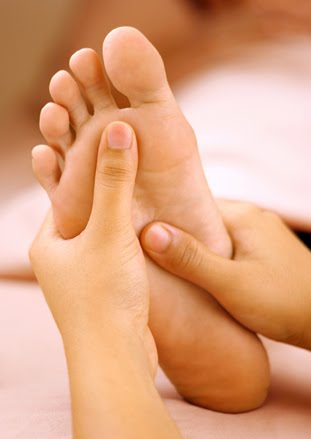
One child who did not like the hand massages, would sit still for foot massages. A neutral oil (no essential oil) was used first to avoid sensory overload and was gradually introduced. This technique worked for gaining his attention before a new learning experiences such as group games or counting games.
In her conclusions, Jane states that "being aware of the often negative effects of sensory stimulation to children with autism, I had not expected the positive way the aromatherapy sessions were received. For all of the children, the experience has led to new opportunities for interaction & communication."
Overall, Ms. Ellwood concludes that the children reacted with interest and activity to the stimulating oils (peppermint & Eucalyptus) and receptiveness and calm with the calming oils, Neroli, Sandalwood and Roman Chamomile. However, the oils paired with the activity (massage, relaxation, etc. ) may also be a contributing factor in the outcome.
(Ms. Ellwood's study was published in Vol 1 • No 3 ~ Winter 2002-03 of "In Essence"- the quarterly Aromatherapy journal of the International Federation of Professional Aromatherapists)
Its important to not that before you introduce this type of sensory activity to your child check with his or her therapist or medical doctor. Also, be sure to use only natural essential oils and foods (coffee, oranges, lemons, basil, sage, lavender, etc.). Artificial scents, fabric softeners, & fragrances contain many chemicals that can cause headaches, nausea and other undesired affects on a child with sensitivities.
There are both strong supporters of this practice as well as others who say the effects cannot be proven. Most affects can be observed but are difficult to scientifically establish. You have to make these decisions for what is best and what will work for your students/child. It has been my own experience in a self contained classroom setting and with my own daughter, (who is not sensory challenged) that aromatherapy has a positive effect with careful application, dilligence & time.
A simple sensory activity to do with your child is "Scented Salt Dough". You can encourage your child to help you make this simple scented dough, and then use like clay to incorporate a variety of skills & sensory experiences (kitchen activities and "following a recipe" in general help improve auditory processing, visual processing, proprioception, fine motor skills, tactile senses, olfactory sense, language and socialization skills.)
You can also add rice, sand or other grainy substances to a different batch to increase the tactile response. (I don't suggest combining both scent and texture until after both types are introduced to the child/children and gotten used to.)
Some natural scents you can add to the dough: (be conservative & aware of what you are adding & whether or not a child has known skin sensitivities.)
Stimulating: Instant coffee, peppermint extract, lemon extract, pumpkin pie spice, cinnamon, ginger, ground cloves, basil, cherry kool aid,
Calming: vanilla extract, lavender, Roman Chamomile, Neroli, honey, anise extract, licorice or fennel
The dough can then be allowed to harden & painted for an extra creative & sensory experience!
For salt dough recipe and other sensory games & activities please visit our web page at: BodyLogique.com
To order a copy of "Calm & Connected: Yoga-Based Tools for Self-Regulation" (filled with dozens of simple, kid-friendly relaxation techniques) please use this link.
For more information on Aromatherapy and autism, visit:
Aromatherapy-ADHD & Autism
Evaluating Aromatherapy Massage Effects on sleep in children with autism
Aromatherapy for ADHD
Receive S.M.Art Kids / Healthy Kids by Email
.
.
Aromatherapy is the science of alternative medicine that uses volatile plant materials, known as essential oils, and other aromatic compounds for the purpose of improving a person's mood, cognitive function or health. In recent years there has been an interest is using aromatherapy for reducing the anxiety and behaviors associated with autism and other Sensory processing disorders.
In 1999 an OT named Jane Ellwood from the UK carefully planned and set up a structured program to use aromatherapy for a group of 6 non-verbal severely autistic children at a special needs school. The idea was to see if this would warrant further study. This would also provide an opportunity to document the therapeutic use and effects on children with sensory challenges.
5 different essential oils would be used-both stimulating and calming scents-and were selected based on their safe use with children, their ability to stimulate the olfactory sense, and their therapeutic properties:
Peppermint: A somewhat familiar scent. Acts as a neuro-stimulator. Widely used to improve concentration. Also has a cooling effect on the skin and can be used as an additional sensory experience.
Neroli: A non-irritating and sedating oil.Good for massage & when calming is needed. Also recommended fore obsessive behavior, one of the characteristics of autism.
Eucalyptus: Stimulating and clears nasal & bronchial passages allowing for deeper respiration.
Roman Chamomile: Calming and has been suggested to use for eye pillows and to counter act aggressive behaviors.
Sandalwood: Non irritating and scent contrasts to the other oils. Blends well with Neroli and would give an additional scent if needed.
Peppermint was used the first week initially in a room diffuser then in spray bottle allowing droplets to settle on the hands and feet of the children. Some children requested more. Jane observes how one child, who was tactile defensive, used the neck pillows filled with Roman Chamomile on his neck and remained calm and still the entire class despite usually having difficulties sitting still. One child who was overwhelmed by the new sensation at first, learned to shut his eyes when he was smelling the mint, thus avoiding sensory overload.
Later on, hand massage was introduced, using Neroli diluted in massage oil. One child who self-stimulated by spitting into his hands and rubbing it in found this to be a more pleasurable, calming and more acceptable activity. This child remained alert and participated in the group sessions and would request the oil when he needed his hands rubbed to calm down. He learned to do this for himself. After a few weeks, the children, some resistant to touch, were willing to rub each other's hands for a new sensation. Other objects, textures and hot/cold packs with the essential oils in or on them were slowly introduced each week to further expand and integrate the range of sensory experiences.
![]() |
In her conclusions, Jane states that "being aware of the often negative effects of sensory stimulation to children with autism, I had not expected the positive way the aromatherapy sessions were received. For all of the children, the experience has led to new opportunities for interaction & communication."
Overall, Ms. Ellwood concludes that the children reacted with interest and activity to the stimulating oils (peppermint & Eucalyptus) and receptiveness and calm with the calming oils, Neroli, Sandalwood and Roman Chamomile. However, the oils paired with the activity (massage, relaxation, etc. ) may also be a contributing factor in the outcome.
(Ms. Ellwood's study was published in Vol 1 • No 3 ~ Winter 2002-03 of "In Essence"- the quarterly Aromatherapy journal of the International Federation of Professional Aromatherapists)
Its important to not that before you introduce this type of sensory activity to your child check with his or her therapist or medical doctor. Also, be sure to use only natural essential oils and foods (coffee, oranges, lemons, basil, sage, lavender, etc.). Artificial scents, fabric softeners, & fragrances contain many chemicals that can cause headaches, nausea and other undesired affects on a child with sensitivities.
There are both strong supporters of this practice as well as others who say the effects cannot be proven. Most affects can be observed but are difficult to scientifically establish. You have to make these decisions for what is best and what will work for your students/child. It has been my own experience in a self contained classroom setting and with my own daughter, (who is not sensory challenged) that aromatherapy has a positive effect with careful application, dilligence & time.
A simple sensory activity to do with your child is "Scented Salt Dough". You can encourage your child to help you make this simple scented dough, and then use like clay to incorporate a variety of skills & sensory experiences (kitchen activities and "following a recipe" in general help improve auditory processing, visual processing, proprioception, fine motor skills, tactile senses, olfactory sense, language and socialization skills.)
You can also add rice, sand or other grainy substances to a different batch to increase the tactile response. (I don't suggest combining both scent and texture until after both types are introduced to the child/children and gotten used to.)
Some natural scents you can add to the dough: (be conservative & aware of what you are adding & whether or not a child has known skin sensitivities.)
Stimulating: Instant coffee, peppermint extract, lemon extract, pumpkin pie spice, cinnamon, ginger, ground cloves, basil, cherry kool aid,
Calming: vanilla extract, lavender, Roman Chamomile, Neroli, honey, anise extract, licorice or fennel
The dough can then be allowed to harden & painted for an extra creative & sensory experience!
For salt dough recipe and other sensory games & activities please visit our web page at: BodyLogique.com
To order a copy of "Calm & Connected: Yoga-Based Tools for Self-Regulation" (filled with dozens of simple, kid-friendly relaxation techniques) please use this link.
| Calm & Connected by Barbara Gini |
For more information on Aromatherapy and autism, visit:
Aromatherapy-ADHD & Autism
Evaluating Aromatherapy Massage Effects on sleep in children with autism
Aromatherapy for ADHD
Receive S.M.Art Kids / Healthy Kids by Email
.
.
Sunday, July 25, 2010
Breathe-Relax!
My son called me yesterday. So how did this get to be a blog topic? Well, I always love to talk about my kids, but it was the content of the call that became today's topic. I will explain.
He called to tell me that he passed (with flying colors) a national certification test for his job. He was ecstatic, talking very quickly & was almost breathless as he told me about it.
Then he told me he was so stressed & asked me for some breathing & relaxation exercises to calm him down before he took his field test. It took me by surprise, because he is very easy-going. I have never pushed or expected any of my children to practice yoga, only invited them to try if they wanted. Now my 26 year old son who has never set foot inside a yoga studio, in spite of always being supportive (just from a distance) of my yoga & dance teaching, my vedic chanting music, my rain sticks & other assortment of odd musical instruments, was asking me for interventions and he was serious. I could hear it in his voice. After a quick phone-coaching session, he was better and went on to his field test which he also did well on.
My point today is that we don't usually associate stress with good news or happy events, but these can also create a stress response in the body. We need to take moments throughout our day to release this tension that builds up not just in our mind, but in our bodies too.
My son was experiencing a stress response and maybe did not realize it at the moment because he was excited about his test results. What he did recognize was a need for something to reverse the sensations in his body-(nervous stomach, heart pounding, short of breath, perspiration). Although he could not remember how to use it, he knew the one tool that we all have that will immediately help us in times of stress: our breath.
It has been known in China and India for thousands of years that the mind. body and breath are all inter- connected and that the breath can be used for balancing all the body's responses, including stress.
I will tell you a secret: Ironically, the divorce from my son's father many years ago was a pivotal time where I learned how to control nerves, fear & migraine headache pain with my breath and imagery. At times, I still momentarily forget this wonderful tool and how to use it. I react to people & emotion and get scared, angry, overwhelmed and frustrated as well. It happens to me during happy times also. The difference is that now, with this knowledge, and after years of practice and application, in times of calm I remember to breathe for relaxation-so that in times of stress my reaction/ recovery time is shorter and less destructive.
Breath techniques are a tool that every child can learn, so that as they grow into teens and adults, a relaxation response to stress becomes the habit, rather than a stress response. I wish I had thought of teaching this to my sons as they grew through many transitions-some painful-in their young lives. Now, as I had my son on the phone, I felt this was an important moment-maybe even a second chance-to be in a great place both in maturity & knowledge to help him, which is what I did.
The opposite situation can occur too, where a person can be too calm, to the point of being complacent and not take action when they should which can be equally destructive. I have also experienced this effect. (Yes, you can be "too calm"!) Practicing Energy breathing can release muscle tension, clear the head, improve focus and motivate a person to take action when they feel wronged or a need for boundaries. Action is very different than reaction. On of my greatest lessons in Life is how the breath can help regulate & balance these two responses.
So for today, here are a few quick exercise to try (for adults & kids):
Belly Breath:
(Deep Breathing) This allows the lungs to fill up completely with oxygen and subsequently improves focus and calm. It will also help clear congestion.)
Place your hand on your belly, over your naval. When you breathe in, allow the breath to come in deeply, through your nose, so that your naval area expands & your hand moves out. When you breathe out, (through nose or mouth) your naval area will contract and your hand will move in. (To teach this to children, have them lie on their backs and place a small toy boat, dolphin, fish, frog, etc on their belly so that it can move up when they breathe in, and down as they breathe out.)
Energy Breath:
(Sometimes called "Big Breath" when working with the very young) Helps release tension, clear the lungs of congestion, increase energy and improve focus.)
Hold a small craft pom-pom ball or cotton ball in the palm of your hand. Take a big breath and blow the ball off your hand as far as you can. (For kids, you can give them each a different color to see how far they can make it go each time.) Even the very small and children with adaptive needs can practice this to some degree.) You can practice this about 3-5 times at first and gradually work up to 8-10 times. Last winter, I even had one Adaptive class of teens work up to have a "snowball fight" this way, where each side of the room had to blow the "snowballs" to the other side and keep away the "snowballs" that were coming at them with their energy breath. They still talk about it .
Another way I teach energy breath with little kids is tell them to hold out their hands, palm up and pretend they are blowing out a birthday candle for themselves on a cupcake. This is something most children can relate to. To help them practice a really big energy breath, I have them imagine blowing out 45 candles on a giant cupcake for my birthday!
Calming Breath:
(Sometimes called "Little Breath" or "Quiet Breath" with small children) This is a quieting relaxation breath. It can be used to help induce calm before sleep, and just before, during or after a stressful event or situation.)
Take a quiet breath in through your nose, deep into your belly, to the slow count of 3 (for small children ) or 4 (for bigger kids or adults) Breathe out slowly to the count of 3 or 4. (You can also use the cotton or pom pom ball for this exercise only this time, the ball must stay in the child's hand and NOT be blown off. This exercise will quickly teach breath control.)
Laughing Breath:
(Reduces & releases tension and improves respiration.)
Breathe in slowly and deeply-and as you breathe out laugh!
These are just a few ways that breathing can be practiced & used by all ages to keep the body balanced and calm. There are many others! I hope you find these few to be helpful! To learn more about fun ways to teach yoga and other healthy techniques to your children or students, please visit us at: http://www.bodylogique.com/
To schedule a customized evaluation for a Stress Reduction Plan for yourself or your child, please contact me at: Barbara@bodylogique.com
Love & Laughter!
~Barbara
(Pictured from Left: My oldest son Michael, his father, my younger son Steven and myself at a music & arts event the boys played at 3 years ago . This is the only photo I have of us all together and in spite of the rough road we have all travelled together (and apart,) I'm encouraged and comforted by the fact that we have all moved forward and are better for the experience.)
.
He called to tell me that he passed (with flying colors) a national certification test for his job. He was ecstatic, talking very quickly & was almost breathless as he told me about it.
Then he told me he was so stressed & asked me for some breathing & relaxation exercises to calm him down before he took his field test. It took me by surprise, because he is very easy-going. I have never pushed or expected any of my children to practice yoga, only invited them to try if they wanted. Now my 26 year old son who has never set foot inside a yoga studio, in spite of always being supportive (just from a distance) of my yoga & dance teaching, my vedic chanting music, my rain sticks & other assortment of odd musical instruments, was asking me for interventions and he was serious. I could hear it in his voice. After a quick phone-coaching session, he was better and went on to his field test which he also did well on.
My point today is that we don't usually associate stress with good news or happy events, but these can also create a stress response in the body. We need to take moments throughout our day to release this tension that builds up not just in our mind, but in our bodies too.
My son was experiencing a stress response and maybe did not realize it at the moment because he was excited about his test results. What he did recognize was a need for something to reverse the sensations in his body-(nervous stomach, heart pounding, short of breath, perspiration). Although he could not remember how to use it, he knew the one tool that we all have that will immediately help us in times of stress: our breath.
It has been known in China and India for thousands of years that the mind. body and breath are all inter- connected and that the breath can be used for balancing all the body's responses, including stress.
I will tell you a secret: Ironically, the divorce from my son's father many years ago was a pivotal time where I learned how to control nerves, fear & migraine headache pain with my breath and imagery. At times, I still momentarily forget this wonderful tool and how to use it. I react to people & emotion and get scared, angry, overwhelmed and frustrated as well. It happens to me during happy times also. The difference is that now, with this knowledge, and after years of practice and application, in times of calm I remember to breathe for relaxation-so that in times of stress my reaction/ recovery time is shorter and less destructive.
Breath techniques are a tool that every child can learn, so that as they grow into teens and adults, a relaxation response to stress becomes the habit, rather than a stress response. I wish I had thought of teaching this to my sons as they grew through many transitions-some painful-in their young lives. Now, as I had my son on the phone, I felt this was an important moment-maybe even a second chance-to be in a great place both in maturity & knowledge to help him, which is what I did.
The opposite situation can occur too, where a person can be too calm, to the point of being complacent and not take action when they should which can be equally destructive. I have also experienced this effect. (Yes, you can be "too calm"!) Practicing Energy breathing can release muscle tension, clear the head, improve focus and motivate a person to take action when they feel wronged or a need for boundaries. Action is very different than reaction. On of my greatest lessons in Life is how the breath can help regulate & balance these two responses.
So for today, here are a few quick exercise to try (for adults & kids):
Belly Breath:
(Deep Breathing) This allows the lungs to fill up completely with oxygen and subsequently improves focus and calm. It will also help clear congestion.)
Place your hand on your belly, over your naval. When you breathe in, allow the breath to come in deeply, through your nose, so that your naval area expands & your hand moves out. When you breathe out, (through nose or mouth) your naval area will contract and your hand will move in. (To teach this to children, have them lie on their backs and place a small toy boat, dolphin, fish, frog, etc on their belly so that it can move up when they breathe in, and down as they breathe out.)
Energy Breath:
(Sometimes called "Big Breath" when working with the very young) Helps release tension, clear the lungs of congestion, increase energy and improve focus.)
Hold a small craft pom-pom ball or cotton ball in the palm of your hand. Take a big breath and blow the ball off your hand as far as you can. (For kids, you can give them each a different color to see how far they can make it go each time.) Even the very small and children with adaptive needs can practice this to some degree.) You can practice this about 3-5 times at first and gradually work up to 8-10 times. Last winter, I even had one Adaptive class of teens work up to have a "snowball fight" this way, where each side of the room had to blow the "snowballs" to the other side and keep away the "snowballs" that were coming at them with their energy breath. They still talk about it .
Another way I teach energy breath with little kids is tell them to hold out their hands, palm up and pretend they are blowing out a birthday candle for themselves on a cupcake. This is something most children can relate to. To help them practice a really big energy breath, I have them imagine blowing out 45 candles on a giant cupcake for my birthday!
Calming Breath:
(Sometimes called "Little Breath" or "Quiet Breath" with small children) This is a quieting relaxation breath. It can be used to help induce calm before sleep, and just before, during or after a stressful event or situation.)
Take a quiet breath in through your nose, deep into your belly, to the slow count of 3 (for small children ) or 4 (for bigger kids or adults) Breathe out slowly to the count of 3 or 4. (You can also use the cotton or pom pom ball for this exercise only this time, the ball must stay in the child's hand and NOT be blown off. This exercise will quickly teach breath control.)
Laughing Breath:
(Reduces & releases tension and improves respiration.)
Breathe in slowly and deeply-and as you breathe out laugh!
These are just a few ways that breathing can be practiced & used by all ages to keep the body balanced and calm. There are many others! I hope you find these few to be helpful! To learn more about fun ways to teach yoga and other healthy techniques to your children or students, please visit us at: http://www.bodylogique.com/
To schedule a customized evaluation for a Stress Reduction Plan for yourself or your child, please contact me at: Barbara@bodylogique.com
Love & Laughter!
~Barbara
(Pictured from Left: My oldest son Michael, his father, my younger son Steven and myself at a music & arts event the boys played at 3 years ago . This is the only photo I have of us all together and in spite of the rough road we have all travelled together (and apart,) I'm encouraged and comforted by the fact that we have all moved forward and are better for the experience.)
.
Wednesday, July 21, 2010
Surf's Up! Adaptive Beach Yoga
There are mostly boys with autism, ages 5-10 in the camp. For the ones with more developed communications kills, their favorite swimming is done at the beach-and their favorite "beach' topic is definitely sharks.
So taking this into consideration & since it was summer and since recent events have created alot of talk and debate about the current & future safety of our sea life, I thought that we would work with the topic of "Beach Yoga". It has proven to be a great choice!
Our warm up consists of breathing exercises followed by 'surfing'-the yoga mat is now a surf board, and variations of locust pose, warrior pose, mountain, triangle & down dog becomes a 'surfer' paddling his board out to the waves, surfing and (gently) "wiping out". The 'surfers' are taught the correct and safe way to 'wipeout' which is also a lesson in body awareness & self control. They ask for this every time, and it keeps them excited about yoga, so I keep doing it as a permanent part of the class. It also is a perfect opportunity for them to release pent-up energy. Kids need to do that before there is any hope of them "being still".
Surf music is played during the warm up. After 3 minutes of surfing, the kids (and the assistant teachers) are pretty warmed up! So we take a quick break with quiet breathing while I begin to explain the other activities & tell the day's story.
Our story is an original (by BodyLogique®) about a seagull that travelled over many miles of land to get to the ocean-over farms, mountains, volcanoes, trees, and even rainbows and when he got to the ocean he could see all the people on the beach & creatures below the water-fish, stingrays, sharks, coral, sea snakes, whales, sea horses, seaweed, jellyfish etc.
As the story unfolds, the children each contribute a part of the story-this is facilitated by prompts: "Where is he flying now?" "What else does he see?" "Name another sea animal/creature..." etc. The yoga is the movement of all the wonderful and creative animals they 'see' (some I have never heard of!). In this way, and on many levels, the story comes alive. This is easily adaptable by using color photos, flashcards or some visual prompts for the children who need it.
We then played a non-competitive problem solving game of "Survivor Island." This is a variation on musical chairs and was designed to encourage cooperation and auditory processing. When the game was finished, the kids wanted to play again, but we were short on time. I had to bribe them with our next activity which was making their own "Message in a Bottle".
We wind down our class with a simple Guided Imagery-quiet music and reminding the children of their breath-to listen to it-like the ocean waves, rolling in to them- and away. Bringing refreshment, happiness, love and all the things they need and taking away tension and all those thoughts & feelings they don't need.
The "Beach" or "Ocean" theme can be expanded in a multitude of ways and adapted to various settings & skill levels. It can be done in the home, at a camp program, outside, in the classroom, by the pool, virtually anywhere that is comfortable, safe and secure for the group you are teaching. It fulfills the requirements for 1 hour daily of physical exercise set by the National Association for Sports & Phys Ed. I encourage parents and educators to teach & play with their children in this way. You don't need any special skill or equipment, as it does not have to be perfect. It takes just a little imagination and a desire to lead your child through creative movement lessons.
Click here for more ideas on Sensory Games.
For more information on the Wanna Play Program (with locations in PA & NJ) , please click here
Click here to order the complete "Ocean Surfari" summer S.M.Art Story™ curriculum!
Subscribe to S.M.Art Kids / Healthy Kids by Email
.
Subscribe to:
Posts (Atom)