Tuesday, October 12, 2010

Developing Character Through the Arts

You can stand tall without standing on someone. You can be a victor without having victims. ~Harriet Woods

The above quote is referring to a core standard of good character which is to treating others as one would want to be treated.  We define character as 'moral or ethical strength.'


As a society in general I think we-especially schools, teachers (and parents)-tend to mistake good behavior for good character. What we are rewarding & subtly reinforcing is docility, suggestibility & compliance. In reality, we are not nurturing good character, but creating the child who will do what he is told. (Or even better, the child who will do what we want without even having to be told.) What we value most in children is what children value least in themselves. Its no surprise that any effort to 'teach' good character, through "Character Education" Programs or "Anti-Bullying" or "Bully Prevention" programs are statistically shown to be only minimally effective; and maybe its because we don't recognize-nor reward or reinforce good character when we see it.

I don't beleive that character is somethig that gets 'taught': rather, Children will naturally develop character if and when they are guided through their everyday challenges properly and through their decision making process. They learn it through having consequences for hurtful actions and for seeing positive outcomes when they put forth their best effort.

They need a healthy outlet for creative problem solving and support at home as well as at school. It is not entirely up to the school to educate our children, especially when it comes to character. A parent is the child's first and best teacher. It should start in the home, with the example you set & be a team effort extending to the school environment & beyond.

A child spends more hours at school than he does at home during the academic year, so there needs an atmosphere of mutual respect, approachability and a consistent example at school as well. I know a guidance counselor who is in charge of a local school's Character Education program who illustrates my point.

In a recent incident between my daughter and a few of her classmates, this counselor, in an effort to resovle the issue explained to the girls that gossiping is bad and hurtful and they should not involve themselves in it at all. She had them do some group hug thing and sent them on their way.

A few days later, my daughter was waiting in the office for me as an early dismissal and when she got in the car she told me, very indignantly,that the same counselor-along with another teacher, was having a detailed, negative and complaining conversation about a particular student-and his family-who she happens to be friends with. She was very upset & asked me how she could ever trust or take the counselor seriously again? She also astutely recognized that if she was talking about that family, does she talk about us too?

Kids can spot a phony and a hypocrite a mile away, and they will call you on it. And they won't ever forget the betrayal. My daughter learned more about good character in that 10 minute observation than she has in a whole year of "Character Ed" class. My job is to keep the communication open-when she comes to me, I actively listen and help her make her own assessments of the situation. I ask her leading questions about what other choices were available. I try to do this in a non-judging way so that the teaching moment is not lost in that-or in unnecessary drama. I always ask her a final "what is the lesson?" and I give her my take on it as well.

So other than purposely exposing our kids to hypocritical people, drama, pain and suffering, (Which I strongly discourage!) how do we help instill in them and further develop good character?

I haved been working on that answer for more than a year now. I know that we have to do things differently than we have in the past. We need to innovate and involve them in the process, rather than impose more restrictions on them. "Zero Tolerance" policies and punishment does not work for teaching character or for even discouraging inappropraite behavior or ensuring compliance with rules. It only breeds resentment and more opposition,not better character. There is no dialog, no thinking nor discussion about what the better choices would have been and possible outcomes.

Its been widely known that the arts greatly contribute to all student's academic success and emotional well being. The ancient art of storytelling can be utilized easily in many environments in & out of the classroom. Storytelling is the basis of the "S.M.Art Kids® Adaptive Yoga program, and now is the basis of our Character Arts™ Program.

Storytelling is easily adaptable to all ages and all abilities. No special equipment is needed to create an imagery-just an audience, a speaker & the imagination. As a learning tool, storytelling encourages students to explore appropriate ways to express themselves and improves communication of thoughts & feelings. The storytelling process can even be adapted to use pictures or sign language for children with limited language skills.

Folktales & other stories are a creative, non-competitive & non-threatening way to guide young people toward positive personal values by presenting hypothetical situations in which the results and consequences of both 'good' and 'bad' decisions can be observed. They can identify with the characters, their challenges & their actions through experiencing & becoming the story. This teaches creative problem solving, which is a vital skill that can be applied in a variety of settings.

This skill is strengthened when the student is encouraged to write & tell their own wisdom stories-based on real or imaginary scenarios, and guided to incorporate visual art-in the form of illustrations, props, masks, puppets, mandalas, art journals, story sticks and more into the process. The lesson now becomes active rather than passive & much more personal & meaningful and hence, more integrated into everyday life.

Through this unique medium, these skills are learned easily & in support of character development. Telling a personal story, and listening to others tell theirs helps define a child's individual and unique self-worth, and allows them to acknowledge & respect the worth of others without competition, over-compensation or prejudice. Storytelling allows children to "unplug" from all the electronics surrounding them & is a compelling way to remind children that their spoken words are powerful, that listening is equivalent to understanding, and that clear communication between all people is an essential art.

Other benefits of Story Arts include development of expressive & receptive vocabulary & verbal skills, cultural education & strengthening the imagination. These skills can naturally be molded to self-confidence & motivation as students learn to focus on & envision themselves competent & able to reach & obtain their goals & dreams. A socially mature, emotionally strong, creative, confident child will be less likely to underachieve, undermine or judge others or to be taken in and overwhelmed by the massive epidemic of manufactured drama, insecurity, competition, hatred & fear that seems to permeate & infect society.

Confident and self-aware children are less likely to become a statistic: a victim of (or a participant in) teasing, bullying, depression, eating disorders, domestic violence, addictions, suicide and other forms of violent behavior.

Story telling & the arts in many forms are usable tools that if introduced at an early age, can help children feel more safe, see more beauty and good in the world & provide an appropriate outlet to neutralize & overcome the disturbing social & environmental messages, situations & obstacles that they are exposed to daily. It is not only possible, but is being accomplished today though many organizations.

Along with Movement & storytelling, Visual art is one of the most beneficial activities you can allow your child to engage in. In many ways, art can become a type of 'yoga' and bring many elements of human nature together. It can be a turning point, reinforcing simple lessons like creativity & balance, allowing brain & body to work together, minimizing the stress response and allowing children to independently create something beautiful & personally meaningful to them. I envision art being used to creatively reinforce and tangibly represent & remind the student of the idea, theme or "moral" of the stories.

The process of creating art also enhances communication, critical thinking & visual processing skills while developing the tactile sense, fine motor control & strengthens brain integration making it a perfect activity for children with learning challenges. It relieves stress & improves focus, making it a versatile, multi-sensory activity for all children.

It is never too early-or late- to introduce children to story telling or the arts. Its never too late to experience the process and excitement of finding their creative brain an using it to solve conflicts and problems-and to develop their own confidence & sense of good character: to know how to stand tall without standing on someone or to be a victor without having victims.


Subscribe to S.M.Art Kids / Healthy Kids by Email


.

Monday, August 23, 2010

Its ALL Sensory!

Peeling tomatoes-tactile & fine motor
Sensory integration is a dynamic and natural part of the human growth and maturation process that occurs during the early childhood years. Simply stated, it is the useful organization of sensations by the nervous system. It is a continual process of Mind and Body interacting with the environment, receiving and processing information & creating an appropriate response.


Early childhood experiences should provide fun, varied & frequent activities that support and nurture this vitally important growth process.

Children learn best by doing, and greatly benefit from daily activities such as dressing up, warm or scented play dough or clay, movement games and  sensory boxes. These choices provide a rich sensory 'diet' that calms the nervous system, improves brain development and integrates all the information processed by the senses. The more sensory-motor experiences young children have, the more easily they learn to function in daily life.

Children with autism, ADD, PDD and other processing disorders have difficulty in filtering, sorting out and responding to this information as it comes in through the 5 senses, especially during periods of high stress, discomfort, transitions or chaotic or extremely stimulating environments. Sensory Integration therapy involves a structured & simultaneous stimulation of several senses for the purpose of completing the same activity.

Why are S.I activities so important to a child’s development and learning? One reason is that they train the brain to properly digest & use the countless bits of information being received every moment so that an appropriate response or behavior can be formed. Generalization is when the child learns to apply the process of integration in other areas & occurs automatically from imitation & repetition. It is a vital element of the learning process as well as for cultivating self-esteem. As an activity becomes more familiar, it becomes centrally programmed in the nervous system & more automatic & then becomes sensory motor memory.

The variety of sensory integration activities is endless... literally  thousands of activities to stimulate & integrate every one of the senses! These activities do not have to be elaborate or require expensive equipment. One of my favorite simple sensory activities is cooking.

In addition to creating nourishing meals, encouraging healthy habits and spending quality family time together, closely supervised cooking can be a great social & integrative activity for all children and especially children with Sensory Processing Issues. Children learn self-care skills, can stir, mix or knead ingredients, (proprioceptive/tactile) measure ingredients (visual) and be exposed to different tastes & smells (gustation/olfactory). Following the steps of a simple recipe teaches order & focus and eating food that they helped prepare gives a sense of  meaningful accomplishment!

This weekend I made fresh pasta sauce with my daughter from tomatoes, bell peppers and basil that she helped pick from our garden. My son posted a recipe here on his blog (Fork & Spoon Operator.) that we followed to the letter. It was a multi sensory experience: washing the tomatoes, slicing them to peel the skin, hot/cold water baths, peeling, squeezing out the seeds, chopping & stirring...and the wonderful aroma of the fresh tomatoes, fresh bell pepper and the spices: fresh basil, black pepper, roasted garlic, cheese, oregano and onion, filling the entire house, and probably the neighborhood.

Lauren kept trying to dip bread in the pot to "taste" the tomatoes-(I pretended not to see her...). She was calm, happily focused and completely engaged in our activity.

We spent several hours in all, working, laughing and talking and cooking (and making a huge mess!) and then cleaning up. She even made garlic bread with freshly roasted garlic. I took this opportunity to tell her stories of my immigrant grandparents and the ways of the "old world". When we finally served dinner to everyone,  she also had a new appreciation for family, her ancestory, where our food actually comes from and the care with which it is prepared. 

Sensory integration activities are vital to providing and achieving the necessary challenges and subsequent skill development for children that supports:
  • reaching developmental milestones
  • cognitive & emotional development
  • a sense of achievement/positive self-esteem
  • learning readiness in mind & body
  • positive social development through interactions with people & environment
  • achievement of developmental milestones
Many of these sensory activities can be found in the child's most natural, familiar & first learning environment-at home.


For more information about movement programs for sensory integration please vist us at:

http://www.bodylogique.com/

For phenominal recipes and entertaining edgy commentary, be sure to follow "Fork & Spoon Operator"
(my oldest son's blog)


Mmm! Ice Cream for desert!


.

Wednesday, August 4, 2010

Ocean Surf-ari Yoga

This week winds down the Wanna Play Summer Social Skills Camp. The theme of "Beach Yoga" worked so well the first week that I have used it  with all 4 groups for the entire 6 weeks. The children have responded well and for the most part have been very willing to interact with all the other children & other activities.

The format was the same each week to create a familiar routine: Get mats, sit down, take off shoes, practice breathing, "surfing" warmup, story or topic with poses, movement games and then finally an art project. The kids in my Tuesday class have been asking "Ms. Barb, are we doing art today?" for the last 3 weeks. The art has not only become a therapeutic outlet for self expression as well as a tangible symbol of the concepts they are being taught & shown, but also has become a motivator and a stress management tool.

Art has been used therapeutically since the 1940's. Art therapy is very different than other forms of therapy in that it utilizes and strengthens the creative process and is more accessable to everyone becuae we all, young or old, can be creative in some form or another! (See the article " Every Brain is A Creative Brain". ). Art therapy can be very beneficial to children as they have a harder time verbally expressing what they are expereincing & feeling as opposed to adults. They may feel "safer" and have an easier time expressing themselves through simple art projects.

Art can also aid a child in cultivating self-awareness, releiving stress or anxiety, integrating the sensory system & overcoming the challenges of learning disorders, autism, and other traumatic experiences. When a group art project (such as a mural) is planned, it can be a fantastic opportunity for refining social skills as well.

One of the first programs I worked with that recognized & embraced this concept of using art therapeutically as a form of communication & expression was the HeArts For Autsim Program.

This innovative monthy program is directed for children with autism and their siblings. Monthly activities are planned around a central theme and an art activity that is facilitated by volunteers.

I was asked to facilitate a yoga program for HeArts last year, and helped to establish the adaptive yoga program they are now using. We used the art activities along with yoga movement in a similar way that art is used in therapeutic environments, and it seems to be teaching skills and working in ways I never expected!

The other aspect of art is the unique interpretations and insights the children have. 

The Starfish project was a favorite-and can be used to teach many concepts. I used the imagery of a starfish-and the body in "Starfish Pose" (corpse pose or "savasana") as a relaxation technique. The starfish rests under the water-(weightless-cool) sinking deeper into the sand (safe-supported ) -where its quiet (rest-relaxation). Surrounded by beauty (visual processing-imagination) and kept company by other sea creatures (friendship-diversity) .


This week's Jelly Fish Project was well received too. I explained to the children that JellyFish are made of mostly water, have no bones, and no muscles so they are very floppy & can't move very well by themselves. They need to "suck in" and "blow out" the water to push them through and they need the Ocean currents to move them around-near food and shelter.


We rested in Jellyfish pose-Played Pass the Sea Urchin (a modified version of  'Funny Football" ) Played "The JellyFish Game" and made our own Art JellyFish to do the "JellyFish Dance" with.
I think I am all Jelly-Fished out!

Friday will be my day off-I am taking a trip with my daughter and some great friends to the actual beach. I am remembering the time that my (then 4 year old daughter) came running up to me excited by the "treasure she had found: to her it looked like a "tatoo necklace" so she picked it up and put it around her neck. I was horrified when I looked closer and saw that it was actually jellyfish tentacles! (Thankfully she was not stung-and we still laugh about this everytime we see "JellyFish Necklaces" at the beach!)

Maybe I will come up with some more beach adventures &  ideas for you while I am there!

Love & Laughter!

~Barbara


*Go to this link to order the complete beach themed S.M.Art Story™ curriculum: "Ocean Surfari"


Subscribe to S.M.Art Kids / Healthy Kids by Email


Contact: barbara@bodylogique.com


Related Articles:

Surf's Up!

Sand Dollar Shakers


.

Thursday, July 29, 2010

Aromatherapy & Autism: How can it help?

Article updated April 14, 2013


Aromatherapy is the science of alternative medicine that uses volatile plant materials, known as essential oils, and other aromatic compounds for the purpose of improving a person's mood, cognitive function or health. In recent years there has been an interest is using aromatherapy for reducing the anxiety and behaviors associated with autism and other Sensory processing disorders.

In 1999 an OT named Jane Ellwood from the UK carefully planned and set up a structured program to use aromatherapy for a group of 6 non-verbal severely autistic children at a special needs school. The idea was to see if this would warrant further study. This would also provide an opportunity to document the therapeutic use and effects on children with sensory challenges.


5 different essential oils would be used-both stimulating and calming scents-and were selected based on their safe use with children, their ability to stimulate the olfactory sense, and their therapeutic properties:

Peppermint: A somewhat  familiar scent. Acts as a neuro-stimulator. Widely used to improve concentration. Also has a cooling effect on the skin and can be used as an additional sensory experience.

Neroli: A non-irritating and sedating oil.Good for massage & when calming is needed. Also recommended fore obsessive behavior, one of the characteristics of autism.

Eucalyptus: Stimulating and clears nasal & bronchial passages allowing for deeper respiration.

Roman Chamomile: Calming and has been suggested to use for eye pillows and to counter act aggressive behaviors.

Sandalwood: Non irritating and scent contrasts to the other oils. Blends well with Neroli and would give an additional scent if needed.

Peppermint was used the first week initially in a room diffuser then in spray bottle allowing droplets to settle on the hands and feet of the children. Some children requested more. Jane observes how one child, who was tactile defensive, used the neck pillows filled with Roman Chamomile on his neck and remained calm and still the entire class despite usually having difficulties sitting still. One child who was overwhelmed by the new sensation at first, learned to shut his eyes when he was smelling the mint, thus avoiding sensory overload.

Later on, hand massage was introduced, using Neroli diluted in massage oil. One child who self-stimulated by spitting into his hands and rubbing it in found this to be a more pleasurable, calming and more acceptable activity. This child remained alert and participated in the group sessions and would request the oil when he needed his hands rubbed to calm down. He learned to do this for himself. After a few weeks, the children, some resistant to touch, were willing to rub each other's hands for a new sensation. Other objects, textures and hot/cold packs with the essential oils in or on them were slowly introduced each week to further expand and integrate the range of sensory experiences.

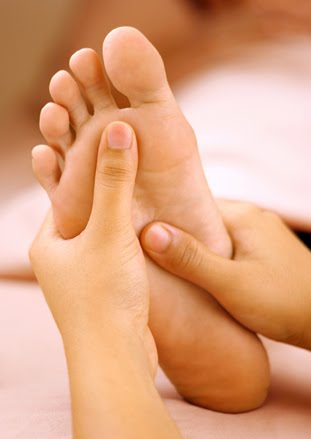
One child who did not like the hand massages, would sit still for foot massages. A neutral oil (no essential oil) was used first to avoid sensory overload and was gradually introduced. This technique worked for gaining his attention before a new learning experiences such as group games or counting games.

In her conclusions, Jane states that "being aware of the often negative effects of sensory stimulation to children with autism, I had not expected the positive way the aromatherapy sessions were received. For all of the children, the experience has led to new opportunities for interaction & communication."


Overall, Ms. Ellwood concludes that the children reacted with interest and activity to the stimulating oils (peppermint & Eucalyptus) and receptiveness and calm with the calming oils, Neroli, Sandalwood and Roman Chamomile. However, the oils paired with the activity (massage, relaxation, etc. ) may also be a contributing factor in the outcome.

(Ms. Ellwood's study was published in Vol 1 • No 3 ~ Winter 2002-03 of  "In Essence"- the quarterly Aromatherapy journal of the International Federation of Professional Aromatherapists)

Its important to not that before you introduce this type of sensory activity to your child check with his or her therapist or medical doctor. Also, be sure to use only natural essential oils and foods (coffee, oranges, lemons, basil, sage, lavender, etc.). Artificial scents, fabric softeners, & fragrances contain many chemicals that can cause headaches, nausea and other undesired affects on a child with sensitivities.

There are both strong supporters of this practice as well as others who say the effects cannot be proven. Most affects can be observed but are difficult to scientifically establish. You have to make these decisions for what is best and what will work for your students/child. It has been my own experience in a self contained classroom setting and with my own daughter, (who is not sensory challenged) that aromatherapy has a positive effect with careful application, dilligence & time.

A simple sensory activity to do with your child is "Scented Salt  Dough". You can encourage your child to help you make this simple scented dough, and then use like clay to incorporate a variety of skills & sensory experiences (kitchen activities and "following a recipe" in general help improve auditory processing, visual processing, proprioception, fine motor skills, tactile senses, olfactory sense,  language and socialization skills.)

You can also add rice, sand or other grainy substances to a different batch to  increase the tactile response. (I don't suggest combining both scent and texture until after both types are introduced to the child/children and gotten used to.)

Some natural scents you can add to the dough: (be conservative & aware of what you are adding  & whether or not a child has known skin sensitivities.)

Stimulating: Instant coffee, peppermint extract,  lemon extract, pumpkin pie spice, cinnamon, ginger, ground cloves, basil, cherry kool aid,

Calming: vanilla extract, lavender, Roman Chamomile, Neroli, honey, anise extract, licorice or fennel


The dough can then be allowed to harden & painted for an extra creative & sensory experience!

For salt dough recipe and other sensory games & activities please visit our web page at: BodyLogique.com 


To order a copy of "Calm & Connected: Yoga-Based Tools for Self-Regulation" (filled with dozens of simple, kid-friendly relaxation techniques) please use this link.

Calm & Connected
by Barbara Gini

For more information on Aromatherapy and autism, visit:

Aromatherapy-ADHD & Autism

Evaluating Aromatherapy Massage  Effects on sleep in children with autism

Aromatherapy for ADHD 


Receive S.M.Art Kids / Healthy Kids by Email


.
.