Showing posts with label art. Show all posts

Friday, March 21, 2014

Pinwheels!

IMAGE: Barbara Gini
www.recprograms.com 
Pinwheels!!

I remember picking pinwheels out of my Grandmother's Rose Garden, and my Grandfather's vegetable garden, and running around the yard with them when I was a child.

My Grandparents used the Pinwheels to scare away the birds and rabbits, and to keep them from eating and pecking at the flowers & the vegetables, but I knew that in reality they were Magical Fairie Wands...

In addition to stimulating creative imaginary play, what else can kids learn from playing with a Pinwheel? 

Well, for one thing, they can learn how to direct and control their breathing, which helps with singing, speaking and self-calming. By doing this they also develop oral motor skills when puckering lips to blow on the wheel...this helps develop the muscles we use for speech. 

A Pinwheel also helps stimulate the visual sense with its color and movement, which is important for strengthening the eyesight (rods and cones) and ocular muscles that assist the eyes in tracking a moving object. This skill helps with reading, writing, sports, and just about every other activity that kids engage in.

They also can learn science-(particularly about air currents and using wind power to generate electricity by using a large Pinwheel (called a Windmill.) 

What else can they learn from this simple toy?

This pretty Pinwheel (in the picture above) has been outside on my patio shelf all Winter and has survived the cold and stormy weather. I think I am going to need some more of these for the upcoming Spring and Summer fun! 

Watch our Promo Video for Spring / Summer 2014 and be sure to Visit our Web Home at: www.recprograms.com 

You can also stay in touch by following us on Facebook and on Instagram @RecreationEducation

Happy Spring everyone!


Related Reading:

Pinwheel Designs- Coloring book

Pinwheel Board Book (ages 3-6)

The Pinwheel Project

Pinwheels for Peace

Pinwheels for Prevention


.

Saturday, April 20, 2013

Ink


Photo: http://www.nohscbwi.org


A short post today:


 I felt a need to post something inspirational today, after the week of events that the US and the world has witnessed and experienced. 

The post below comes from an actual experience of my friend Lisa, who is an elementary school art teacher in Camden NJ.

I could not have relayed this message any better: sometimes a simple activity can have a huge impact & speak volumes to a much bigger lesson.

Hoping everyone has a peaceful weekend.


"Today we used gold and silver scratchboards for a 4th grade art project. This was what happened when a new student used his tool and saw the gold for the first time:

"Oh my god, this is beautiful"...


scratched a little more...

"This is amazing. SO beautiful"...

a little more scratching...

"This is SOO beautiful, I could cry". ..


He had me smiling at his amazement and enthusiasm, for this little black ink covered board.  He made my day with his joy over this project.

In a world that seems insane, crazy and falling apart, have faith that there are still children who are inspired and encouraged by the simple things. 

Help your children uncover the "gold" under the "ink" of life."


~L.W


Contact: barbara@bodylogique.com 


.

Tuesday, May 29, 2012

Sand Dollar Shakers

Photo: Avian Cetacean at Flickr.com
I've always been fascinated with sand dollars. A variety of legends & associations have been made by beachcombers who run across the bleached skeletons of dead sand dollars on the beaches of the world.

They are sometimes said to be coins lost by mermaids or the people of Atlantis. Christian missionaries found the fivefold radial patterns on the outside and the dove-shaped pieces contained inside to be symbolic. 'Aristotle's lantern' and other associations have been made with the distinctive 'keyholes' of sand dollars.


One of the sensory activities I like to do in the summer with the kids is to make "Sand Dollar Shakers". This simple project and game helps develop visual and fine motor skills, concentration, auditory processing and mid line skills.

The materials are simple and inexpensive: small paper plates, rice, beans or sand, white glue and markers. You may also need some scissors depending on if you decide to draw the design on the plate or use a template and have the students cut it out. (See video below)

The best way for me to show you & explain how to make these is with this quick video I made last year:


After you make the Sand Dollar Shakers, and they dry completely, you can use them as props for movement games to help further develop auditory skills and body awareness. "Shake & Stop" is a fun & simple game (Much Like "Simon Says") where the leader will give instructions and the group follows.

For a complimentary copy of the "Shake and Stop" game, please e-mail:

Related Articles:

Ocean Surf-ari Yoga 

Sunday, March 18, 2012

Chalk

What do 12 year old girls do when they are challenged to turn off their electronics for a day?


(Find out below!)


Tuesday, January 3, 2012

Best Play Ideas of 2011 (New Year Blog Hop)

Happy New Year! and Welcome to our very first Blog Hop!
( I have been inspired by "Creative Connections for Kids" )

"What the heck is a blog hop?" you ask...

A blog hop is a great way to connect with other bloggers, find information & share ideas through a link list that is duplicated and posted on multiple blogs.

When several blogs put the same link list code on their blog, the exact same list appears on each blog. Visitors can easily submit their link entries on any blog that contains the list. All link entries will appear on each blog where the list resides. Blog readers see the same list on each blog, and can "HOP" from blog  to blog seeing that same list of links to follow.

You are invited to submit a link! At the bottom of the list, you will see the words You are next... and a link "Click Here to Enter". Click that link and follow the simple instructions.

I'd love to see some of your favorite post links from 2011, from Educators, Therapists, Parents and others in the Special needs community, relating to play, art, story or yoga (or movement) based activities for children with and without adaptive needs. (Also feel free to post personal insights and other educational & informative articles!) There are quite a few already to get you started...(175 as of 12:21pm...)

Don't forget to Like, Join & Follow as many of these fantastic blogs as you'd like to!

Then post the code on your blog and pass it on!

Ready?  Let's BLOG HOP!

~Barbara

*For questions or problems please contact barbara@bodylogique.com
.

Saturday, November 5, 2011

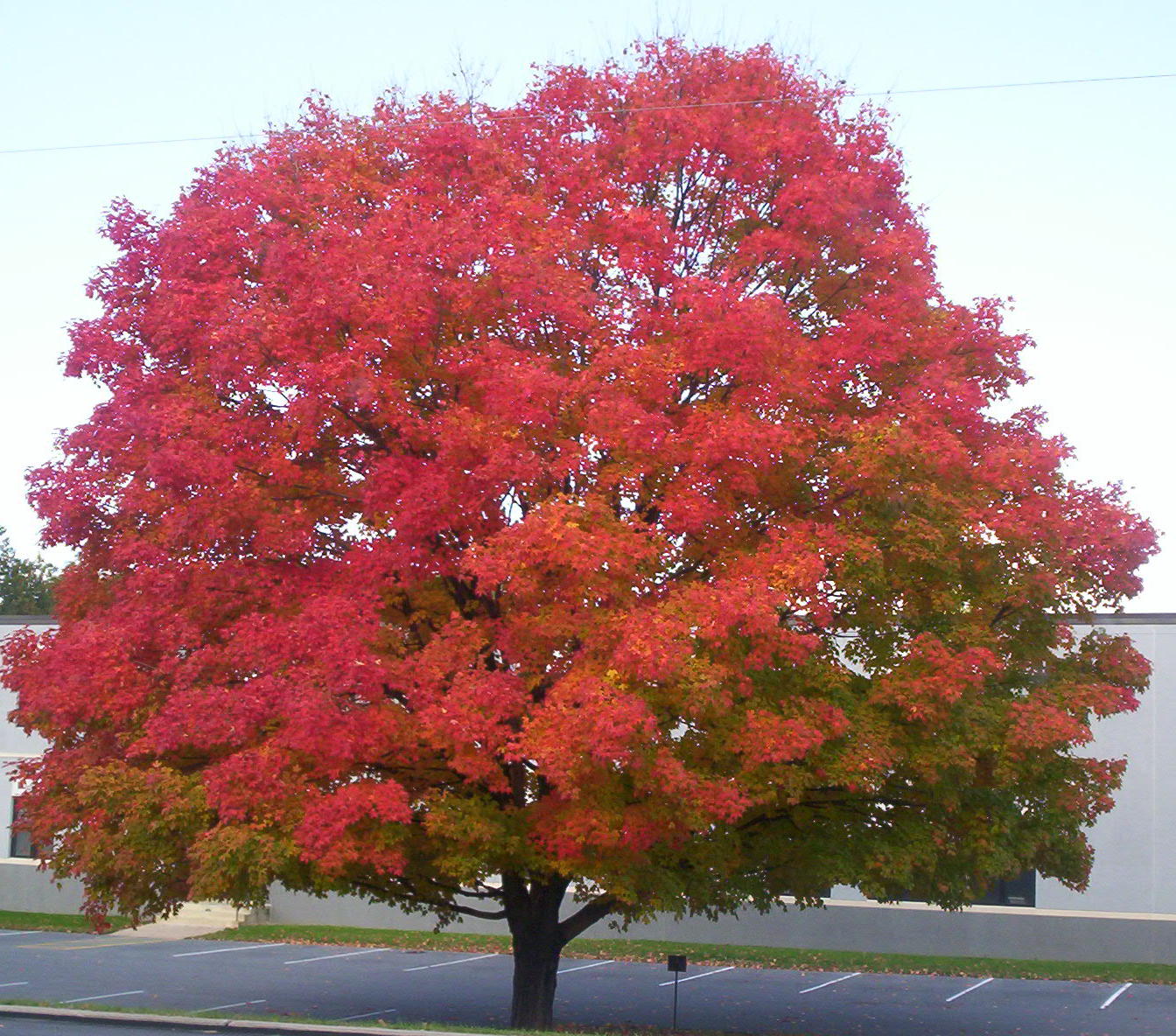
Living in Color

Photo by: B.Gini ©2006
(Tree at Cornwall Inn) 
I love taking walks in the woods this time of year. The colors of the foliage is absolutely beautiful and so restorative & healing to me. My daughter often refers to this time of year as "Living in Color". 

I remember once taking my daughter for a walk in the woods near our old home in NJ and helping her collect pine cones & leaves-of all different colors. We took her treasures home and made a colorful collage out of them. "The colors make me feel happy", she said to me when we hung it up on her wall. Was she referring to the activity we did or does color really have the power to affect our mood?

Everything around us is energy. If you have ever felt the vibrant energy of the colorful fall leaves-or that of a vegetable, herb or flower garden surrounding you, then you have felt that connection not only with your physical and emotional senses, but also with that part of yourself that we refer to as our spirit.

Color is a form of non-verbal communication. Colors say something to us when we look at them. What colors make you feel happy? Agitated? Color consists of many different energy patterns which vibrate at different frequencies. The reason we see color and the reason it makes us feel a certain way is because these vibrations are received by the color receptors (cones) of the eye, which then translates that pattern into a color & sends that data to the brain. The brain then begins the release of hormones and chemicals depending on the messages it receives & interprets. When the energy in one part of the body is out of balance, a chain reaction will begin leading to changes in all systems and organs as the body tries to restore balance. By surrounding ourselves with and looking at a particular color we may stimulate or suppress pituitary and pineal glands (located in the center of the cranium). These glands regulate the hormones for metabolism and growth of the body, sleep patterns and blood pressure functions, appetite and thirst sensations.

Since ancient times, every culture has used color for various art, customary rituals and clothing. It has long been known that light and color can have an effect on the body, the mind and the emotions. Colors on the walls, in art, in clothing and on furniture can energize calm, uplift, depress, irritate, anger and even heal. The use of light & color has been explored as its own form of holistic healing called Color Therapy or Chromotherapy. Although it has been deemed pseudoscience by its critics, citing the placebo effect, many therapists & educators feel that there is some use for color as a practical tool in daily living. It can provide a simple way to enhance the environment of adults & children, whether it be in a traditional classroom, and afterschool program or in a yoga class.

The origins of Color Therapy dates back to the Egyptians. The vibrant colors of nature were reflected in all aspects of their lives: floors of temples were green or blue (grass and water). They believed that red, yellow, and blue affected the body, soul, and spirit, respectively and used colored gemstones and crystals as remedies for many diseases. The cure was believed to come from the activated energy of the color of light reflected by sunlight.

Ayurveda refers to the Chakras as sources of subtle energy. Chakras represent the Life Force and energy of the entire body and are depicted as 7 circular areas that form a vertical line from the base of the spine to the top of the head. Each of the centers corresponds to a color and in turn an emotion as well as an organ, system or gland.

Color therapy is also applied in the practice of Feng Shui which uses the placement of furniture, plants & objects by shape, element and color encourage & ensure harmony & balance.

During the early 20th century, Rudolph Steiner, an Austrian philosopher, related color to form, shape, and sound suggesting that certain combinations of color and shape have either destructive or regenerative effects on living organisms. Steiner’s work was continued by many researchers all finding evidence that color preferences demonstrate states of mind and have measurable and predictable effects on the nervous system.

While more controlled research needs to be done, early studies are encouraging. In one study, 98 percent (49 out of 50) of participants with migraine headaches reported relief after being treated with goggles that alternately illuminated the right and left eyes with red light. (The Journal Headache, July, 2008)

The most clinically supported use of Color and Light Therapy includes the use of light boxes in the treatment of Seasonal Affective Disorder (SAD) & other mood, sleep & stress-related disorders.

Using Color in daily life can involve exposure to colored lights, art, furniture, plants & using imagery. This can help calm disrupted energy within the body and bring it back into balance. (Practitioners use this for both physical and emotional challenges, treating the body as a whole, rather than just addressing symptoms.)

In traditional or yoga, education or therapy, (OT, PT, SLP) or even at home, using colors strategically can help enhance the learning environment & the effects of the activity, lesson or therapy you are administering. Since each color has a different effect or association, try to match this with your expected outcome of the lesson or session. For example, if your student is lethargic, surround him/her in red or violet to envigorate re-energize and shift the mood into a positive direction. If your student seems anxious, restless and can’t seem to find concentration, Blue, Green and Indigo will calm & ease physical, emotional and mental tension and bring improved awareness and better concentration. Try accenting the sensory room with soft colored lights, mats, shawls, gems, candles, paintings, tapestries, plants, table cloths, shades, etc. (See Color Meanings Below)

Another easy way to incorporate color is to use imagery. Ask your student to close their eyes & imagine for a minute that he/she is a tiny balloon. Each time he breathes in he gets bigger and floats higher and each time he breathes out he releases some of that beautiful color into the sky. You can assign each child a specific color based on the effect you want the imagery to have or let them imagine their own favorite color. (Always prepare them to be brought out of the imagery gently and gradually by suggesting they imagine they land gently on the ground, wiggle fingers, toes and on the count of three, they can open their eyes.)

The Meaning of Colors:
In each category, consider all degrees of color and shades in that group, from jewel tones to pastels. Experiment & see what works.

RED: is beleived to stimulate brain wave activity, increase heart rate, respirations, blood pressure, and adrenal glands. It warms us and awakens us physically and has been applied to improve circulation. It is a good color to wear when we have low energy due to colds and poor circulation. (CAUTION: Too much red can over stimulate, agitate and make the illness feel worse.)

ORANGE: is the color of joy, creative energy and internal connection. It is believed to stimulate appetite and it is a good color for improving creative problem solving, clearing the lungs & balancing hormones.

YELLOW: is the color of wisdom, personal power, intuition and emotions. It energizes, uplifts, relieves depression, improves memory, stimulates appetite and has been applied to help with digestive problems.

GREEN: has a calming, balancing effect on the nervous system. Green sooths and relaxes, eases depression, anxiety & nervousness. (Since green is associated with and said to stimulate growth, it is suggested to be avoided in cancers and other tumors.)

BLUE: is calming and cooling & is often used to counteract stress & hypertension. It is the color for overall health and connects us to our higher thought and make us open to learning new things. (Too much blue can overwhelm and depress the system.)

INDIGO: is the color for healing. It is said to enhance immunity and connect us to our unconscious self.

VIOLET: is cleansing, strengthening, and awakening. It has been used to suppress appetite & in restoring a peaceful environment. It is supposed to affect the bones and has been applied to improve auto-immune conditions, cancerous illnesses, and arthritis. It has proven to be an excellent color for relief of eye strain, headaches and migraines.

WHITE: The color of Spirituality, softness, purity and Peace. Has been used to neutralize negative thoughts/emotions. (Too much white can be over stimulating, blinding & cause headaches. Substitute more subdued crèmes, beige or ivory shades if this is the case.)

BLACK: Black is the absence of color. It conveys mystery, mourning & rebellion. It is also grounding and calming to some, especially sensory challenged children and teens. Incorporate or simulate black by using softer lighting. (Use sparingly! Be sure to balance the use of black with other uplifting & energizing colors.)


• Use for Calming:  Blue, Green, Turquoise, Silver

• Use for Alerting:  Red, Pink, Yellow, Gold, Orange

• Use for Maintaining Balance:  Purple, Lavender, Green, Turquoise

• Use to Neutralize or Unify:  Brown, Beige, Ivory, Gray, Black, White


*What are some of the creative ways that you "Live in Color" and have used at home or in the clasroom? We would love to hear about your experiences! Please leave a comment in the space below.
 

Contact Barbara at: www.bodylogique.com

.

Monday, November 22, 2010

Peace in A Jar

In a perfect world, we all would have some 'Peace in A Jar'. One we could keep on our desk or on our window sill. All we would have to do is open up the jar and let some 'Peace' out whenever we felt stressed or anxious and boom-all of our stress would be gone, and problems would be solved!

In reality, we know its not that easy. For both adults & children struggling with stressful lives, bullying, learning roadblocks or medical conditions, its even more of a challenge for us to first teach them about these abstract concepts,and secondly to navigate them through their struggles and empower them with ways to manage and overcome them.

'Peace In A Jar'  is another visual art tool I use in my children's yoga classes to illustrate the abstract concepts of  stress management. (for the adults, we call it "Serenity Jar" )

I was introduced to this idea through a children's book called  "Moody Cow Meditates"  by Kerry Lee McLean. In the book it was referred to as "mind in a jar". Whatever we call it, I have found that it has several very useful functions & and can be a simple visual reminder for adults as well. "Peace Jars"  are simple and inexpensive to make. I know several teachers who have creatively adapted this for their classrooms with success as well.  Each child can make one of their own, or there can be one single family/classroom (or office) jar.

Assemble your supplies
First, assemble the following items: a jar with a tight fitting screw top lid-(I prefer to use plastic ones for children-to avoid accidental breakage. Plastic mayonnaise or peanut butter jars washed thoroughly and the label removed work very well.) , lukewarm water, craft sand or fake 'snow' (found in craft stores), large glitter (do not use fine glitter-it does not work as well for this project) a few plastic sequins or confetti pieces, corn syrup or glycerin (found in a pharmacy), labels or paper and tape.

The simple steps are as follows:

Mix sand & glitter together
1-Mix the sand (or artificial snow) with a small amount of glitter & and add in some sequins until you have a colorful mixture. Set aside.


Add water & glycerin to jar
2-Pour water into the jar about 2/3 of the way to the top. Add some corn syrup or glycerin, until liquid is about 1/2 inch from the top of the jar. Mix well.


Label your "Peace Jar"
3-Take a label (or paper) and write "Peace Jar" (or "Serenity Jar") or on it and attach to the outside of your jar.


Add a scoop of sand for each time you felt angry 
4- Now, instruct your child or students to think of a time today, or this week, when they felt angry. Take a little scoop of sand, and dump it in the jar. That is their anger. Think of a time you (or they)  were upset or sad. Take another small scoop of sand and dump that into the jar. That is your sadness. Do this a few times, putting small scoops of sand into the jar, for every time you got upset.


5-Now, put the lid on the jar tightly, and shake it up. All the particles & debris will swirl around in the liquid like a tornado, making it look cloudy and dull. This is what happens inside of us when we are upset or angry. All our thoughts & feelings get stirred up and we can't see the situation clearly much less think clearly about what our choices are.


As the sand settles so does our anger
6-Then, set the jar down on a stable surface and watch it. Don't touch it, just watch. As the jar sits still, you will notice all the particles begin to settle to the bottom. We may have to sit and observe for a bit, but eventually, every particle of sand or glitter settles. This is what happens inside of us when we can settle down, observe &  remain still and quiet. All the thoughts & feelings swirling around eventually fall to the bottom, and we can see, think & understand more clearly and know better what choices to make.


For children, I expand the imagery to think of all the shiny sequins & glitter particles mixed in with the cloudy sand are like those feelings, friends, memories and circumstances that are happy & uplifting to us-the spots of 'light' (Serenity & Peace) in our sometimes murky & challenging lives. If we don't take time and sit still and look for those "shiny sparkly things"  as those heavier particles settle, we will never see them  or even know that they are there. This exercise teaches us to look for them as well.

From a sensory aspect, this is not only an exercise in focused attention, and strengthening concentration skills, but also a tool for visual processing-looking for the "sparkles" in the swirling sand. (One little girl called them "stars" and made wishes on them. She called her project a "Star Jar"

When having a rough day, the child can shake their jar, and set it down & be instructed to just sit still as they can, breathe & watch their jar until all the sand settles. By the end of the few minutes it takes for the particles to drop they will feel calmer. Its another way to teach the vital life skills of patience, observation, self-control and self-calming.

It also illustrates that those things that upset us are always there, mixed in with the 'glitter', but if we can learn to calm and focus ourselves when things get 'shaken up', we can get control of our feelings, instead of our feelings getting control of us. Its up to us to decide which to focus on: the 'sand' or the 'sparkles'.

At this writing, my jar is almost full of sand & glitter. However it has become progressively easier for me to focus on those little tiny specks of light as I watch the sand settle.

When your jar gets full & starts getting too cloudy, you can just empty the water & discard the sand/glitter-letting go of all those irritations they represent and start over again.

As time passes, you will find that you put less and less sand in the jar-and find more and more 'Peace' within yourself .


To learn more about stress management for kids visit:
www.bodylogique.com

To order the "Moody Cow" book, click here

Tuesday, October 12, 2010

Developing Character Through the Arts

You can stand tall without standing on someone. You can be a victor without having victims. ~Harriet Woods

The above quote is referring to a core standard of good character which is to treating others as one would want to be treated.  We define character as 'moral or ethical strength.'


As a society in general I think we-especially schools, teachers (and parents)-tend to mistake good behavior for good character. What we are rewarding & subtly reinforcing is docility, suggestibility & compliance. In reality, we are not nurturing good character, but creating the child who will do what he is told. (Or even better, the child who will do what we want without even having to be told.) What we value most in children is what children value least in themselves. Its no surprise that any effort to 'teach' good character, through "Character Education" Programs or "Anti-Bullying" or "Bully Prevention" programs are statistically shown to be only minimally effective; and maybe its because we don't recognize-nor reward or reinforce good character when we see it.

I don't beleive that character is somethig that gets 'taught': rather, Children will naturally develop character if and when they are guided through their everyday challenges properly and through their decision making process. They learn it through having consequences for hurtful actions and for seeing positive outcomes when they put forth their best effort.

They need a healthy outlet for creative problem solving and support at home as well as at school. It is not entirely up to the school to educate our children, especially when it comes to character. A parent is the child's first and best teacher. It should start in the home, with the example you set & be a team effort extending to the school environment & beyond.

A child spends more hours at school than he does at home during the academic year, so there needs an atmosphere of mutual respect, approachability and a consistent example at school as well. I know a guidance counselor who is in charge of a local school's Character Education program who illustrates my point.

In a recent incident between my daughter and a few of her classmates, this counselor, in an effort to resovle the issue explained to the girls that gossiping is bad and hurtful and they should not involve themselves in it at all. She had them do some group hug thing and sent them on their way.

A few days later, my daughter was waiting in the office for me as an early dismissal and when she got in the car she told me, very indignantly,that the same counselor-along with another teacher, was having a detailed, negative and complaining conversation about a particular student-and his family-who she happens to be friends with. She was very upset & asked me how she could ever trust or take the counselor seriously again? She also astutely recognized that if she was talking about that family, does she talk about us too?

Kids can spot a phony and a hypocrite a mile away, and they will call you on it. And they won't ever forget the betrayal. My daughter learned more about good character in that 10 minute observation than she has in a whole year of "Character Ed" class. My job is to keep the communication open-when she comes to me, I actively listen and help her make her own assessments of the situation. I ask her leading questions about what other choices were available. I try to do this in a non-judging way so that the teaching moment is not lost in that-or in unnecessary drama. I always ask her a final "what is the lesson?" and I give her my take on it as well.

So other than purposely exposing our kids to hypocritical people, drama, pain and suffering, (Which I strongly discourage!) how do we help instill in them and further develop good character?

I haved been working on that answer for more than a year now. I know that we have to do things differently than we have in the past. We need to innovate and involve them in the process, rather than impose more restrictions on them. "Zero Tolerance" policies and punishment does not work for teaching character or for even discouraging inappropraite behavior or ensuring compliance with rules. It only breeds resentment and more opposition,not better character. There is no dialog, no thinking nor discussion about what the better choices would have been and possible outcomes.

Its been widely known that the arts greatly contribute to all student's academic success and emotional well being. The ancient art of storytelling can be utilized easily in many environments in & out of the classroom. Storytelling is the basis of the "S.M.Art Kids® Adaptive Yoga program, and now is the basis of our Character Arts™ Program.

Storytelling is easily adaptable to all ages and all abilities. No special equipment is needed to create an imagery-just an audience, a speaker & the imagination. As a learning tool, storytelling encourages students to explore appropriate ways to express themselves and improves communication of thoughts & feelings. The storytelling process can even be adapted to use pictures or sign language for children with limited language skills.

Folktales & other stories are a creative, non-competitive & non-threatening way to guide young people toward positive personal values by presenting hypothetical situations in which the results and consequences of both 'good' and 'bad' decisions can be observed. They can identify with the characters, their challenges & their actions through experiencing & becoming the story. This teaches creative problem solving, which is a vital skill that can be applied in a variety of settings.

This skill is strengthened when the student is encouraged to write & tell their own wisdom stories-based on real or imaginary scenarios, and guided to incorporate visual art-in the form of illustrations, props, masks, puppets, mandalas, art journals, story sticks and more into the process. The lesson now becomes active rather than passive & much more personal & meaningful and hence, more integrated into everyday life.

Through this unique medium, these skills are learned easily & in support of character development. Telling a personal story, and listening to others tell theirs helps define a child's individual and unique self-worth, and allows them to acknowledge & respect the worth of others without competition, over-compensation or prejudice. Storytelling allows children to "unplug" from all the electronics surrounding them & is a compelling way to remind children that their spoken words are powerful, that listening is equivalent to understanding, and that clear communication between all people is an essential art.

Other benefits of Story Arts include development of expressive & receptive vocabulary & verbal skills, cultural education & strengthening the imagination. These skills can naturally be molded to self-confidence & motivation as students learn to focus on & envision themselves competent & able to reach & obtain their goals & dreams. A socially mature, emotionally strong, creative, confident child will be less likely to underachieve, undermine or judge others or to be taken in and overwhelmed by the massive epidemic of manufactured drama, insecurity, competition, hatred & fear that seems to permeate & infect society.

Confident and self-aware children are less likely to become a statistic: a victim of (or a participant in) teasing, bullying, depression, eating disorders, domestic violence, addictions, suicide and other forms of violent behavior.

Story telling & the arts in many forms are usable tools that if introduced at an early age, can help children feel more safe, see more beauty and good in the world & provide an appropriate outlet to neutralize & overcome the disturbing social & environmental messages, situations & obstacles that they are exposed to daily. It is not only possible, but is being accomplished today though many organizations.

Along with Movement & storytelling, Visual art is one of the most beneficial activities you can allow your child to engage in. In many ways, art can become a type of 'yoga' and bring many elements of human nature together. It can be a turning point, reinforcing simple lessons like creativity & balance, allowing brain & body to work together, minimizing the stress response and allowing children to independently create something beautiful & personally meaningful to them. I envision art being used to creatively reinforce and tangibly represent & remind the student of the idea, theme or "moral" of the stories.

The process of creating art also enhances communication, critical thinking & visual processing skills while developing the tactile sense, fine motor control & strengthens brain integration making it a perfect activity for children with learning challenges. It relieves stress & improves focus, making it a versatile, multi-sensory activity for all children.

It is never too early-or late- to introduce children to story telling or the arts. Its never too late to experience the process and excitement of finding their creative brain an using it to solve conflicts and problems-and to develop their own confidence & sense of good character: to know how to stand tall without standing on someone or to be a victor without having victims.


Subscribe to S.M.Art Kids / Healthy Kids by Email


.

Wednesday, August 4, 2010

Ocean Surf-ari Yoga

This week winds down the Wanna Play Summer Social Skills Camp. The theme of "Beach Yoga" worked so well the first week that I have used it  with all 4 groups for the entire 6 weeks. The children have responded well and for the most part have been very willing to interact with all the other children & other activities.

The format was the same each week to create a familiar routine: Get mats, sit down, take off shoes, practice breathing, "surfing" warmup, story or topic with poses, movement games and then finally an art project. The kids in my Tuesday class have been asking "Ms. Barb, are we doing art today?" for the last 3 weeks. The art has not only become a therapeutic outlet for self expression as well as a tangible symbol of the concepts they are being taught & shown, but also has become a motivator and a stress management tool.

Art has been used therapeutically since the 1940's. Art therapy is very different than other forms of therapy in that it utilizes and strengthens the creative process and is more accessable to everyone becuae we all, young or old, can be creative in some form or another! (See the article " Every Brain is A Creative Brain". ). Art therapy can be very beneficial to children as they have a harder time verbally expressing what they are expereincing & feeling as opposed to adults. They may feel "safer" and have an easier time expressing themselves through simple art projects.

Art can also aid a child in cultivating self-awareness, releiving stress or anxiety, integrating the sensory system & overcoming the challenges of learning disorders, autism, and other traumatic experiences. When a group art project (such as a mural) is planned, it can be a fantastic opportunity for refining social skills as well.

One of the first programs I worked with that recognized & embraced this concept of using art therapeutically as a form of communication & expression was the HeArts For Autsim Program.

This innovative monthy program is directed for children with autism and their siblings. Monthly activities are planned around a central theme and an art activity that is facilitated by volunteers.

I was asked to facilitate a yoga program for HeArts last year, and helped to establish the adaptive yoga program they are now using. We used the art activities along with yoga movement in a similar way that art is used in therapeutic environments, and it seems to be teaching skills and working in ways I never expected!

The other aspect of art is the unique interpretations and insights the children have. 

The Starfish project was a favorite-and can be used to teach many concepts. I used the imagery of a starfish-and the body in "Starfish Pose" (corpse pose or "savasana") as a relaxation technique. The starfish rests under the water-(weightless-cool) sinking deeper into the sand (safe-supported ) -where its quiet (rest-relaxation). Surrounded by beauty (visual processing-imagination) and kept company by other sea creatures (friendship-diversity) .


This week's Jelly Fish Project was well received too. I explained to the children that JellyFish are made of mostly water, have no bones, and no muscles so they are very floppy & can't move very well by themselves. They need to "suck in" and "blow out" the water to push them through and they need the Ocean currents to move them around-near food and shelter.


We rested in Jellyfish pose-Played Pass the Sea Urchin (a modified version of  'Funny Football" ) Played "The JellyFish Game" and made our own Art JellyFish to do the "JellyFish Dance" with.
I think I am all Jelly-Fished out!

Friday will be my day off-I am taking a trip with my daughter and some great friends to the actual beach. I am remembering the time that my (then 4 year old daughter) came running up to me excited by the "treasure she had found: to her it looked like a "tatoo necklace" so she picked it up and put it around her neck. I was horrified when I looked closer and saw that it was actually jellyfish tentacles! (Thankfully she was not stung-and we still laugh about this everytime we see "JellyFish Necklaces" at the beach!)

Maybe I will come up with some more beach adventures &  ideas for you while I am there!

Love & Laughter!

~Barbara


*Go to this link to order the complete beach themed S.M.Art Story™ curriculum: "Ocean Surfari"


Subscribe to S.M.Art Kids / Healthy Kids by Email


Contact: barbara@bodylogique.com


Related Articles:

Surf's Up!

Sand Dollar Shakers


.

Friday, July 16, 2010

Refresh Everything!

Everybody has a cause-something they are sincerely passionate about. Something personal that moves them to action, whether it be recycling, animal cruelty, education, etc.
So what is your passion? Art? Dance? The environment? What do you really care about? Education or Health reform? If you had the chance, how would you want to change the world? Maybe you are a teacher or a coach-mother-or an everyday Joe or Jane.  Regardless of who you are, what your passion  is, or even if you are looking for work right now, I can tell you that you CAN make a big difference in your community and your world.

Pepsi is giving people a chance to make a difference by giving away millions of dollars in grants each month to fund great ideas that will refresh individuals and communities everywhere as part of its 'Refresh Everything Project' campaign.

There are 1,000 submissions accepted electronically on a first come first serve basis each month in 5 different categories. There are 4 levels of grant awards ranging from $5,000 up to $250,000. Once a project is accepted, then the grants are awarded by community votes. A total of 10 grants are awarded  by most votes in each category.


I am very excited to announce that after 4 months of submitting my idea, my Refresh Project, The Creative Movement Project  (Which will bring low cost/free Adaptive Yoga & Creative Movement Classes to Children with Special needs)  has been accepted for the August round of voting that starts in just 2 short weeks!
My project was first conceived a few years ago when I worked in NJ as a classroom assistant and 1:1 aide to children with autism. I had always worked with children in some capacity & had done this specific work for several years under a very compassionate & talented teacher and a great team of 1:1 aides and found that this was my passion. 

As much as I love my work I have always had an inner sense that we could do so much more for the kids and the families. I started playing yoga based movement games- (something I had been certified for and never used regularly) during therapy sessions to break it up a bit and saw that it seemed to help the kids handle tension and to focus better, but most of all, they were laughing!

I kept using these techniques and even consulted with OT's, yoga teachers and other educators to refine my games. I did this right up until I moved out of the district to Bucks County PA where I now live. When I left NJ, I decided that I wanted to provide adaptive Yoga classes as an enrichment activity to families and schools in the community. I have been able to do that for the last 2 years in PA, and my Pepsi project will expand this work to include all children of all abilities, in PA, NJ and surrounding areas, especially those who are limited by financial restrictions. It will also provide equipment & training programs for parents and teachers so that they can use this program to help their children & students stay physically healthy, develop friendships and learn while reaching their highest potential.

While I was in the process of submitting my idea, I was fortunate enough to meet 2 amazing & passionate people I'd like to tell you about. These are my "Pepsi Refresh Partners" and we are three separate projects supporting each other through August's round of voting. Their stories are below and I encourage you to read more about them by clicking on  the links!


David M. Serotko is the founder of Multiple Sclerosis Dreams, Inc. (www.msdreams.org)  In late August 2006 he was preparing to complete his Associates Degree. A few days before school was to begin, he started to feel very off balance & suspected an ear infection. His toes were tingling and almost numb. Although an initial visit to the doctor turned up 'normal", the symptoms worsened into severe dizziness & nausea. David contacted his doctor with grave concern & was given an MRI. It was confirmed in September that he had MS.

Within a few weeks he fortunately improved to a point that was better, although he still had the "MS hug" and trouble with balance. Through it all he was able to complete his degree, in David's words: " At the time I owned my own computer consulting business and lost several clients because I could not service them due to my illness. At that moment, I realized that life can change in an instant &  that things I wanted to do later in life may not be a possibility. It was the hardest thing I had ever been through."

After several moves and experiencing layoffs & job discrimination, he and his wife made two trips to Maui and lived life to its fullest. He flew in a helicopter for the first time, drove up a volcano & hiked around it, met some wonderful people, "and had the time of our lives..." .
"The reason I founded this organization is that I want everyone with Multiple Sclerosis to be able to fulfill their dreams. I was fortunate to be able to do many things and want the same for others in my boat. Whether we enable you to do something you have always wanted, or give you hope that things can happen for you, we will make a difference. No one should have to live their life feeling like a disease will keep them from fulfilling their dreams. I am not going to accept this, and neither should you. Together, we will make dreams come true for people with Multiple Sclerosis!
David's "Multiple Sclerosis Dreams" project will help those dreams come true for so many!


Kris Courtney: The REAL Color of America:

American Artist & Author Kris Allen Courtney, drawn to benevolence and disability awareness by his own personal experience, from his struggle as a child born into years of surgical intervention, (being in a body cast at only 3 days old)  to an ensuing lifelong continuous health struggle, has created ‘The REAL COLOR of America’ Project. Through this project, he is dedicated to service and participation for all beyond their disabilities. Kris’ art is bold and thoughtful in its message to the viewer and invites you to pause. This energy opens Kris to the strife and parallel beauty of the real color of life surrounding us all.

"The "REAL Color" project is designed to use art to bring a spot-light awareness to cities and towns across the country in need of inclusion. Through the travels across America, this project will create a unique abstract map of the cities and communities visited as well as the people of all abilities who participate."  Kris creatively uses open plein air creations coordinated with Local Fund Raising Organizations geared towards poverty reduction, food, special needs and disabilities, to create a beautiful medium for a truly inclusive American Art Exhibit. A gallery has generously offered to house the completed pieces.

Kris's book, "Norma Jean's Sun"  is painfully reflective yet ultimately hopeful. A story told through the eyes of a boy who believes he has been mistakenly born into the world and a man who conquers physical and emotional injustice--and thrives. The memoir  reveals not only the struggle and heartrending elements of generational lives “gone wrong,” but also the love and growth of a human being overcoming the odds and determined to find a way to live life to the fullest.

Kris's "REAL Color" project will allow many others to do the same.


From August 1- 31, I am asking you to please go to the Pepsi website and vote everyday for these 3 "Pepsi Refresh" projects that will impact so many individuals and communities in a positive way. It only takes a moment of your time. You can go to the Pepsi website for more details, and you can even sign up to get e-mail voting reminders here.

These 3 projects can also be followed on Facebook and Twitter. We will be posting updates on our respective project progress so please check back for any developing news!
Thank you for your passion & your support! We know that together, we can refresh communities everywhere by including everyone & helping all people make their Dreams come true!

Love & Laughter
~Barbara

www.bodylogique.com

BodyLogique on Facebook

BodyLogique on Twitter

The Creative Movement Project


.


Tuesday, June 1, 2010

Every Brain is a Creative Brain

 I do not seek the meaning of creativity. I seek the experience of being creative.
               ~Unknown


Have you or someone you know ever said this?
 
 "Oh, I'm/my son is/my daughter is just not creative..."

Science tells us otherwise: Every Brain is a Creative Brain.

It has been long believed that the right side of the brain is the 'creative' side and the left is 'analytical'. Artists, musicians and writers are considered 'right brained' because they are creative & engineers, computer programmers & accountants are considered 'left brained' because of their analytical natures. Scientists now know that this is not completely true. In fact, many artists are considered to to be 'left brained' & many accountants are considered to be 'right brained'. Here is why:

Learning to sculpt, draw, paint or to play music are skills developed by following a template or pattern that is already in existence. (Such as a musical score, a 'still life' or portrait painting, or a sculpt of the human form.) Many accomplished portrait artists would not be able to paint a portrait, and object or a scene from memory, without having the subject right on front of them. This is a quality of the analytical, left side of the brain.

The right brain has the ability to think up & create something that has never been before-and not necessarily based on anything real. This would place abstract art under this (right brain) ability.

This is where the idea of 'right brained' people being creative originally came from. The truth is, that you, (and your child) can be either left or right brained and still be creative.

One way to stimulate creativity is to expose yourself (and your child) to fun, positive and varied social environments. While some children (and adults) tend to resist new social experiences, they are so important in many ways. They help a child to better understand people, cultures, themselves, the world we live in, & think of creative solutions whether it be problem solving or artistic expression. For adults, a positive social environment can be the difference between staying motivated & stagnating, whether socially or professionally.

Another way, and on of the easiest & best ways for adults & children to stimulate & enhance creativity is movement- play movement games, walk outdoors, swim, dance, yoga, karate, wash the car, dig in the garden, etc. All of these activities help to enhance creative thinking and reconnect the left and right sides of the brain. The TV, computer and other forms of sedentary activity don't help the brain to grow or to form new neuropathways or come up with any new or creative ideas.

Art, music, and reading/writing are other ways to stimulate creative ideas. It doesn't have to look perfect-it can be as simple as singing, or coloring with your child. (In addition, it will  increase focus, and reduce the stress response-which also inhibits creativity.)

The brain relies on stimulation in many forms to function as the amazing, creative organ that it is. Feed it with the right kinds of stimulation and it will always give you the wonderful experience of being creative.


For more information please visit:

Enhancing Your Creativity


BodyLogique Creative Fitness


.