Showing posts with label ADD. Show all posts

Tuesday, April 23, 2013

Adapting Yoga for Children with ADD


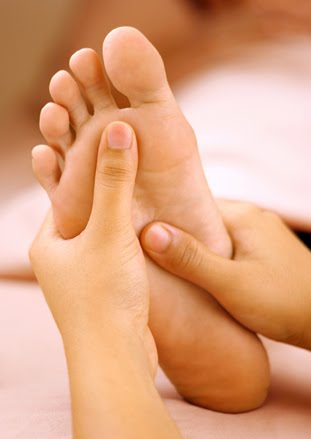
Photo: bodylogique.com 
I received a question several weeks ago in my inbox from an educator in Hong Kong, pertaining to constructing yoga classes & sequences for children with ADD.

My personal thoughts on how we diagnose and treat ADD could be a whole separate blog-(not just one single article-I mean an actual separate BLOG...) but to keep it succinct, I will just pose this question to you:

Do you find it odd that we place children-energetic children-who have growing bodies and curious brains-and a natural tendency to move and explore-into an 'educational' setting that not only isolates them from natural, active, outdoor play, but also directs all their activities and thinking, for almost all of their waking hours-some more than 12 hours daily if you throw in before and after school care--and then expect them to sit still, be quiet AND pay attention?

AND when they do not sit still, be quiet and pay attention as we want them to, diagnose them with a condition and recommend a course of 'treatment'?

Could it be that the "Attention Deficit Disorder" is actually a "Priority Preference Complex"- and the child is not paying attention because he/she is either bored, not mature enough to give you his/her attention, or has other priorities (playing) at the moment?

To put it another way: If a child was hungry or thirsty, would you deny them food and water? Of course not! Well, I feel that many schools deny kids other vital essentials-such as movement, sensory input, group learning activities as well as down (nap/quiet) time. We as educators and parents need to take back control of our kid's education and start using tools & methods that help support success and overcome challenges-not perseverate conditions.

This is one of the reasons I decided years to leave the traditional education system and become an independent educator. I now have the ability to reach and support many more children by supporting their parents and other educators-and therapists from around the world, in giving their kids more of what they need-in and out of the classroom.

Yoga is not the answer to everything, however it is a highly effective and adaptable method that naturally regulates the sensory system, and improves concentration when it is needed. It can be an activity that supports the other interventions that are put into place. Our kids need as much support and guidance as we can give them.

Below is the question I received and my response. Although it is directed at a question about a yoga class, it can be applied to any learning environment. (Some parts of the original e-mail  have been edited slightly to protect privacy) Please feel free to add any advice or resources you may know of  in the comments area below.


Dear Barbara,

Hope you are well!! I stumbled across your incredible work online on yoga with autistic children in Yoga in my school (http://yogainmyschool.com/2011/04/06/yoga-for-autism-with-barbara-gini/ ).  The reason I am writing to you is because I would love to seek your expert advice on teaching yoga for the first time to a child with special needs.   
I am a certified Basic Integral Hatha Teacher (200 YT) and was recently approached about teaching yoga to a nine year old child.  According to the father, the child has problems concentrating and has slight ADD.  I was asked to conduct a trial private yoga session with his child and so began my research on yoga for children with special needs.  

I would love it if you could perhaps share some words or wisdom, advice or online resources as I prepare my class structure- from what I gathered in your interview, being creative, using sound, repetition and simplistic language would be essential.  

Any help you can provide would be greatly appreciated!  

With gratitude,
Davina


 Hello Davina 
Thank you so much for the e-mail and I am glad you enjoyed the interview with Donna.
There is such a need for people to work one on one with children who experience these challenges. I blend a lot of different information and science to customize the activities and sequences.
Every child is so different-and the key is getting to know your student and being aware of the subtle personality quirks. Being creative (and sometimes un-conventional), using sound, repetition and simple everyday language in general is a good start, but you also must take into consideration the child's sensory tolerance and how easily they get overwhelmed. We want to take them just to the edge, but not over it. We want the experience to be one they will want to repeat instead of avoid, and in doing this we need to take care not to go the other way and give them no guidance or structure at all. Everything in balance.
In general, with ADD and sensory kids I work on first releasing tension through sensory input and weight bearing postures (disguised as games) and I focus on breathing & imagery for self calming. There are lots of activities that will stimulate & use the sensory system to calm anxiety and bring better focus.
ADD children will have highs and lows to their energy and its our job to direct it-not place a blanket  over it. Children like to move and the more movement (games are the best way to do this) the better. Gradually take them down to a calmer energy and give them tools to stay in that calm-ness for longer durations. 
ADD can be an asset if its directed properly. The problem is that kids are expected to sit and be quiet and compliant for long durations and its unnatural. My goal is to give them yoga and sensory-based tools so they can blend and function better in these unnatural environments.
I can give you some other basics and some resources or I can work with you more personally so you can gradually introduce methods with your student. In either case, I would love to talk more by phone or Skype if possible-there is so much information it would take me hours to type it!
Looking forward to talking with you soon!
Barbara
215-257-3193
Quakertown, Pennsylvania
If you have a question regarding a child with ADD or other challenges and would like a consultation or to brainstorm ideas by phone or Skype, please contact me at: bodylogique.info@gmail.com 


Related Articles:


Constructive Fidgeting for Self-Regulation

The Brain on Yoga

I Will not Allow My Exam Grade to Decide My Fate  (Video)

Easy Beginner Postures for Kids

In Case You Missed It: March 2012 (Article Links)

20 ADHD Accommodations that Work


To find our growing library of
Webinars and Conference Call recordings 
visit AnyMeeting

.

Friday, April 20, 2012

Its Friday! In Case You Missed it-April 16-20


In Case You Missed it... Its Friday! and we are back as promised with the top article links for this past week.


For those of you new to my blog, each Friday, we feature the top articles (archived and new) that are relevant to those who work with children with social, sensory and learning challenges. The purpsoe of this weekly post is to expand and improve the scope of resources & information for families, educators & otehr professionals. We want to build connections with diverse resources to help each other stay informed in the most straightforward and entertaining way possible.

To read the original article, click on the title link. (A short description as a quote or excerpt taken right from the article appears under each link.) The source is listed under the article title. Please feel free to share, with the original links & authors referenced.

If you have an article link you would like to add, contact Barbara at the e-mail at the bottom of this post.

Guest post submissions are always welcome!

Please report any broken links to Barbara at the e-mail link below.

Have a Fantastic Weekend!

~Barbara

barbara@bodylogique.com


Affection Deficit: Dealing with Students who Hear a Different Drummer
(Edutopia)
I had assumed that my son's interests in science & electronics would make him a great student. I was wrong. Instead, school has been an ordeal. Why? Because Cole will tune out what doesn't interest him. He can get lost going from one simple task to another, and his imagination revs up without warning, taking him from spelling quiz to intergalactic mission in a matter of seconds...


Autism, Inflamation & Nutrition
(Psychology Today)
Autism. The reason no one has been able to find a specific pathological cause or cure is because it is multifactorial - it seems that a combination of genetic, environmental, neurological, and inflammatory factors contribute to the development of autism. Today I would like to focus specifically on the inflammation and other evidence of nutritional contributing factors...


 Healthy Ways to Show Feelings (A classroom activity Grades pre-k to 2nd grade)
(Teaching Tolerance)
Individuals of all ages can find it difficult to identify and express their feelings in a positive way. At the elementary level, many students need a springboard for discussion. This can help make students more open about their feelings.


Redefining 'Normal'
(Stuart Duncan, Autism from a Father's Point of View)
Normal… that peculiar notion of fitting in with those around us. Not with society… but with those around us. In highschool, some people felt it was normal to be with the cool kids, others with the nerds and so on. At work, for me, the designers tend to fit in with other designers more so than programmers and programmers tend to fit in with other programmers better than designers...


The 'Sun Stretch' for Kids!
(BodyLogique.com)
Yoga can be used to release frustrated pent-up energy, to calm and relax in the classroom (before a test) at home (before bedtime) or anytime & anywhere the need arises. It helps build physical strength, character and confidence & can be done indoors or outside. No special equipment is needed. Our "Pose & Postures"Page is a feature to acquaint you with some of the things we learn in a typical play group or class. Try the "Sun Stretch"...


Contact: barbara@bodylogique.com


Subscribe to S.M.Art Kids / Healthy Kids by Email

Thursday, February 23, 2012

Senses, Stims and Stress

We tend to take our sensory system for granted until something goes wrong with it. We are all sensory organisms! Our sensory system provides us with the ability to interpret information about our body & environment through a variety of sensory receptors. Most of us have been taught that there are five senses: visual, auditory, gustation (taste), tactile & olfactory (smell). There are in fact three more: the vestibular (balance), proprioception (motion of the body ) & interoception (internal -hunger, heartbeat, breathing, bladder, etc.) that help us learn about ourselves and the environment.

Many OTs agree that vestibular & proprioception tops the list respectively, in priority in terms of human development. The sensory system develops before the ability to utilize the muscles & bones effectively for purposeful movement does. Ironically, movement is the only way to strengthen sensory/neural connections & strengthen the brain’s ability to process information and retain it in the long term.

If the neural connections are weak or not there, the brain will not know what to do with the stimulus it is now receiving through the senses. Science tells us that neural connections are created & strengthened through movement. A variety of daily movement & stimulation to each sensory system will improve the body’s/brain’s ability to refine movement, improve cognitive processing & reduce “stim behavior”. (This is the purpose of a Sensory Diet/ Sensory Integration Therapy.)

Stim Behaviors occur for a specific reason-as a sign of sensory, physical or mental stress. The sensory challenged, ADD or ADHD child is not being 'non-compliant'. They are telling you they are 'hungry' just as a grumbling stomach or dry mouth tells us we need nourishment. When we are hungry or thirsty, we eat/drink. Why then, when a child needs sensory 'food' do we deny them by prompting them to stop? To these students, this is the equivalent to withholding food and water.

Stims tell us that the body is imbalanced, the brain is overwhelmed and both are trying to re-engage. A stim is telling us that there is a bodily “craving” for something that child’s body & brain needs. (We all have stim behaviors. You are probably doing one right now as you read this.) If the brain/body cannot re-engage it will result in a stress response or as a full blown 'meltdown'. Once this happens, the child (and the brain) is no longer capable of learning-he is now in “Fight or Flight” /survival mode and the body/brain is in adrenalin shock-He cannot stop himself from the effects & cannot engage/cooperate/learn/comply until the adrenals get back to normal. This is what is called a stress response. Its vitally important to understand this effect and address it properly. Sensory diets are put in place for exactly this reason.

S.M.Art Kids® programs aim to assist sensory integration & minimize the Stress Response through 3 aspects: Stories, yoga based Movement & Art. Together, these tools help encourage stronger neural connections, a calmer central nervous system & improved focus.

Stim & Stress Strategies You can use:


  • Learn to read warning signs- (body language) Staring, yawning, fidgets, tapping, teeth grinding, etc. are all signs of the brain trying to re-engage. Try to determine which sensory system is 'hungry' and feed that one first. You will find that in most cases, if you address the sensory needs, the behavior will take care of itself. Learn as much as you can about each child's responses and rather then try to de-sensitize him or her, try to address it by giving them the input they need. You will find that they eventually will pay better attention.
  • Help children Release muscle tension-through self massage or “Squeezing Lemons” (help children imagine they are making lemonade-and squeezing the lemons into a glass. Imagine they are using each part of their body from head to toe to squeeze them-hands, elbows, armpits, knees, toes, etc. Its okay to be a little silly. If they want to imagine they are squeezing a lime, an orange, a Pink lemon-or even a blue one, go with it! The object is to get them to squeeze and release muscle tension.) This will help with body awareness and deep muscle input that helps the nervous system stay calm for longer.
  • Imagery is a simple and versatile tool where you will suggest a calming scenario for the children to follow. (Let's imagine we are on a beautiful beach, with big swaying palm trees, sparkling sand and crystal clear water....") Speak slowly, dim the lights and have them put their heads on the desk and follow your voice for 3-5 minutes. Always bring the "back" gradually by having them "wiggle fingers, wiggle toes, take a big breath and on the count  of 3, slowly lift your head and stretch..." always take a minute to get feedback. )  Works well as a transition or at the end of a test.
  • Employ other calming techniques- breathing in patterns (To calm, breathe in while counting to 3 and out while counting to 4), art (simple coloring pages-geometric patterns or mandalas are the most calming. ) music (instrumentals such as Native American Flute music or ocean sounds, thunderstorms, etc will calm children while keeping them alert.)
  • Re-engage in activity using different creative approaches to keep students actively  interested.
Summary:

In order to learn anything, the brain must be calm, focused & engaged. Our capacity to learn is greatly improved through sensory motor stimulation. Hands-on learning, incorporating movement breaks, experiential and group projects are the best way to to address these needs. We receive information through the eyes, ears & other senses for our brains to process it, recognize, organize & respond to it. When a child “stims” he is really trying to integrate the senses, to receive & process the information, regain focus, re-engage or transition to another activity & get the brain back in gear to complete a task.

For a fantastic detailed overview of the sensory systems go to: SPD Life


*This article is excerpted from our professional development course:

"S.M.Art Kids @ School: Engaging The Whole Child Through Stories, Movement & Art (Yoga Based Tools for Teachers)

To schedule a staff workshop for your school or organization, please contact: barbara@bodylogique.com

Saturday, September 10, 2011

Children, Yoga & Executive Function

Today I came across an article that  drives home the point of why our kids are so overwhelmed & stressed and have trouble learning. It discussed the importance of teaching children to focus, which is controlled by a mental process in the brain called "Executive Function".

Executive function is a term used to describe a set of mental processes that help us connect past experiences with present actions. It is the part of our brain function that controls the planning, organizing, strategizing, paying attention to and remembering details, &  managing time & space.

Executive functions include organizing, prioritizing, focusing, sustaining and shifting focus to tasks, regulating alertness and processing speed, managing & regulating emotions, and self-monitoring and regulating action (often called inhibiting). All of these skills enable us to formulate a goal, plan for reaching that goal, then initiate, sequence, sustain or inhibit behaviors to work towards and finally attain that goal. It helps us override procrastination & emotions that would otherwise interfere with these other important activities.
 
Children who have executive functioning weakness often have trouble with focus, attention, organizing, memory, time management, transitions, regulating emotions & dealing with frustration.

In a well planned children's yoga program, all of these important skills can be reinforced through targeted movement, guided imagery, interactive movement games, storytelling and deep relaxation.

As you read the list of executive functions above, it should be clear that these are all skills necessary for children to succeed in school, understand social interactions at home and in the community, and manage daily schedules and routines. Children with good executive functioning take all of these tasks in stride, but those with deficits in executive skills struggle with school and homework demands, social interactions, and changes in schedule. These ever fluctuating dynamics feel overwhelming & confusing.

Executive functioning weaknesses can be managed with a plan & consistent support. There are some simple strategies that can assist the child with weak executive skills. These include:
  • Maintaining a regular routine at home and school, as much as possible
  • Posting a daily schedule so the child can refer to it throughout the day
  • Informing children of changes in schedule, ahead of time (such as a doctor's appointment )
  • Create a short set of rules. Be clear on expectations & consistent with following through on consequences for breaking the rules.
  • Use Reminders to prepare for a transition: "Jay, 10 minutes until we leave the playground. 3 Minutes ...1  ..... time to go.
The other intervention that is being widely studied by scientists is movement.

We know that daily and varied movement is what helps our brains develop and we know that executive function can be significantly improved, especially if interventions are consistent & begin at an early age. In the current issue of   The Wall Street Journal,  author, journalist & neuroscientist  Jonah Lehrer talks about why executive function is so important. He points out that the very activities that will help our kids develop  are the ones being cut out of school budgets. I like Jonah's candidness. Among other things, he cites studies tracking how this relates to an increase in rates of crime and drug addiction to ways to overcome information overload.

In his article, Learning How to Focus on Focus , he talks about why our kids are so overwhelmed and what can be done by parents & schools to help our children succeed in this age of information. Martial arts, yoga and  board games are mentioned as other interventions to this growing problem.

As I always stress to parents: you are your child's first teacher! If the school doesn't offer what your child needs, get it for him! Don't wait for someone to give you permission to help your child. There is a wealth of information out there all at your fingertips. I hope you find Jonah's insights a welcome addition to your resources.

Find Jonah's Blog here: http://www.wired.com/wiredscience/frontal-cortex/

Tuesday, April 12, 2011

Kids Learning On The Ball

In my Yoga-Based Sensory Integration workshops, one of the most common questions I get from teachers and paraprofessionals is how to improve attention spans & encourage engagement. I have offered & discussed many different sensory-based techniques & have had some great suggestions from workshop participants. Lately, I have been reading more about a strategy that I myself have used for several years: replacing desk chairs with exercise balls.

I had read about this years ago in a women's fitness magazine article & since I have replaced my own computer desk chair with a large exercise ball (also called Therapy Balls or Swiss Balls) I have noticed a decrease in shoulder pain (in my 'mouse' arm ) and a definite improvement in my posture. I also have found that I am much more focused & work more efficiently when I have to work at the desk for longer periods of time.

If you have not tried this, I encourage you to do it. Its almost impossible to slouch while sitting on this-you will roll right off of it! ( Be sure to select a ball that "fits" meaning that when you sit on it, your thigh is parallel with the floor and your feet will rest flat on the floor.)

I have come across several articles (see links below this article) on how a growing number of schools are using this simple technology for students. The results and feedback look positive, and I have noticed the difference for myself, however I would like to see more actual research on this for students, especially in the area of ASD, SPD, ADD & ADHD.

In general, the muscles that are constantly in use in order to sit correctly on the balls will also help improve posture, core strength & integrate the vestibular & proprioceptive senses. Brain integration improves as does alertness, along with a decrease visual & mental fatigue.

When you look at what schools spend on desks and chairs they are also cost-effective. The typical exercise balls cost $15 to $40, depending on the type and size. The balls are also quieter than chairs too, adding to the overall quality of the learning environment.

For one elementary school in Florida, the results have been encouraging. The balls were purchased with  funds from the PE department. The kids seem more attentive & like the balls better than chairs. The PE & classroom teacher are collecting data to see what the overall outcome is & effects are.


In another experiment in Michigan last year with college students who used exercise balls as chairs, the study indicated overwhelmingly a preference for ball chairs. The results were Published in the Chronicle of Kinesiology and Physical Education in Higher Education.  The study found that there was also at least a perception of  improved concentration and focus.

While some children with sensory challenges exhibited improved behaviors, others appeared to be distracted by the balls, indicating that, as with many interventions, this may not be helpful nor appropriate to all children. For some children with poor muscle tone, this may not be a recommended activity so closely supervise & please check with your OT, PT or other therapist/doctor before attempting with children who have diminished mobility or vestibular/proprioception challenges.

To schedule a Yoga Based Sensory Integration workshop for your parents group staff or organization, please contact: barbara@bodylogique.com

See a list of our current offerings here: Workshops/Professional Development

* More Fitness Ball Articles &  Information here:

Chicago Tribune

BayNews (Seminole Florida)

SPD Foundation

LIVESTRONG.com

WittFitt

The Ergonomenon


*For broken or dead links please contact : barbara@bodylogique.com


.

Thursday, July 29, 2010

Aromatherapy & Autism: How can it help?

Article updated April 14, 2013


Aromatherapy is the science of alternative medicine that uses volatile plant materials, known as essential oils, and other aromatic compounds for the purpose of improving a person's mood, cognitive function or health. In recent years there has been an interest is using aromatherapy for reducing the anxiety and behaviors associated with autism and other Sensory processing disorders.

In 1999 an OT named Jane Ellwood from the UK carefully planned and set up a structured program to use aromatherapy for a group of 6 non-verbal severely autistic children at a special needs school. The idea was to see if this would warrant further study. This would also provide an opportunity to document the therapeutic use and effects on children with sensory challenges.


5 different essential oils would be used-both stimulating and calming scents-and were selected based on their safe use with children, their ability to stimulate the olfactory sense, and their therapeutic properties:

Peppermint: A somewhat  familiar scent. Acts as a neuro-stimulator. Widely used to improve concentration. Also has a cooling effect on the skin and can be used as an additional sensory experience.

Neroli: A non-irritating and sedating oil.Good for massage & when calming is needed. Also recommended fore obsessive behavior, one of the characteristics of autism.

Eucalyptus: Stimulating and clears nasal & bronchial passages allowing for deeper respiration.

Roman Chamomile: Calming and has been suggested to use for eye pillows and to counter act aggressive behaviors.

Sandalwood: Non irritating and scent contrasts to the other oils. Blends well with Neroli and would give an additional scent if needed.

Peppermint was used the first week initially in a room diffuser then in spray bottle allowing droplets to settle on the hands and feet of the children. Some children requested more. Jane observes how one child, who was tactile defensive, used the neck pillows filled with Roman Chamomile on his neck and remained calm and still the entire class despite usually having difficulties sitting still. One child who was overwhelmed by the new sensation at first, learned to shut his eyes when he was smelling the mint, thus avoiding sensory overload.

Later on, hand massage was introduced, using Neroli diluted in massage oil. One child who self-stimulated by spitting into his hands and rubbing it in found this to be a more pleasurable, calming and more acceptable activity. This child remained alert and participated in the group sessions and would request the oil when he needed his hands rubbed to calm down. He learned to do this for himself. After a few weeks, the children, some resistant to touch, were willing to rub each other's hands for a new sensation. Other objects, textures and hot/cold packs with the essential oils in or on them were slowly introduced each week to further expand and integrate the range of sensory experiences.

One child who did not like the hand massages, would sit still for foot massages. A neutral oil (no essential oil) was used first to avoid sensory overload and was gradually introduced. This technique worked for gaining his attention before a new learning experiences such as group games or counting games.

In her conclusions, Jane states that "being aware of the often negative effects of sensory stimulation to children with autism, I had not expected the positive way the aromatherapy sessions were received. For all of the children, the experience has led to new opportunities for interaction & communication."


Overall, Ms. Ellwood concludes that the children reacted with interest and activity to the stimulating oils (peppermint & Eucalyptus) and receptiveness and calm with the calming oils, Neroli, Sandalwood and Roman Chamomile. However, the oils paired with the activity (massage, relaxation, etc. ) may also be a contributing factor in the outcome.

(Ms. Ellwood's study was published in Vol 1 • No 3 ~ Winter 2002-03 of  "In Essence"- the quarterly Aromatherapy journal of the International Federation of Professional Aromatherapists)

Its important to not that before you introduce this type of sensory activity to your child check with his or her therapist or medical doctor. Also, be sure to use only natural essential oils and foods (coffee, oranges, lemons, basil, sage, lavender, etc.). Artificial scents, fabric softeners, & fragrances contain many chemicals that can cause headaches, nausea and other undesired affects on a child with sensitivities.

There are both strong supporters of this practice as well as others who say the effects cannot be proven. Most affects can be observed but are difficult to scientifically establish. You have to make these decisions for what is best and what will work for your students/child. It has been my own experience in a self contained classroom setting and with my own daughter, (who is not sensory challenged) that aromatherapy has a positive effect with careful application, dilligence & time.

A simple sensory activity to do with your child is "Scented Salt  Dough". You can encourage your child to help you make this simple scented dough, and then use like clay to incorporate a variety of skills & sensory experiences (kitchen activities and "following a recipe" in general help improve auditory processing, visual processing, proprioception, fine motor skills, tactile senses, olfactory sense,  language and socialization skills.)

You can also add rice, sand or other grainy substances to a different batch to  increase the tactile response. (I don't suggest combining both scent and texture until after both types are introduced to the child/children and gotten used to.)

Some natural scents you can add to the dough: (be conservative & aware of what you are adding  & whether or not a child has known skin sensitivities.)

Stimulating: Instant coffee, peppermint extract,  lemon extract, pumpkin pie spice, cinnamon, ginger, ground cloves, basil, cherry kool aid,

Calming: vanilla extract, lavender, Roman Chamomile, Neroli, honey, anise extract, licorice or fennel


The dough can then be allowed to harden & painted for an extra creative & sensory experience!

For salt dough recipe and other sensory games & activities please visit our web page at: BodyLogique.com 


To order a copy of "Calm & Connected: Yoga-Based Tools for Self-Regulation" (filled with dozens of simple, kid-friendly relaxation techniques) please use this link.

Calm & Connected
by Barbara Gini

For more information on Aromatherapy and autism, visit:

Aromatherapy-ADHD & Autism

Evaluating Aromatherapy Massage  Effects on sleep in children with autism

Aromatherapy for ADHD 


Receive S.M.Art Kids / Healthy Kids by Email


.
.