Showing posts with label sensory integration. Show all posts

Thursday, January 24, 2013

Calming Technique: Deep Pressure

Photo: innovativecaremodels.com 
How our bodies feel is directly affected by what our senses pick up from the environment. Some of us are more "tuned in" to our outer and inner environments than others.

The most calming of sensory inputs, which can last in the nervous system for up to a couple of hours, or even longer, dependent on the intensity  is deep pressure input.  Simply defined, deep touch pressure is the type of (tactile) surface pressure on the body in most types of firm touching, holding, hugging, or swaddling. 

(Light touch pressure is a more superficial touch on the skin: tickling, light touching or brushing, or moving just the hairs on the skin. Occupational therapists have observed that a very light touch alerts the nervous system, but deep pressure on skin, muscles and joints is relaxing and calming.)

In the elementary or middle school classroom, deep pressure activities can be highly effective for improving concentration, cooperation and overall receptivity of the material being taught, or for those times when they become worked up, anxious or have meltdowns.(This is one reason that phys-ed and recess programs need to be re-instated or expanded.)

As an Mind-Body Educator, one of my objectives is to show other educators and parents how to incorporate these techniques into everyday routines. There are a variety of ways to satisfy this sensory need:


  • Weight bearing yoga postures: (especially, plank, chair, mountain, tree, forward bends, downward dog, warrior III, triangle, half-moon)
  • Weighted Lap Blankets
  • Frequent Movement Breaks
  • Self-Massage
  • The 4 B's


This is not only effective for the students with sensory or cognitive challenges, but all children. The one question that is often asked, is "How much pressure do I give?"

Below I have included links to three articles that explain this sensory need a bit more as well as ways to address it and how much pressure to use:


Deep Touch Pressure Helps Kids Concentrate & Be Calm (Life Skills 4 Kids)

Calming Effects of Deep Touch Pressure in Patients with Autistic Disorder, College Students, and Animals  (Temple Grandin, PhD )

Proprioceptive Dysfunction (SensoryProcessingDisorder.com)


Please feel free to share these resources with others. IF you have another good resource, please leave us a link in the comments below.


Contact: barbara@bodylogique.com  


.

Wednesday, November 14, 2012

Teen Health: The Most Requested Technique for Stress Relief

I was watching my newly-teen age daughter do her homework yesterday, and I noticed her posture. She was leaning to one side, her one leg folded under her and her head resting in her free hand. A little while later she told me she had a headache. Instead of giving her an aspirin, I asked her to sit down in front of me, and I placed my hands on her shoulders. Just as I thought: her neck and upper back muscles were completely constricted and hard as a rock.


3 Minute Neck Massage
I placed one of my home made hot packs around her neck and then I spent about 10 minutes kneading out the knots with my hands. She started to relax and told me about her day, which was a particularly stressful one for her.

At the end of the 10 minutes I asked her how she felt and she said she was much better. She didn't have a headache any more. When she went back to her work, her posture was much better.

My daughter had not even realized that she was stressed, and her outward posture and headache were her own body's signs of a stress response. The most useful skill I have learned through yoga practice over the years is how to recognize the signs of stress not only in my own body, but also the outward signs of stress in others. I've spent many years teaching myself, my own kids and my students how to recognize it and head it off before it gets out of control.

Stress related illnesses count for at least $300 billion each year in health care costs & missed work/school. About half of Americans (48%) report lying awake at night due to stress. (Source: American Psychological Association study, 2009). To combat this, Americans fill more than 50 million prescriptions for sleeping pills and spend more than $600 million on over-the-counter sleep-inducing supplements.

Stress in children is now on the rise with and estimated 45% of school age children reporting feeling worried & stressed and 61% of teens reporting feeling stressed. All of these children reported physical symptoms such as stomach or headaches and nightmares.

In spite of this statistic, only 17%-28% of  the parents polled acknowledged that their children's behavior or symptoms could be stress related. These numbers show the huge disconnect between our own views of stress and how we view the effects of stress on our kids.

It’s difficult for both adults and children to concentrate on work and be/do their personal best when their mind is racing and body is aching. Physically, the upper back, spine, back of head, shoulders and neck seem to be the areas where the most stress and tension builds up, so those are the areas of the body that need the most relief. When we are more relaxed, we have a more positive outlook, concentrate for longer duration, accomplish more in a shorter time frame and stay well longer.

I believe that self-care - particularly managing stress - is the most vital and self-empowering Life Skill that we can teach our students and children.

Exercise, hydration and monitoring the types and amounts of foods that are eaten are 3 quick ways to minimize and manage stress. Another option is a simple 3 minute massage.

While getting a professional massage can do wonders for reducing stress levels and clearing one's head, it may not be logistically or economically practical on a regular basis. No worries. You can learn to do this yourself, for both you and your child or teen.

Here is the simple process that I showed my daughter. You can learn it for yourself and teach your children how to do it for themselves too.

3 Minute Neck and Shoulder Massage (Video)

Photo: Barbara Gini for Serenity Health & Fitness
In my teen yoga classes, one of the techniques I teach in addition to the self-massage technique for shoulders, hands & feet, is the 'Massage Train', pictured at right. (The picture quality is low because it originally came out very dark, so I had to lighten it a few times to show detail.) This is done at the end of class, in dimmer light, and there is no talking during the activity.

Students who do not want to participate may "opt out" and just do a simple relaxation on their mat, but I have only ever had one student-including the extremely shy & the sensory-avoiding students-opt out.

I encourage each student to focus only on the student in front of them and to massage with intention, to project love, healing, friendship compassion, forgiveness, reciprocation (I usually pick one theme per class rather than all at once.) and all the positive things they wish for themselves, to the person they are massaging.

I sit behind the last student in the line and massage scalp, neck, shoulders, back and arms. I let them do this for about 3-5 minutes. Then, everyone turns themselves around, facing the opposite direction, and we do it for another 5 minutes, with me switching position as well, again, behind the last student in the line.

This is by far the most asked for activity in my teen classes. Teens are stressed. They are frustrated. They crave calm, relaxation, human contact and a safe, welcoming space that allows them to just 'be'. This activity helps re-connect them with their sense of self, cultivate calm, and gives them permission to 're-charge' their internal batteries. It is an activity that can be done at home at bedtime, after school or anytime your child is stressed.

How do you help your teens manage stress? Please tell us in the comments below.

~Barbara


Contact: barbara@bodylogique.com

.

Thursday, November 8, 2012

In Case You Missed It: Teens and Sensory Integration


Photo:
New Step Consultation Services

There seems to be an abundance of information out there about sensory, language and other early interventions for young children, but I am often asked about techniques that will help teens, so today's post is dedicated to teen health, learning &  sensory interventions.

I received this e-mail (see below) earlier this week and thought I would include it as Friday's post along with an excerpt of my answer and some other relevant article and website links.

If you have any other good resources that would be helpful to our readers, be sure to leave the information in the comments section below. Enjoy!

~Barbara


Barbara, 

I found your email address when searching for additional information on the Wilbarger Body Brushing Protocol.  

I am searching for information on use of brushing with a teenager recently diagnosed with Autism and Tactile Defensiveness.  

All the references I have found deal with infants or younger children.  This is an academic student with average cognitive abilities but other issues associated with Autism.  Do you have any experience teaching a teen this approach in conjunction with other strategies?

The student is an 8th grader, tall and mature physically.  Language skills are very good. At school the primary problem are shutting down physically, emotionally with transitions and change.  He is high functioning.  He would really need self brushing and compressions. I just don't have any idea how that could even work in a large middle school ?

Thank You ! 
JW


Dear JW,

Thank you for your e-mail inquiry. While I do not personally have experience with this, I have consulted with some of my colleagues who do and here is what we collectively came up with:

It sounds as if your student would benefit greatly by being involved in the entire process of putting together and implementing his sensory diet, especially if he has the ability to understand his own wiring and the important purpose of the sensory activities and how they will help him function optimally in a classroom setting and beyond.

I have been told that the brushing technique works better if it is done by someone else as opposed to self-brushing, however male teens will be less likely to be comfortable with someone else (especially a female therapist) brushing them, wanting to be more independent and in control. 

So with that in mind, there are ways to help a teen choose and blend sensory activities into their everyday living that incorporate the sensory input that is needed. (Examples: using a loofah sponge to shower in the morning before school; (Preferably not use on face or stomach!) chewing gum can be used to stimulate gum/oral input; thera-putty or a stress ball to squeeze for muscle pressure input, etc. ) You will have to talk with the teen and his family to see what the biggest issues are and design a sensory diet with his full input. Let him know that if something isn't working, you can easily change it.

The challenge is in giving him tools to use that will be non-alienating, discreet and least distracting to other students while he is in class. Hopefully, his teachers will be on board and cooperative. If not, its your job to educate them so that they will be as accepting and help the process rather than hinder it. (For example, once a diet is in place, they need to know that his fidgeting is his way of regulating, etc. )

If he has an IEP these activities should be included. It was also recommended that the teacher, a therapist or the student himself, (if comfortable) do an "inclusion talk" (or design a "brochure-maybe as a class project) explaining his behaviors and sensory needs for the purpose of opening up dialog and developing understanding between peers. Most kids will be very willing to help if they know how-(such as keeping voices low, taking care not to bump or roughhouse with the student, etc.) and the ones who will use it as an opportunity for teasing, will be shut down by the rest of the students who want to help.

As far as transitions-this is always difficult but a daily agenda or schedule is always helpful-visual or verbal-something small that can stay on desk or in pocket-if he wears a watch, maybe you can help him set it so that a reminder goes off 5 minutes before the class will end so he has a few moments to do what he needs to prepare for transition. 

The is no way to really prepare for every unexpected transition-such as a fire drill-maybe you can open a dialog with the principal and there can be some sort of announcement or notice to that student that there will be a fire drill around 1 pm...etc. and then give him tools to calm the anxiety he may experience while "waiting" for the bell to sound. There may be some helpful articles on my blog about calming anxiety. 

For deep pressure input and self-calming tools, there are some resource links below and I just published a book this summer called "Calm & Connected: Yoga Based Tools for Self-Regulation" that gives dozens of techniques that would be helpful and even though its geared for younger children, you might find something of value that can be adapted for a teen. I have included some pressure point techniques in the book that have gotten some good feedback, and a really useful technique I learned from my OT adviser called the "4B's" that can be used discreetly for overall calming, concentration or to prepare for transitions. (Find that download here > > go to the bottom third of page where it says "Fall Specials" and you will find the 4B's S.M.Art Cards™ free download link.

To find a description of my Calm & Connected book, go here  and If you'd like to order it, use the "Add to Cart" button and the discount code: 8U45E59T for $5 off.

Karate (hard forms), Tai Chi (soft forms), pilates, weight training, horseback riding and vinyasa yoga may also be good ways to incorporate muscle input during leisure time-this may in turn carry over & help when stressed, anxious, or in a classroom setting. Pilates and yoga can easily be done in the home - in the student's familiar and comfortable environment-with no echoes, incense or chanting- with their own music preference playing, etc. which makes them great additions to a sensory diet. 

You may give a heads up to the gym teacher too to see if some of these activities can be incorporated into his class's phys-ed time.

I hope this was helpful and you will find some resources you can use. 

Barbara

** Do you have any experience, advice or resources for JW? Please share them in the comments below.


Related Links:


Inspire USA / ReachOut.com   (Teen Resiliency/Mental Health Foundation)

Wednesday, August 15, 2012

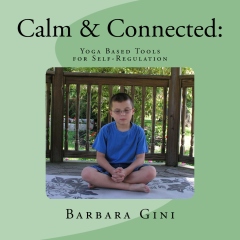
Calm & Connected: Yoga-Based Tools for Self Regulation

Calm & Connected
We live in stressful times. Societies are changing. Transitions are scary for kids & they react differently to them than adults do. It’s easy to overlook signals. 

More and more children and teens of all ages & abilities are being affected by stress each day, with devastating results. Whatever age you are, stress interrupts our ability to learn, heal, form healthy relationships and function optimally.


In a recent survey, 20%-40% of children age 8-12 reported being stressed & worried over something - yet only 8%-17% of parents & educators were even aware that children were feeling stressed. One of the proactive things we can do is to pay better attention to the outward stress signals children send us.

Children with special needs are even more sensitive to changes in their home & school environments and may show signs as well: crying, aggression, trouble sleeping, food cravings or other changes in eating habits, headaches, teeth grinding, constipation, & chronic illness could all be outward signals of stress.

Preview
More and more parents and educators are asking "What can we do to help?"

You can become aware and observe the children you love, care for and work with. Watch for those outward signals especially during times of turmoil, transition or life changes. By teaching kids to recognize the signs of stress, along with easy strategies for them to use to self-regulate, you can help them respond to outer turmoil by creating a calm more grounded inner environment when they need it most.

Calm & Connected shows you, the parent, educator or professional to guide children in recognizing and responding to stressors and to manage stress in a healthy, resilient manner. The best part is, ANYONE can use this book. You do not need any yoga background to teach these simple techniques effectively. Just follow our easy, illustrated instructions.
Preview

Inside these 87 color pages, you will find more than 3 dozen kid and school friendly, yoga-based tools, techniques, games, activities and more, all aimed at helping children recognize stress & self-regulate. By learning to use them, kids age 3 and up can begin to effectively recognize stress, create a calmer connection to themselves and others, effectively manage stress, reduce anxiety, improve focus connect with their inner calm, minimize anxiety improve concentration & enjoy life more.  In addition they will learn to make better choices for themselves in every situation. This information is a must-have for any home or school health & wellness library.

Preview
The techniques are effective as an intervention or re-direction method but are most effective when practiced consistently:  it’s crucial that they are re-enforced every day for all kids-in school, at home, on the field or stage and in the therapy room. After initial instruction, children will be able to do these techniques independently. 

Bad habits are formed over time and good habits will also take time. A stress response is simply a habit of responding a certain way to sensory input. So is a relaxation response. Children need to be taught that they do have a choice as to how to respond to stressors. They need to know what tools they can use if they are in pain, scared or their senses are overloaded and they feel confused and as if they are losing control.

Calm & Connected will help you show them what do to.


Order Your Print Copy of Calm & Connected here

*Now Available on Kindle


*Calm & Connected is part of our R.E.A.Ch™ Programming (Relaxation Education for Adults & Children) Find out more here: R.E.A.Ch Programming


Contact: barbara@bodylogique.com


.

Monday, August 13, 2012

10 Steps to Encouraging Kids to Participate in Yoga, School and Life

Photo:
unicef.org.nz

"Education Is Not the Filling of a Pail, But the Lighting of a Fire"  ~W.B.Yeats

Whether you are talking about yoga, recreation, education, parenting or coaching, our most important task is to "light a fire" by engaging our young audience as they learn. If children are engaged, they will participate more, and the more they participate, the more engaged they become. This keeps them motivated to keep learning through every experience, both in and out of the classroom.


Below are 10 factors that I have found to encourage active participation in all types of learning in the classroom and in life. How many are you currently using? How many more can you incorporate?


1- Environment: Think in terms of  whether or not the environment is clean, sensory friendly and welcoming. Outside of physical factors, what makes an environment most relaxing & welcoming is how relaxed and approachable the teacher/coach/parent is. A relaxed child will be more willing- and able- to participate and learn.

2- Senses: Awaken and engage each and every sense. Use music, games, art, colorful posters to encourage integration of the body as well as the brain. We learn through all of our senses and the more you incorporate them into homework, coaching or classrooms the more a child will want to learn.

3- Structure: Have a plan, but structure it loosely to allow room for spontaneous and free exploration of related questions, topics and activities. This adds and brings imagination to the learning experience. When it comes to a home routine, keep tasks & rules consistent and no more in number than the age of the child in years up to a maximum of  7 at a time. (Seven is the maximun number of items or ideas the brain can remember at once.)

4- Visual Presentation: About two thirds of our brain is used for visual processing while only 2% of it is used for conscious and cognitive functions. Traditional classrooms are set up to teach to that 2%. Be sure to use cartoons, photos, drawings, props, felt boards and other visual aides to engage that part of the brain kids use most.

5- Modify & Adapt: There are many ways that children learn. Have as many (physical and educational) supports available for them to use. In yoga this might include straps, bolsters, balls, and in the classroom this might include video, charts or images. If using technical, long or unfamiliar words, explain concepts with simpler ones until understood. Then introduce the technical terms.

6- Keep it Real: This applies more so to yoga teachers than others, but remember to be consistent and use regular everyday voice and language. If you speak using awkward metaphors or alien language, (such as "align with your chakras" or  "shine your head forward" or "feel the happiness in your organs" ) kids will tune you out, not take you seriously and not grasp the concepts you are trying to teach. Speak using as few words as possible, in simple, everyday language & introduce new vocabulary only after the basic concepts are grasped.

7- Participate: Kids are more willing to play or try an activity that the adult facilitator is participating in rather than imposing on them. It fosters a sense of trust. So find your inner child and play with the kids.

8- Feedback: Listen to what the kids say-and don't say. Observe their reactions and interactions. Allow the children to share what their favorite part of a class or activity was- (after sharing their not-so favorite) and suggest other things they might like to do/learn. Find a way to incorporate it into the curriculum.

9- Be a Good Student:  Be open to learning. Let students (individually or in a group) plan lead a class activity. It will give them a greater appreciation for learning, and you just might learn something too!

10- Fun: Remember above all that kids are kids. Not miniature adults. They are rushed through life unnecessarily and need time, patience and fun. Find ways to package what students need to know, into something fun that they will want to know and help light a healthy (educational) fire in each of them!


Contact: barbara@bodylogique.com


.


Monday, July 30, 2012

Sensory Fun with Sand Gardens

Ryoan Ji Zen Garden in Kyoto, Japan
Photo: Steven D'Alu
Japanese Rock Gardens, (also Called Dry Landscape or "Zen" Gardens) are one of the world's first forms of art and have been in existence since about 784 AD. They can be found around many shrines, temples, and palaces in Japan and in the US. Each garden and the elements within that garden have a unique symbolism.
White gravel is a special feature of Japanese gardens and is used to symbolize purity, emptiness, distance and water. Rocks, moss, pruned trees and bushes, are placed in the gravel to create a miniature landscape that imitates nature rather than replicates it. The gravel (or sand) is then raked to represent ripples in the water.

These gardens were intended to be plain and to serve as an aid to help find clarity & to meditate about the true meaning of life. In modern times, miniature tabletop versions of these gardens can be found in a variety of outlets and are designed to temporarily slow down our pace, reduce stress, encourage focus, initiate an internal contemplative mood or encourage play & imagination. The great thing about these is that you don't need alot of space for them. In fact, you can make one very simply with a few items found around the home, or easily obtained. It can be stored on a desk, a bookshelf or in a drawer.

Kids of all ages love these, as it adds an extra element of sensory play and body-brain integration that helps to improve concentration, adjust to transitions and self-calming. When I made the sample in the video below, my daughter found it and claimed it. As I was getting ready to film the video, I observed her play with it on the couch (thaqt is away from her cell phone and with the TV off) for almost 40 minutes-unprompted and uninterrupted. She kept saying to me,  "Mom, this thing is so relaxing!" She did not want to give it up when I was ready to make the video-so she offered to help me with it if I would let her keep the finished item. (Of course I let her keep it!)

This version of the "Sand Garden" (or Sensory Garden)  uses natural elements for the center, (rocks, shelss, etc.)however if kids want to place small animal figures or other personal items in the sand instead I don't see a problem with that. If they are calm and engaged then it has served its purpose. What's even better is that these Sand Gardens are portable and spill-proof if you have the right container. View the video below for the easy instructions.

Have fun!


Contact: barbara@bodylogique.com


.


Wednesday, July 18, 2012

Less is More


Photo: fox.temple.edu
From a article entitled "I Can't Think!" published in Newsweek:

"The Twitterization of our culture has revolutionized our lives, but with an unintended consequence: our overloaded brains freeze when we have to make decisions. "

The article went on to discuss a recent study conducted at the Center for Neural Decision Making at Temple University. The following 2 paragraphs stood out to me:

"As the information load increased...so did activity in the dorsolateral prefrontal cortex, a region behind the forehead that is responsible for decision making and control of emotions. But as the researchers gave the [volunteers]  more and more information, activity in the dorsolateral PFC suddenly fell off, as if a circuit breaker had popped."

"The research should give pause to anyone addicted to incoming texts and tweets. The booming science of decision making has shown that more information can lead to objectively poorer choices, and to choices that people come to regret. It has shown that an unconscious system guides many of our decisions, and that it can be sidelined by too much information."

Our good decisions are sidelined by too much information. Every time I visit Twitter, or Facebook, and see the endless stream of links, promotions, thoughts, ideas, pictures, complaints, opinions & random words I want to just log out quickly; and every time I read an article such as this I put it in the framework of how it must affect our kids. How overloaded are they? How many kids endlessly text on cell phones-sometimes 3 or 4 friends at a time? How many are on My Yearbook, My Space, Meebo or Facebook for hours daily? How many go to school and are subjected to information and homework bombardment and standardized testing preparation, as their art, music and athletic programs are being cut out entirely? How many of these kids are being diagnosed with a plethora of conditions from ADHD to depression and put on medication because they can't make decisions, focus on or finish anything? Are they too suffering from information overload?

Understanding how the brain works will help us understand how to minimize some of the problems. The human brain has three forms of memory: Sensory, Long-term and Short-term.

Sensory memory is the initial contact for stimuli and lasts about 200–500 milliseconds after an item is perceived through one of the senses. The ability to hear instructions & remember them, or to look at an item, and remember what it looked like with just a second of observation, are two examples. Sensory memory is only capable of retaining information for a very short period of time.

In a study of sensory memory conducted by George Sperling (1963) the maximum capacity of sensory memory was found to be approximately 12 items, but that number drops very quickly (within a few hundred milliseconds). Because this form of memory degrades so quickly, participants would see a display, but be unable to report all of the items (12 in all) before they decayed. This type of memory cannot be prolonged by rehearsal or repetition which would explain why your child forgets the 3 or 4 tasks or commands you just rattled off to them.

Long-term memory is just like unlimited hard-drive space & can store much more information for very long durations (such as an entire life span).  We can remember social security numbers, passwords and telephone numbers for many years through repetition of use. Information retained in this way is said to be stored in long-term memory.

Short-term memory functions much like a very small RAM and is capable to hold only about five to nine (seven is an average) items at a time. Retrieving information longer than this will require it to be grouped together into seven units, or store it in long-term memory.

For example, given a random seven-digit number we may remember it for only a few seconds before forgetting, suggesting it was stored in our short-term memory. On the other hand, remembering your bank password, safe code, childhood phone number or address is somewhat easier due to repetition and commitment to long term memory.

We can use the results of the Temple Study and the knowledge of how our memory works to begin to clear out the verbal and visual clutter & communicate better with each other, especially with our kids and with our students. Its important for kids to learn this too. A good rule of thumb when giving instructions, delegating tasks, outlining steps to problem solving, or introducing yoga, karate, dance or exercise sequences to children or teens, (especially sensory or cognitively challenged) is that less is more. Aim to keep it to 1 or 2 items, (or 1-2 written or spoken words), per age of child, but no more than 7 at a time. Otherwise, you are very likely to trigger an overload and the emotions and upheaval that accompany it.

I show all of the students that I work with a very simple technique to combat this overload. Its a meditation, only I don't call it that. I call it Imagery or simply "relaxation". They can use it anywhere and anytime they feel like they need it- at home, school or anywhere. Essentially, they unplug & turn off everything electronic, and sit quietly thinking of a place (such as the beach) or an object (such as a starfish, flower or a sea shell) and I teach them to use their imagination to focus only on that one thing. (younger kids have an easier time using an object at first)

You can do this at home with your child before overload becomes a permanent problem. Keep a small collection of river stones, shells or other small toys or objects in a jar, and when a need arises for relaxation, have them take one of the objects out, sit or lie down & study it for a minute. Then, close their eyes and imagine it in detail. I've had my 'Hyperactive" students sit for up to 20 minutes doing this exercise. The kids ask for it (especially my teen girls) and they are asking for it because its something their taxed brains and emotions desperately need.

The growing human brain needs down time every day, like the lungs need air and the cells need water.

While technology can be a useful tool to bring people together and create collaborations that may not have been possible otherwise, please take care to use it responsibly and teach your kids to do the same. When it comes to communicating, less is more.


Related Articles:

The Myth of Meditation

I Can't Think!


to purchase our books on Amazon


.

Friday, June 8, 2012

In Case You Missed It: Updates for June 4 - 8

Cat Chases Bear Up A Tree:
Photo:  nationalgeographic.com 
This week was filled with end of the school year classes, picnics, a cardboard boat regatta, and other events, a downsize and re-organizing of my current projects, several new insights and collaborations, and lots of outdoor fun! I hope it was just as amazing for you too!

I am just finishing the final edits of two S.M.Art Stories™ and working on  distance learning programs  to better serve the parents and professionals who want to learn more about what we do and how we do it but live too far away or who are juggling too full of a schedule to attend a local workshop. I know travel costs are out of control and I am working on ways to continue to deliver quality programming to my friends in the US, Canada, Australia, England and of the world. My goal is to have these all in place over the summer, so hang in with me until then!

I have also just completes the first edit of  "Dance, Cheer Yoga!", a yoga based program for female youth athletes. Look for the book release dates and other information on our webpage.


Before I get myself outside for the day, I want to bring to you this week's "In Case You Missed It" links.

For those of you new to my blog, each Friday, we feature the top articles (archived and new) that are relevant to those who work with children & teens, especially those with social, sensory and learning challenges. The purpose of this weekly post is to expand and improve the scope of resources & information for families, educators & other professionals. We want to build connections with diverse resources to help each other stay informed in the most straightforward and entertaining way possible. I hope you will pass it on and share with others who would be interested.

This week, I've selected some of your favorites (most viewed) from the S.M.Art Kids / Healthy Kids Blog. To read the original article, click on the title links below. Its as simple as that. Please feel free to share, with others, and if you would like to see a link to a specific topic, please let me know.

Guest post submissions are always welcome. Please report any broken links to Barbara at the e-mail link below.

To receive these posts and current professional development & other  program release information right to your inbox, Subscribe to S.M.Art Kids / Healthy Kids by Email

Have a Fantastic Weekend!
~Barbara

barbara@bodylogique.com


Grandfather Tells: The Wolves Within (A Cherokee Wisdom Story)


7 Ways to Show Kids You Love Them  


The Keys to Adapting Movement & Sports to Include Special Needs Children  


Peace Garden: (Guided Imagery) 


Things to do Outside: Sensory Scavenger Hunt 


Yoga-Perfect Conditioning for Teen Athletes: Dance-Cheer-Yoga!


Going Barefoot


Constructive Fidgeting


.

Monday, April 16, 2012

From The Archives

Well yesterday I realized that I didn't schedule a Friday "In Case You Missed It" Post! It was a such a  beautiful day, that I was out of my office most of it. I hope you were too.

Today I've selected a few of the most-viewed articles-and a few of my personal favorites- from my archives and linked them here. Enjoy & feel free to pass on to others the ones you find most useful.

"In Case You Missed It" will return on Friday in its regular spot.

Have a great week everyone!


~Barbara


Helping your Child Sleep Well
(January, 2012)
It is estimated that as many as 30% of all children may have a sleep disorder at some point during childhood. Sleep disorders can impact health, school performance, day to day activities & social-emotional adjustment. For this reason it is important for both parents and educators to understand these disruptions and simple ways to assist children to rest and sleep better...


The Connection Between Sensory Integration & Yoga
(July, 2009)
Yoga itself is a natural form of sensory integration and It can be adapted to a variety of ages, learning styles and environments. Yoga will assist in facilitating many of the same skills as conventional S.I. as all 5 senses are stimulated & integrated during a 30-45 minute yoga session...


 Breathe-Relax
(July, 2010)We don't usually associate stress with good news or happy events, but these can also create a stress response in the body. We need to take moments throughout our day to release this tension that builds up not just in our mind, but in our bodies too...


 Living in Color
(November, 2011)I love taking walks in the woods this time of year. The colors of the foliage is absolutely beautiful and so restorative & healing to me. My daughter often refers to this time of year as "Living in Color". Color is a form of non-verbal communication. Colors say something to us when we look at them. What colors make you feel happy? Agitated?


Peace Pose
(May, 2011)Today is a perfect day for soaking in the peacefulness of the sunshine, the clear blue sky & the cool breeze & watching Lauren, my daughter play with the neighbors grandchildren. They have had a very fun & busy morning; running barefoot in the grass, playing wiffle ball, catching butterflies, picking (and eating) strawberries from our garden, blowing dandelion seeds, playing with dolls and pretending to be astronauts...


Where Mind, Body & Technology Meet
(October, 2011)When I was a kid you couldn't pay me to stay inside. (Unless it was snowing out. I did not like the cold much and still don't.) 4 years ago, I moved myself and my daughter to an area with plenty of parks, rocks to climb, biking & hiking trails and lakes. I am surrounded by the beauty of the woods & 'out doors' is a large part of my life. But as much as I advocate movement, sensory integration and art & nature being vital for children to learn & thrive, I want to also acknowledge that there are many places where the mind, body & technology meet and can live in harmony...


Dragonflies
(May, 2010)

"The Dragonfly Story" has become a favorite for the students in my Adaptive Yoga class for many reasons. In the story, a little "water beetle" who lives in the bottom of the pond gets curious to see what is up at the top. The story continues as he journeys into the unfamiliar, seeing new creatures around the pond and meeting new friends.One reason this story is so loved (by children as well as adults)  is the many lessons contained within it...


Contact Barbara: barbara@bodylogique.com


Wednesday, April 4, 2012

Rice & The Art of Engagement

Sea Turtle Mandala
Photo: ©2011  B.Gini
A few years ago, I was asked by Greenshire Healing Arts Center to provide a community art project for a Youth Peace Summit that reflects the theme of "Peace". What is better as a symbol of unity than a community Mandala?


Mandalas are circular, symmetrical designs that have been used for centuries as a tool for meditation & reflection, and in more modern times by Sigmund Freud as a tool for psychoanalysis. I have drawn many mandalas over the years and find them to be a great tool for engagement in self-reflection, peaceful, focused thought and creative problem solving.


I was not sure how to proceed at first, and after a few ideas that I rejected, I finally envisioned a design: The Earth encircled by a rainbow-(the symbol for Hope as well as a symbol of diversity) two Doves with olive branches (symbolizing Peace) A Heart at the base is for Love, Friendship and Acceptance, and Lotus petals framing all 4 corners, represent the progress of working towards Peaceful interactions. (A lotus grows up through the mud to blossom into a fragrant, perfect bloom. I have observed & known many people with that same ability.) I drew the design on brown paper that painters use to cover surfaces when working.


The Mandala was made with colored rice-a technique I became familiar with through my Friend Ritu who who also does the most amazing Henna and Batik you have ever seen! She has been doing this beautiful ancient art for many years. She was my inspiration for the building of this project & this was my first time doing such a large piece.


Each grain of rice, being placed on the design by at-risk teens of all ages was the epitome of Peaceful interaction not just with each other, but within themselves. I noticed that as each area of the design emerged-one small spoonful at a time- the kids became fully engaged in the tiny colorful grains. One remarked that she felt as if she had become part of the design itself.

That is the beauty of this process. As each individual works on a part of the design, and as it emerges, it brings self- reflection to the individual, to the group & to the larger community. It helps us realize that even though we are individual and unique, we are all part of something much larger than ourselves. The mandala making process becomes the Art of Engagement which is the basis of all peaceful interactions.

When the design was finished, it was displayed in the gallery for a week, then dismantled, much as Tibetan Mandalas are. To me, this represents impermanence & non-attachment. It reminds me of the fragile nature of Life & affirms that any positive change begins with a single thought from a single person-just as this design began with a single spoonful of rice.

Being who I am, I have adapted this activity to use with my younger groups & my students with sensory challenges. From their perspective, it is a fun, calming, multi-sensory activity that helps them learn to focus, share, engage & follow through with a project to completion. For the younger kids, I use simple terminology & call the designs 'mosaics', or 'rice art' and I make them permanent by using a little bit of white glue before the rice is added.

So many Life & Social skills can be learned through this activity! Its a perfect activity for outdoors and is the method I prefer. If you are going to do it inside, let the kids assist through the entire process by helping color the rice, set up the area & clean up at the end. If rice spills, gently guide them to help clean it up. Wherever you decide to set up the activity, be sure to allow plenty of time. It’s counter-productive to rush children through the process.It may even be helpful to set it up at a 'sensory station' and let the kids work on it at intervals during the week.

Supplies are simple: Plain, heavy duty paper plates, round or square (not Styrofoam) OR shoe box lids. (You can also use aluminum pans or plain color plastic trays) rice, food coloring and hand sanitizer. There are literally thousands of ideas and patterns online. Start with simple geometric shapes and build more intricate designs as the skill and attention level increases.

To see an instructional video of how to color the rice, click here: Colored Rice Technique.

 
To find our e-course on designing mandalas for stress management go to:
10 Minute Mandalas

I know there are hundreds of other ways to use colored rice. Tell us your ideas in thecomments below!


To see some photos of the activity in progress, watch the video below.


Contact: barbara@bodylogique.com


Thursday, February 23, 2012

Senses, Stims and Stress

We tend to take our sensory system for granted until something goes wrong with it. We are all sensory organisms! Our sensory system provides us with the ability to interpret information about our body & environment through a variety of sensory receptors. Most of us have been taught that there are five senses: visual, auditory, gustation (taste), tactile & olfactory (smell). There are in fact three more: the vestibular (balance), proprioception (motion of the body ) & interoception (internal -hunger, heartbeat, breathing, bladder, etc.) that help us learn about ourselves and the environment.

Many OTs agree that vestibular & proprioception tops the list respectively, in priority in terms of human development. The sensory system develops before the ability to utilize the muscles & bones effectively for purposeful movement does. Ironically, movement is the only way to strengthen sensory/neural connections & strengthen the brain’s ability to process information and retain it in the long term.

If the neural connections are weak or not there, the brain will not know what to do with the stimulus it is now receiving through the senses. Science tells us that neural connections are created & strengthened through movement. A variety of daily movement & stimulation to each sensory system will improve the body’s/brain’s ability to refine movement, improve cognitive processing & reduce “stim behavior”. (This is the purpose of a Sensory Diet/ Sensory Integration Therapy.)

Stim Behaviors occur for a specific reason-as a sign of sensory, physical or mental stress. The sensory challenged, ADD or ADHD child is not being 'non-compliant'. They are telling you they are 'hungry' just as a grumbling stomach or dry mouth tells us we need nourishment. When we are hungry or thirsty, we eat/drink. Why then, when a child needs sensory 'food' do we deny them by prompting them to stop? To these students, this is the equivalent to withholding food and water.

Stims tell us that the body is imbalanced, the brain is overwhelmed and both are trying to re-engage. A stim is telling us that there is a bodily “craving” for something that child’s body & brain needs. (We all have stim behaviors. You are probably doing one right now as you read this.) If the brain/body cannot re-engage it will result in a stress response or as a full blown 'meltdown'. Once this happens, the child (and the brain) is no longer capable of learning-he is now in “Fight or Flight” /survival mode and the body/brain is in adrenalin shock-He cannot stop himself from the effects & cannot engage/cooperate/learn/comply until the adrenals get back to normal. This is what is called a stress response. Its vitally important to understand this effect and address it properly. Sensory diets are put in place for exactly this reason.

S.M.Art Kids® programs aim to assist sensory integration & minimize the Stress Response through 3 aspects: Stories, yoga based Movement & Art. Together, these tools help encourage stronger neural connections, a calmer central nervous system & improved focus.

Stim & Stress Strategies You can use:


  • Learn to read warning signs- (body language) Staring, yawning, fidgets, tapping, teeth grinding, etc. are all signs of the brain trying to re-engage. Try to determine which sensory system is 'hungry' and feed that one first. You will find that in most cases, if you address the sensory needs, the behavior will take care of itself. Learn as much as you can about each child's responses and rather then try to de-sensitize him or her, try to address it by giving them the input they need. You will find that they eventually will pay better attention.
  • Help children Release muscle tension-through self massage or “Squeezing Lemons” (help children imagine they are making lemonade-and squeezing the lemons into a glass. Imagine they are using each part of their body from head to toe to squeeze them-hands, elbows, armpits, knees, toes, etc. Its okay to be a little silly. If they want to imagine they are squeezing a lime, an orange, a Pink lemon-or even a blue one, go with it! The object is to get them to squeeze and release muscle tension.) This will help with body awareness and deep muscle input that helps the nervous system stay calm for longer.
  • Imagery is a simple and versatile tool where you will suggest a calming scenario for the children to follow. (Let's imagine we are on a beautiful beach, with big swaying palm trees, sparkling sand and crystal clear water....") Speak slowly, dim the lights and have them put their heads on the desk and follow your voice for 3-5 minutes. Always bring the "back" gradually by having them "wiggle fingers, wiggle toes, take a big breath and on the count  of 3, slowly lift your head and stretch..." always take a minute to get feedback. )  Works well as a transition or at the end of a test.
  • Employ other calming techniques- breathing in patterns (To calm, breathe in while counting to 3 and out while counting to 4), art (simple coloring pages-geometric patterns or mandalas are the most calming. ) music (instrumentals such as Native American Flute music or ocean sounds, thunderstorms, etc will calm children while keeping them alert.)
  • Re-engage in activity using different creative approaches to keep students actively  interested.
Summary:

In order to learn anything, the brain must be calm, focused & engaged. Our capacity to learn is greatly improved through sensory motor stimulation. Hands-on learning, incorporating movement breaks, experiential and group projects are the best way to to address these needs. We receive information through the eyes, ears & other senses for our brains to process it, recognize, organize & respond to it. When a child “stims” he is really trying to integrate the senses, to receive & process the information, regain focus, re-engage or transition to another activity & get the brain back in gear to complete a task.

For a fantastic detailed overview of the sensory systems go to: SPD Life


*This article is excerpted from our professional development course:

"S.M.Art Kids @ School: Engaging The Whole Child Through Stories, Movement & Art (Yoga Based Tools for Teachers)

To schedule a staff workshop for your school or organization, please contact: barbara@bodylogique.com

Tuesday, February 21, 2012

3 Minute Neck Massage

I was watching my daughter do her homework yesterday, and I noticed her posture. She was leaning to one side, her one leg folded under her and her head resting in her free hand. A little while later she told me she had a headache. Instead of giving her an aspirin, I asked her to sit down and I placed my hands on her shoulders. Just as I thought: her neck and upper back muscles were completely constricted and hard as a rock!

I placed one of my home made hot packs around her neck and then I spent about 10 minutes kneading out the knots with my hands. She started to relax and told me about her day, which was a particularly stressful one for her. At the end of the 10 minutes I asked her how she felt and she said she was much better. She didn't have a headache any more. When she went back to her work, her posture was much better.

My daughter had not even realized that she was stressed, and her outward posture and headache were her own body's signs of a stress response. The most useful skill I have learned through yoga practice over the years is how to recognize the signs of stress in my own body and how to head it off before it gets out of control. I believe that this is a vital Life Skill that we can easily teach our students and children.

Stress related illnesses count for at least $300 billion each year in health care costs &  missed work. About half of Americans (48%) report lying awake at night due to stress. (Source: American Psychological Association study, 2009). To combat this, Americans fill more than 50 million prescriptions for sleeping pills and spend more than $600 million on over-the-counter sleep-inducing supplements.

Stress in children is now on the rise with and estimated 45% of school age children reporting feeling worried & stressed and 61% of teens reporting feeling stressed. All of these children reported physical symptoms such as stomach or headaches and nightmares. However, only 17%-28% of  the parents polled acknowledged that their children's behavior or symptoms could be stress related. These numbers show the huge disconnect between our own views of stress and how we view the effects of stress on our kids.

It’s difficult for both adults and children to concentrate on work and be/do their very best when their mind is racing and body is aching. Physically, the upper back, spine, back of head, shoulders and neck seem to be the areas where the most stress and tension builds up, so those are the areas of the body that need the most relief. When we are more relaxed, we stay well longer and accomplish more.

Exercise, hydration and monitoring the types and amounts of foods that are eaten are 3 ways to relieve stress. Another option is a simple 3 minute massage.

While getting a professional massage can do wonders for reducing stress levels and clearing one's head, it may not be logistically or economically practical on a regular basis. No worries. You can learn to do this yourself.

So here is the simple process that I showed my daughter. You can learn it for yourself and teach your students how to do it for themselves too.


3 Minute Neck and Shoulder Massage Video

.

Thursday, January 26, 2012

Incorporating Sensory Activities for Whole Child Learning


Photo: Families.com
When we talk about "whole child learning" we are talking about more than sitting still & listening while learning math, reading, social studies and other subjects. These skills while important, are not enough to prepare a child for long term success.

Whole child learning does not just engage a students' ears. It engages all of the senses, the body & brain, the attention as well as the imagination. By engaging and supporting the whole child in their own learning process, they learn better, form mutually supportive friendships, retain information longer & are better prepared to think creatively & critically as they evaluate data, solve problems, and communicate with one another.


A "whole child" approach puts students first, matches up resources and adaptations to a student's unique needs, and provides a more balanced approach to learning. In order to be effective for lifelong success, all the different parts of education must work in coordination, not separately. When subjects and lessons are presented in a compartmentalized manner, the student feels the disconnect and disengages because they simply do not hold any real meaning for him.

When you can keep children engaged & challenged they will be better prepared for building on their education, work, social and civic life.

So, how can we easily adapt lessons & curriculum's to be engaging & challenging, allowing the whole student the opportunity to move, communicate, be creative & develop positive character?

How can we incorporate visual, auditory, olfactory, proprioceptive and tactile stimulation to improve the way our students take in and process, understand and utilize information? 

This is the topic of a professional development workshop I am presenting at the Center for Lifelong Learning  in Sayerville, NJ tomorrow. 100 educators and therapists will be joining me as we explore yoga and other holistic based tools and techniques for engaging students more in the classroom.

I am in the process of making this course available on our Distance Learning page and I hope to have that ready by mid-February. In the meantime, here are just a few ideas to get you started:


1.Make learning more hands-on by having your students dream up, name & create their own dinosaur or constellation.

2. Let your students make their own tactile sensory boxes using shoe box lids and rice, sand, beans or other material. Have them "write" the alphabet, their names, numbers or play tic tac toe.

3. Adapt the sensory box activity from #2 to be a relaxation activity. Play some soft, instrumental, harp or Native American flute music, and have the students draw circles or shapes to the music. To deepen the self-calming effect, have them do this with their eyes closed.

4. Create a Vanishing Slate using individual slates and paint brushes with water. The students can "paint" a positive word, their name or a design on the slate with the water and watch it slowly disappear. Can be done to low frequency, slow tempo music.

5. Create a labyrinth (a maze) in the classroom with masking tape or rope, or with sidewalk chalk outdoors. Have the children slowly walk the path, and walk back out. (A labyrinth differs from a maze in that there is only one way in and one way out.)

6. If you don't have room to make a large labyrinth, here are 4 different labyrinth designs  students can use while sitting at a desk or lying on the belly on the floor. (Directions included.)

7.Teach children math concepts & fiscal responsibility by having them plan a week's worth of meals, and creating a budget for their purchases using actual grocery advertisements. You can then go grocery 'shopping' at an online store.

8. Play relevant interactive & technology games between lessons and during transitions between classes. Encourage the students to solve puzzles and meet challenges as if they were their favorite video game character: Dora, Mario, Zelda, Angry Birds, Etc.)

9. Use photos, art, journals and literature to help your students create a timeline that highlights people's lives during significant historical or personal events: ( The Crusades, Christopher Columbus sailing to America, The first Thanksgiving, The Civil War or the day they were born, made the basketball team, etc.)

10. Guess what substances are in boxes or jars by smelling only. You can use a blindfold and do one  or two "Mystery Smells" a day. (Use ONLY natural substances such as coffee, vanilla bean, cloves, sage leaves, lemon tea bags, peppermints, etc.)

*(Do not use fragrance oil or perfume as it can have a toxic or allergic effect on the nervous system  of some children. Be sure to ask parents about allergies before you do this activity! )

11. Have children each bring in a fruit or vegetable and take them through the steps to make a salad together for the class to share. (Please check with parents for food allergies and special diets.)

12. Play the 'Pizza Game'. Improve body awareness and deep muscle input by using pool noodles as "rolling pins" and the students as "dough"  (Directions at this link.) To make this an activity that children can do for themselves, see this link here on how to stimulate pressure points: Pool Noodles

13. Adaptive Yoga is being used successfully in classrooms all over the world. Take a few minutes to put on some music and stretch, move and breathe! You don't  have to know the 'poses' or the Sanskrit names. Just ask the students: "What would my body look like if it were a [fill in the animal, natural or transportation object]"  Younger children will have fun taking turns moving and imitating and older kids will enjoy the creative movement.


What are some of the creative ways that you incorporate sensory, social & self-care lessons into your daily classroom work?

We would love to hear your ideas! Please leave a comment below!


Subscribe to S.M.Art Kids / Healthy Kids by Email


To schedule a professional development workshop for your school or organization, Contact Barbara@bodylogique.com

.