Showing posts with label stress management. Show all posts

Friday, April 12, 2013

R.E.A.Ch™ Relaxation Education


A New Relaxation Education program by BodyLogique® Health & Learning,  helps parents & professionals support "Calm in the Classroom" & beyond.

Photo: BodyLogique.com

More and more children and teens of all ages & abilities are being affected by stress each day, with devastating results. The statistics are staggering:

In 2010 U.S. Spent $12 billion on troubled children and youth. Three quarters of them did not have needs met. (Rand Research)


In 2009, $9.6 billion was spent on antidepressant prescriptions in the U.S. alone, reported Intercontinental Medical Statistics (IMS).  (That rounds out to be about 200 million prescriptions.)

The percentage of children aged 5-17 using antidepressants was 1.4% in 1995 and this increased to 2.6% in 2005. 

In another study researchers are saying that they see evidence of depression in children as young as three years of age. (Health Central)

Recent studies show that, at any given time, as many as one in every 33 children may have clinical depression. The rate of depression among adolescents may be as high as one in eight. (Department of Health and Human Services)

Recent studies have shown that greater than 20% of adolescents in the general population have emotional problems and one-third of adolescents attending psychiatry clinics suffer from depression. (The Canadian Journal of CME)

More than 160,000 children skip school every day because they feel threatened by another student. (National Association of School Psychologists)

A report by the Substance Abuse and Mental Health Services Administration indicates that, in the past year, one quarter (26.7 percent) of adolescent girls participated in a serious fight at school or work, group-against-group fight, or an attack on others with the intent to inflict serious harm. (SAMHSA) 

Suicide is the third leading cause of death for 15 - 24 year olds (approx 5,000 young people) and the sixth leading cause of death for five - 15 year olds. (American Academy of Child and Adolescent Psychiatry)

The rate of suicide for this age group has nearly tripled since 1960, making it the third leading cause of death in adolescents and the second leading cause of death among college age youth. (American Academy of Child and Adolescent Psychiatry)

The worst part is, that even though children and teens (ages 8-16) are feeling more stressed, anxious and despondent,  many of the adults in their lives (about 88%) had no idea that their kids/students were stressed at all. (That means that only about 12% of adults are paying attention.)

Of the adults that are aware, lack of support and stress management education leaves them feeling a little lost and asking "How do we stop & reverse the trend ?"  

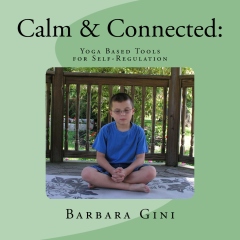
In July, 2012 Calm & Connected  was published to provide parents & educators with tools for sensory support and stress reduction for elementary age children in the classroom, at home and beyond. The book contains simple, practical, real-life tools, images, activities & games aimed at helping younger children begin to recognize stress & take their own empowering steps to minimize it. This book started out as a children's class and then a workshop I presented to a parent's group. At the time, I had not realized that it was only scratching the surface.


The rise in childhood depression & violence shows an urgent need to address the problem in a different way than we have been. The violence we are seeing is a symptom of bigger problems, ones that start early in childhood. Stress, anxiety, depression, violence and suicide do not just affect the child who is depressed or angry-but has a ripple effect on everyone they come in contact with. In order to give kids and teens the support they need, we, as parents & educators, need to address the problems at an early age and from the inside-out: not from the outside hoping our help sinks in.
  
In an effort to help address the growing need for 'Calm in Classrooms'-stress management support in schools and at home at every age- our 'Calm & Connected' children's program & book has been developed further into an expanded 4 module program called R.E.A.Ch™ - (Relaxation Education for Adults & Children.) 


This program is based on sensory & brain science, as well as the latest research on Mindfulness & Meditation. The 1 day live/blended learning course will be available to educators, parents & child professionals beginning on June 1, 2013. The distance version will be ready by the end of the summer-(just in time for "Back to School!)


The four R.E.A.Ch™ Relaxation Education modules are:


Calm & Composed-for adults age 17 and up

Calm &Connected-Children age 5-11
Calm & Confident-Teens age 12-16
Calm & Creative- Art-based Relaxation Education for all ages

A shorter, modified version of this training, specifically for educators, "REACh Schools: Calm in the Classroom" will also be offered to local schools, therapy groups and non-profit agencies.


This is not just a stress-management course that teaches you "cushioning" (external) techniques after the stress pattern has taken root-it takes you through the science of and anatomy of stress and shows you how to address it from the inside-when & where it actually begins - to the outside-where we finally see its physical symptoms. It gets addressed from every possible angle-not just one or two. It gives you-the parent/educator, the tools to pass on to the child, so they can manage their own emotions and situations as they experience them.


More details, fact sheets and a syllabus will be available June 1, 2013 on our main website. (Check the calendar page often for updates.)


To learn more about the program and schedule, please visit: 
BodyLogique Health & Learning  


If you or your administrators are interested in hosting, sponsoring or scheduling this training-either the live (blended) workshop or the distance program, please contact Barbara at: 215-257-3193, with your name, your organization/schools' name and location (city/state). 


*NOTE: Although this program has been an effective complementary support for improved concentration, and reduced stress and anxiety, for children or adults who are under a medical or mental health professional's care, we highly recommend continuing to follow the prescribed  treatment plan. This program is non-medical and not meant to replace professional/medical treatment. If you are not sure if it is right for you, please consult your primary doctor or specialist.

For other Questions Contact: bodylogique.info@gmail.com 

 For More child stress statistics visit:  ChildStress.org


Related Articles:


Promising Research on Meditation in Schools (Edutopia)

Sleep Cycles and Rebooting Your Brain with Meditation (Psychology Today)

The Human Brain & Stress (Franklin Institute.edu)

Autism Linked with Stress Hormone Levels (Science daily)

Adolescent Stress Linked to (Severe) Adult Mental Illness (Science daily)

The Senses, Stims & Stress (Smart Kids/ Health y Kids)

Improving Body Awareness Keeps Kids Calm & Connected (Smart Kids/Healthy Kids)

Self Calming in the Peace Garden (Guided Imagery)


To Subscribe to our blog posts (its free!) 
please find the "Subscribe" box near the top of the far right margin.


If you found value in this post, please leave feedback below 
or share it with your friends and contacts!


*Find a printable version of this post at: BodyLogique.com 


Friday, January 4, 2013

In Case You Missed It: Cold & Flu Remedies

Photo:  campalleghanyblog.com/

Since flu season has seemed to hit my house in the last few weeks, I thought I would dedicate today's post to Cold & Flu remedies.

I have never tolerated medicine very well and have to take it before bed or I cannot function. Even the "non-drowsy" varieties leave me feeling foggy and useless.

My grandmother was the first one to use a home remedy on me. I remember many times, at her insistence, eating a big plate of fresh scallions from the garden (with olive oil to dip) that she said would 'chase away' the cold I had gotten, or that I felt coming on. Well, the scallions did, in fact, get rid of the cold-and also kept away most of my friends-as they did their best to avoid me and my 'fresh green onion' aroma.

Garlic (roasted) was another favorite remedy of Gran'mom's. She would tell us the story of her brother, who was a medic in WWI during the influenza pandemicThe flu killed more people between 1918-19 than the war itself. She told us how he stayed well by keeping a fresh clove of (raw) garlic in his mouth at all times, like a lozenge. It apparently worked-and I am supposing he had a lovely aroma as well!

It was not until years later I understood why scallions (Green Onion)  and garlic  that were given to me when I was getting a cold helped me stay well: scallions have anti-pyretic (fever reducer), expectorant, anti-bacterial, and anti-fungal properties. They are also full of vitamins A, C and Calcium.

Garlic has more than 150 health benefits and has strong antibiotic and anti fungal properties. It strengthens the immune system, detoxifies the blood, relieves of bronchial coughs, asthma & head colds. I think my great uncle was 'in the know' too.
Thanksgiving 2006: Gran'mom with her
great-grand child  (my daughter) 

My grandmother, having grown up on a farm in Pottstown PA, and being the oldest daughter of 11 brothers and sisters, knew many of these natural remedies for staying well and she used them throughout life. 

She told another story of a neighbor's son named Paulie-who had a fever that would not break. Her fever remedy: potatoes. She went to the neighbors house and packed Paulie in potatoes- literally- sliced potatoes and wrapped him & the slices up in sheets: his head, chest, legs & feet. She said that by that evening, the fever had broken and he was well on his way to recovery. 

My mother was not as homeopathic as my grandmother, but her favorite cold remedy was pastina soup-or "Star Soup" as I used to call it. Homemade chicken broth with star pastina added was the standard 'cure' when me or my brother got sick. 

One study has found that chicken soup has anti-inflammatory properties that will ease cold symptoms, however there has not been any double-blind scientific study to explain why chicken soup helps us feel better. Is it the steam? The nutrients? Or maybe its all that love from mom that goes into making it.

There must be something to those old, natural home remedies. My grandmother lived to be 98 years old, and was rarely ever sick. (But good luck getting your kids to eat a plate of scallions and roasted garlic, or letting you pack them in potato slices!)

Here are a few other remedies I have used over the years to help strengthen the immune system, ease cold symptoms & keep my children (and myself) well:


  • The best remedy for colds is a proper diet, especially fluids to clear the kidneys. Warm water mixed with lemon juice and honey or fruit juice and hot water. This helps to neutralize the acid condition in the body. Pineapple juice in particular is beneficial for this purpose.
  • Ginger is a common remedy for colds and coughs. It is a known digestive aid and can help settle the stomach and controls nausea and vomiting. Ginger tea, ginger ale and candied ginger will all help symptoms of cold and flu.
  • Lime Juice (well diluted) is highly beneficial for reducing colds and fevers. Rich in vitamin C, it eliminates toxins and reduces the duration of the infection.
  • Honey and Lemon Juice will help sooth a sore throat and help eliminate congestion respectively. Honey has antibacterial properties and will help prevent throat infections. Mix a tablespoon of each and warm slightly over stove or in microwave for about 20 seconds. Swallow it one teaspoonful at a time. (Do not give honey to children under one year of age.)
  • Apple Cider Vinegar will help relieve aches & reduce fevers. Pour 2-3 cups in warm bathwater. Yo u can also use with a compress for  muscle aches or on forehead for fever.
  • Rest and sleep helps boost the immune system and allow the body to repair and heal itself. Rest and sleep are not the same. Resting is when you are calm but fully awake and aware. Sleeping is when you are not aware. Your body needs both in order to heal and maintain balance. I have learned when to say 'no' to a project because my body needs to rest and my mind needs relax.
  • Exercise helps reduce stress, maintain metabolic balance and boost immunity by eliminating toxins from the body. Daily activity and light exercise (such as a 10 minute leisurely walk in the absence of fever, or dehydration.) when you are starting to feel better will help  you get back to full strength much faster.

For more information on cold & flu remedies, read below.

*(Please remember to check with your doctor first before taking any new supplement or combining herbal remedies with traditional medications. Unwanted reactions may occur in some cases, so please do your research first.)


Understanding the Common Cold 

10 Misconceptions About Cold and Flu

Pneumonia: Symptoms, Causes & Treatment

Medicinal Properties of Vegetables

9 Ways An Apple A Day Keeps The Doctor Away

Why Was This Ancient Spice Given to People Building the Pyramids?

5 Herbs to Cure the Flu

Natural Flu Remedies

12 Strategies for Building a Healthy Immune System

Stress and the Immune System

Nurse Fired for Refusing Flu Shot


*What are some of your most effective home remedies? Please tell us below!


Contact: barbara@bodylogique.com 


.

Wednesday, November 14, 2012

Teen Health: The Most Requested Technique for Stress Relief

I was watching my newly-teen age daughter do her homework yesterday, and I noticed her posture. She was leaning to one side, her one leg folded under her and her head resting in her free hand. A little while later she told me she had a headache. Instead of giving her an aspirin, I asked her to sit down in front of me, and I placed my hands on her shoulders. Just as I thought: her neck and upper back muscles were completely constricted and hard as a rock.


3 Minute Neck Massage
I placed one of my home made hot packs around her neck and then I spent about 10 minutes kneading out the knots with my hands. She started to relax and told me about her day, which was a particularly stressful one for her.

At the end of the 10 minutes I asked her how she felt and she said she was much better. She didn't have a headache any more. When she went back to her work, her posture was much better.

My daughter had not even realized that she was stressed, and her outward posture and headache were her own body's signs of a stress response. The most useful skill I have learned through yoga practice over the years is how to recognize the signs of stress not only in my own body, but also the outward signs of stress in others. I've spent many years teaching myself, my own kids and my students how to recognize it and head it off before it gets out of control.

Stress related illnesses count for at least $300 billion each year in health care costs & missed work/school. About half of Americans (48%) report lying awake at night due to stress. (Source: American Psychological Association study, 2009). To combat this, Americans fill more than 50 million prescriptions for sleeping pills and spend more than $600 million on over-the-counter sleep-inducing supplements.

Stress in children is now on the rise with and estimated 45% of school age children reporting feeling worried & stressed and 61% of teens reporting feeling stressed. All of these children reported physical symptoms such as stomach or headaches and nightmares.

In spite of this statistic, only 17%-28% of  the parents polled acknowledged that their children's behavior or symptoms could be stress related. These numbers show the huge disconnect between our own views of stress and how we view the effects of stress on our kids.

It’s difficult for both adults and children to concentrate on work and be/do their personal best when their mind is racing and body is aching. Physically, the upper back, spine, back of head, shoulders and neck seem to be the areas where the most stress and tension builds up, so those are the areas of the body that need the most relief. When we are more relaxed, we have a more positive outlook, concentrate for longer duration, accomplish more in a shorter time frame and stay well longer.

I believe that self-care - particularly managing stress - is the most vital and self-empowering Life Skill that we can teach our students and children.

Exercise, hydration and monitoring the types and amounts of foods that are eaten are 3 quick ways to minimize and manage stress. Another option is a simple 3 minute massage.

While getting a professional massage can do wonders for reducing stress levels and clearing one's head, it may not be logistically or economically practical on a regular basis. No worries. You can learn to do this yourself, for both you and your child or teen.

Here is the simple process that I showed my daughter. You can learn it for yourself and teach your children how to do it for themselves too.

3 Minute Neck and Shoulder Massage (Video)

Photo: Barbara Gini for Serenity Health & Fitness
In my teen yoga classes, one of the techniques I teach in addition to the self-massage technique for shoulders, hands & feet, is the 'Massage Train', pictured at right. (The picture quality is low because it originally came out very dark, so I had to lighten it a few times to show detail.) This is done at the end of class, in dimmer light, and there is no talking during the activity.

Students who do not want to participate may "opt out" and just do a simple relaxation on their mat, but I have only ever had one student-including the extremely shy & the sensory-avoiding students-opt out.

I encourage each student to focus only on the student in front of them and to massage with intention, to project love, healing, friendship compassion, forgiveness, reciprocation (I usually pick one theme per class rather than all at once.) and all the positive things they wish for themselves, to the person they are massaging.

I sit behind the last student in the line and massage scalp, neck, shoulders, back and arms. I let them do this for about 3-5 minutes. Then, everyone turns themselves around, facing the opposite direction, and we do it for another 5 minutes, with me switching position as well, again, behind the last student in the line.

This is by far the most asked for activity in my teen classes. Teens are stressed. They are frustrated. They crave calm, relaxation, human contact and a safe, welcoming space that allows them to just 'be'. This activity helps re-connect them with their sense of self, cultivate calm, and gives them permission to 're-charge' their internal batteries. It is an activity that can be done at home at bedtime, after school or anytime your child is stressed.

How do you help your teens manage stress? Please tell us in the comments below.

~Barbara


Contact: barbara@bodylogique.com

.

Monday, October 15, 2012

Children's Brains & Stress: Making Meditation Kid-Friendly

Photo: Barbara Gini-©2010
Serenity Health & Fitness Center

This is your brain on stress: environmental data collected by the sensory systems and interpreted by the brain reads that you are in danger or being threatened in some way. The brain quickly sends the alarm to the body as adrenalin floods into every cell causing your heart and respiratory rate to increase. Every muscle in your body is ready to spring into action, and all before you can even cognitively understand what has just taken place, or even that you are being threatened.

This is your body's "Fight or Flight" mechanism and its commonly known as the Stress Response. Its a natural reaction to stress that the body sets in motion all on its own.

The interesting thing about it, is that the brain cannot tell the difference between a real stress event (such as being stalked on a dark street at night by a group of thugs) or an artificial one, (such as watching a movie scene where someone is being stalked by a bunch of thugs.) In each case, it will react in the same manner.

While we know that the stress response is the body's safety mechanism, we also know that sustained stress, whether real or perceived, can cause a number of health problems. In fact, it is estimated that stress is the underlying reason for more than 70% of all doctor's visits.

In children, especially children with special needs, stress can be equally as devastating. In one study, 20%-40% of the children ages 8-12 reported feeling stressed or worried, yet only 8%-17% of the parents & educators in their worlds realized that they were stressed. Clearly, our children need to have support and guidance in recognizing stress and coping with it so that it does not get out of control. Un-managed stress in children causes a variety of physical, mental and emotional health problems, aggressive behaviors, isolation and illness. This does not just affect the person experiencing stress, but has a ripple effect and will impact every single person a child comes in contact with.

In addition, a stressed brain cannot learn.

Once the brain goes into Fight or Flight mode, all it can do is fight, or flee. This is why its especially important for educators and therapists to know the outward signs of stress in kids and develop plans to minimize and cope with the stress response, but most importantly to teach children how to self-regulate and manage their own stress on a regular basis, no matter where they are. They need to know when its important to react quickly, and when they need to stay calmer and respond rather than react.

Stress management, like brushing teeth, is a vital part of a child's health & learning. It is a life skill that needs to be taught in a patient and clear manner, just as we teach our children the days of the week, how to set the table, put their belongings away, and other everyday tasks. It is a skill that not only serves them in health, but in regulating behavior, relationships & academic learning, in the classroom, at home and in all of life.

One of the topics discussed in our "Calm & Connected" workshop is how to simplify stress management & meditation techniques so that kids can understand and use them independently. When presented in a fun, matter-of-fact, simplified manner, (while children are calm & having fun) using everyday language, kids will respond and actually want to do it. This gives them tools to use to, transition to a new situation, calm quickly after a stressful event occurs or to stay focused on what's important as one is occurring.

Our book, "Calm & Connected: Yoga-Based Tools for Self-Regulation" takes it a step further and draws a connection between sensory integration, stress and the yoga techniques that address both.

The key to helping kids manage stress is to make it "Kid-Friendly". Simple stories, games, props and most of all practice will help a child learn when to "Fight or Flee" and when to "Stay Calm & Keep Connected".


How do you cope with/manage stress?

What are some ways that you help your children or students cope with stress? 


Please tell us in the comments below.


Related Articles:

The Pizza Game (Sensory Based Stress Management for Kids)

Peace Garden Imagery

Pool Noodle Reflexology

Helping Children Cope with Anxiety

Three Minute Neck Massage

Calming Anxious Lives

Meditation: Children and Teens as Mindful Warriors (Roots of Action Blog-Dr. Marilyn Price-Mitchell)


Contact:  barbara@bodylogique.com


Visit Us: www.bodylogique.com 

Visit our sister site: BodyLogique-books.com 


Thursday, September 27, 2012

Mindful Mantis Pose

This morning when I opened up my living room curtains, I saw a Praying Mantis on my window. I grabbed my cell phone and snapped a picture as he was sitting there, perfectly still. When I came back through the living room 45 minutes later, he was still sitting in the same spot.

After observing him for a bit, I see why some of the symbolism of the praying mantis deals with stillness and patience. The mantis lives life at its own silent, unhurried pace. This is a good character trait to emulate- especially when we are busy,overwhelmed and can barely hear ourselves think -and to model and pass down to our students, children & grandchildren.

The Mindful Mantis pose is one I use often for children's yoga classes and seems to be a favorite, especially of the 7-10 year old boys. They are quick to point out that a Mantis is a fierce fighter and hunter, and I agree, adding that the mantis only hunts when necessary, reacts with force only when threatened & always is patient. A Mantis never makes a move or reacts until he is 100% positive that it is the right thing to do. In fact, in China, the mantis has long been honored for his mindful movements. In other cultures, the Mantis is a symbol of stilless, awareness, and intuition. I emphasize these traits and as an example for us all to quiet ourselves & think before we make a choice or react in a certain way, to a person or situation.

Children's Mantis Pose can be done either sitting or standing. The posture is physically good for releasing tension, improving spine flexibility and aiding digestion. When done slowly and deliberately, it teaches children to slow down and to be aware of how their body-and Life- is flowing, either with resistance or with precision.  
  1. Begin Mantis Pose by standing tall with feet together. Bend elbows and place palms of hands together.
  2. Inhale and begin to bend knees-then exhale and slowly twist to right side, exhaling with the movement, until the left elbow reaches the right knee. Hold for 1-3 breaths.
  3. Slowly un-twist and straighten legs & spine until you come back to starting position.
  4. Take one full breath (Inhale-exhale) in standing position.
  5. Repeat the above steps to other side of body: twisting to left side and touching right elbow to left knee. Hold for 1-3 breaths.
  6. Slowly come back to standing position and take one full breath.
This posture can modified and completed while seated in a chair , on a therapy ball, or on the floor. If your students are seated on the floor, be sure to have then sit on folded thick blankets, (with hips on front edge of blanket and feet on floor) to elevate the hips about 2-3 inches off the floor. This allows the hips to relax while the movement is being completed.

Be sure your students move slowly and deliberately, and breathe through the movement. The breathing and slow pace of this posture helps to train the nervous system to a relaxation response and helps keep students calm & focused.

If the student cannot yet touch opposite elbow to opposite knee, just have them go as far as is comfortable until the spine learns to relax more and a larger range of movement can be obtained.


Not sure how to adapt this or other postures for a student? Please contact me! barbara@bodylogique.com

Find more children's yoga poses here.

*See more photos of "Mindful Mantis" here.


* I am currently Working on my first children's book entitled "Mindful Mantis", due to be released sometime in 2013. Please stay tuned for updates and announcements and be sure to look at our "What's New" tab on this blog and our website.

In the meantime, we would be happy to see you connect with us on Facebook and Twitter .


.


Wednesday, August 15, 2012

Calm & Connected: Yoga-Based Tools for Self Regulation

Calm & Connected
We live in stressful times. Societies are changing. Transitions are scary for kids & they react differently to them than adults do. It’s easy to overlook signals. 

More and more children and teens of all ages & abilities are being affected by stress each day, with devastating results. Whatever age you are, stress interrupts our ability to learn, heal, form healthy relationships and function optimally.


In a recent survey, 20%-40% of children age 8-12 reported being stressed & worried over something - yet only 8%-17% of parents & educators were even aware that children were feeling stressed. One of the proactive things we can do is to pay better attention to the outward stress signals children send us.

Children with special needs are even more sensitive to changes in their home & school environments and may show signs as well: crying, aggression, trouble sleeping, food cravings or other changes in eating habits, headaches, teeth grinding, constipation, & chronic illness could all be outward signals of stress.

Preview
More and more parents and educators are asking "What can we do to help?"

You can become aware and observe the children you love, care for and work with. Watch for those outward signals especially during times of turmoil, transition or life changes. By teaching kids to recognize the signs of stress, along with easy strategies for them to use to self-regulate, you can help them respond to outer turmoil by creating a calm more grounded inner environment when they need it most.

Calm & Connected shows you, the parent, educator or professional to guide children in recognizing and responding to stressors and to manage stress in a healthy, resilient manner. The best part is, ANYONE can use this book. You do not need any yoga background to teach these simple techniques effectively. Just follow our easy, illustrated instructions.
Preview

Inside these 87 color pages, you will find more than 3 dozen kid and school friendly, yoga-based tools, techniques, games, activities and more, all aimed at helping children recognize stress & self-regulate. By learning to use them, kids age 3 and up can begin to effectively recognize stress, create a calmer connection to themselves and others, effectively manage stress, reduce anxiety, improve focus connect with their inner calm, minimize anxiety improve concentration & enjoy life more.  In addition they will learn to make better choices for themselves in every situation. This information is a must-have for any home or school health & wellness library.

Preview
The techniques are effective as an intervention or re-direction method but are most effective when practiced consistently:  it’s crucial that they are re-enforced every day for all kids-in school, at home, on the field or stage and in the therapy room. After initial instruction, children will be able to do these techniques independently. 

Bad habits are formed over time and good habits will also take time. A stress response is simply a habit of responding a certain way to sensory input. So is a relaxation response. Children need to be taught that they do have a choice as to how to respond to stressors. They need to know what tools they can use if they are in pain, scared or their senses are overloaded and they feel confused and as if they are losing control.

Calm & Connected will help you show them what do to.


Order Your Print Copy of Calm & Connected here

*Now Available on Kindle


*Calm & Connected is part of our R.E.A.Ch™ Programming (Relaxation Education for Adults & Children) Find out more here: R.E.A.Ch Programming


Contact: barbara@bodylogique.com


.

Wednesday, August 8, 2012

Visual Affirmation Tools for Kids

Affirmation Board
In my last post I talked about the Trouble with Affirmations.  I talked about the disconnect and confusion that can occur when you instruct a child to say an affirmation phrase while doing an unrelated activity.

For kids, the affirmation needs to be very simple, have personal meaning, and needs to make sense within the framework of the actions they are taking or need to take to reach a goal. They need to be able to relate to method you use and sometimes we need to get creative in the packaging of the things that they need to learn. We need to turn it into something fun.

As far as affirmations, children respond better to simple visual tools and are motivated by active participation rather than passive and rote learning. (For example, a photo album of childhood experiences holds more meaning than just talking about the events, and using multiplication to double or triple a favorite brownie recipe is much more engaging than memorizing the times tables.) When spoken word is added to visuals, it enhances the affirming effect and taps into the creative power of the imagination, such as looking at a photo album and hearing the stories behind the photos does.

Below are a few simple and useful visual tools for kid-friendly affirmations:

Painted Pebbles / Charm Stones
Painted Pebbles: Also called Charm Stones were used in Ancient Scotland and Iceland around 500 AD to heal illness. The stones had symbols and motifs painted on them that represented the healing energies being sent to the afflicted. In modern times, we see this concept in a variety of places, especially on accessories found in garden centers. This is such an easy way to display a word, mantra or message of affirmation to kids. Allow them to select their own rock and write or draw what they want to affirm. It does not have to be fancy, just meaningful to them. A small jewel or sticker can be added to personalize for the child. (I know one non-verbal child who kept a large collection of these painted rocks on a shelf of his bedroom. He would often hold them in his hand and softly hum to himself before he went to sleep.)

Message in A Bottle
Message in a Bottle:   A clean, empty water bottle can be up-cycled into a message in a bottle that holds positive messages, wishes or affirming thoughts for its owner. Add some sand, small shells, stickers and ribbon for personalization and a cork for the opening.   Children can add as many messages as they wish. Too see complete instructions, please go to this link: Surf's Up Photo Album.

Affirmations decorate
Mirrors & Door Frames
Mirrors & Door Frames: My daughter creates a variation of the message in the bottle by placing stickers, cards, bookmarks and trinkets around her mirror and on the frames of the pictures on her walls. She is surrounded by these positive expressions every time she enters her room.

When she was little, we started giving each other fruit stickers-the ones that come off of the produce from the grocery store. I would give her one and tell her it was for love-and she would give me one and tell me it was for hugs and so on. One day, I went to hang up her bathrobe on her door hook and on the back of her door, there were dozens of fruit stickers! She said it made her happy to look at them and know I loved her. Even now, every time we eat fruit from the grocery store, we give each other the sticker and a kiss as an affirmation of love.

Journals: Everyday journals can be used to make collage pages of affirmations, motivational quotes, fortune cookie sayings or photos of real life (or fictitious) heroes and role models.  Scrapbook accessories can enhance this process and make it more personal. The child does not need to know how to write to design one of these. The photos act as a positive affirmation, reminding the child of the qualities they love in their heros. A variation of this concept is to construct the collage on a large piece of poster or foam board. These are commonly called Vision Boards and are used to stay focused on goals and the positive things one desires in life, but can be used for many different purposes, such as affirmations. My daughter's is pictured at the top of this post. She made it when she was going through struggles at school and trying to understand the complex process of growing friendships. Each word or item she placed on the board represents a thing in her life she values. This stays displayed in her room as well, along with her message bottle and painted pebbles and of course her fruit stickers!


Contact: bg.bgini@gmail.com


Monday, August 6, 2012

The Trouble with Affirmations

Some of us remember from the 90's the Saturday Night Live skit "Daily Affirmation" with the fictional character of Licensed Nurturer, Stuart Smalley . The bit was a satire on self-help programs. Stuart, in an effort to help people, would offer misguided advice in the form of affirmations, that were actually Stuart's self-projected personal issues. The affirmations would take on a hint of subtle negativity and leave the guests shaking their heads.

At the beginning and ending of each segment, he would look in the mirror and declare: "I'm good enough, I'm smart enough, and doggone it people like me." (See a clip of Stuart with Michael Jordan.)You always got a sense that Stuart really wanted to help. His heart was in the right place but he was too self absorbed and damaged himself to create affirmation effectively and would subsequently go into a "shame spiral".

This is also the trouble with affirmation in real life: if not constructed properly, or if we over-project all of our personal "stuff" into it, it misses the mark entirely.

Recently I read a post where the writer, a yoga teacher, suggested that children practice affirmations while doing personal care activities (bathing, brushing teeth, combing hair, etc.) The affirmation (while brushing teeth) was: "I am kind".

While the affirmation in itself is not a bad one, the act of brushing teeth has nothing to do with the act of demonstrating kindness. It does however relate to a healthy body. A better affirmation for teeth brushing would be: "I take care of my body and my body takes care of me" or "my body is healthy inside and out" or  "my teeth are getting cleaner, healthier and stronger".

When an action (or an image or underlying emotion) does not support the words one is affirming, it creates a disconnect and neutralizes the affirmation. Kids are especially in tune with this. To them it sounds like a lie (and in a sense it is) and can have the very opposite effect than what we intend, or no effect at all.

Let's take this same child who affirms "I am kind" and imagine that they have an awful cranky day because they don't feel good. They are mean to classmates and uncooperative with teachers. (Cranky days happen with adults too.) The actions that child has taken, along with the overall experience of the day is in direct opposition to the affirmation of being kind. This can very easily turn to self-disappointment, guilt, (or Stuart Smalley's dreaded "shame spiral") and all of those things we are trying to discourage in kids.

A better way to phrase this affirmation would be: "I do my best to treat myself & others with kindness/respect."  In addition, the affirmation gains more strength and validity if the child thinks/says this while actually helping someone rather than when brushing his or her teeth.

In order for an affirmation to be effective it must have four main qualities:

1-It must hold value & personal meaning for the one affirming

2-It must leave room for mistakes, improvement or something better to come to be

3-It must be stated positively and in the present tense (remove the words "not", "no", "will" "should" etc.)

4-Relevant action must be taken for the affirmation to become a reality  


In addition, the affirmation and actions taken to bring it into reality need to be related or connected to a personal & intense (positive) emotional feeling.  

Some Examples:  

"I don't hurt/have pain any more" vs. "My body feels healthy and stronger every day"  

"I am good at math"  vs. "I do my best in all my work"  

"People like me" vs. "I like people and am meetng new friends."  

"I am calm/happy"  vs. "I look for activities/people that help me stay calm/happy"  

Affirmations work to override old beliefs that no longer serves us and sometimes this is not as easy as just saying an affirmation. Empowering actions need to be taken as well. Affirmations do not magically work overnight but rather with practice and over time. Many times when people, especially kids, don't see instant results after saying a few affirming, positive statements, they then conclude that affirmations don't work at all, when in reality they can be a powerful tool for goal setting, stress management, self-empowerment, improved performance on the stage or field, creative problem solving and more if used correctly.  

This is why I believe that Imagery is more useful (at first) than affirmation. Whereas an affirmation is a verbal statement, an imagery is an entire scenario that you play like a movie  in your mind's eye. It includes sights, sounds, feelings, solutions and all the details that an affirmation statement cannot.  

On Wednesday's post, I will talk about an easy and fun method that can be used for children to create visual affirmations or set personal goals for themselves.  (See follow up post- Visual Affirmation Tools for Kids  here.)


If you have not already done so, be sure to subscribe at the link below so you don't miss it!  

Contact: barbara@bodylogique.com    


Subscribe to S.M.Art Kids / Healthy Kids by Email             .


.

Monday, July 30, 2012

Sensory Fun with Sand Gardens

Ryoan Ji Zen Garden in Kyoto, Japan
Photo: Steven D'Alu
Japanese Rock Gardens, (also Called Dry Landscape or "Zen" Gardens) are one of the world's first forms of art and have been in existence since about 784 AD. They can be found around many shrines, temples, and palaces in Japan and in the US. Each garden and the elements within that garden have a unique symbolism.
White gravel is a special feature of Japanese gardens and is used to symbolize purity, emptiness, distance and water. Rocks, moss, pruned trees and bushes, are placed in the gravel to create a miniature landscape that imitates nature rather than replicates it. The gravel (or sand) is then raked to represent ripples in the water.

These gardens were intended to be plain and to serve as an aid to help find clarity & to meditate about the true meaning of life. In modern times, miniature tabletop versions of these gardens can be found in a variety of outlets and are designed to temporarily slow down our pace, reduce stress, encourage focus, initiate an internal contemplative mood or encourage play & imagination. The great thing about these is that you don't need alot of space for them. In fact, you can make one very simply with a few items found around the home, or easily obtained. It can be stored on a desk, a bookshelf or in a drawer.

Kids of all ages love these, as it adds an extra element of sensory play and body-brain integration that helps to improve concentration, adjust to transitions and self-calming. When I made the sample in the video below, my daughter found it and claimed it. As I was getting ready to film the video, I observed her play with it on the couch (thaqt is away from her cell phone and with the TV off) for almost 40 minutes-unprompted and uninterrupted. She kept saying to me,  "Mom, this thing is so relaxing!" She did not want to give it up when I was ready to make the video-so she offered to help me with it if I would let her keep the finished item. (Of course I let her keep it!)

This version of the "Sand Garden" (or Sensory Garden)  uses natural elements for the center, (rocks, shelss, etc.)however if kids want to place small animal figures or other personal items in the sand instead I don't see a problem with that. If they are calm and engaged then it has served its purpose. What's even better is that these Sand Gardens are portable and spill-proof if you have the right container. View the video below for the easy instructions.

Have fun!


Contact: barbara@bodylogique.com


.


Tuesday, July 17, 2012

Why Kids Should Eat Breakfast


Photo: familyfun.com 
Do you allow your kids to skip breakfast?

A recent Harvard study linked eating breakfast to higher math scores, decreased hyperactivity, and decreased anxiety &  depression. Food is fuel & breakfast provides the body with enough nutrients to keep energy up for several hours, which is one of the reasons why kids should always eat breakfast.

Children need proper nutrition at every meal, and it doesn't have to be boring or complicated. While Choco-donut holes, Pop-Tarts and Sweetie-Flakes are quick and easy, they are not the best choice. Children's taste buds get used to the sugar and their sense of taste distorted. So much so that natural foods don't taste "right" to them.

A sugary breakfast will jolt a young body into a hyper-active response to the sudden spike in sugar, followed by a sudden drop & decrease in energy that will leave them feeling tired, off balance, unfocused and cranky. The lack of nutrients and empty calories will make them crave more sugary foods, and they cycle begins over again. Stop buying the sugary breakfast foods and replace them with fiber rich healthier ones.

I know we give in when we ourselves are tired and not eating properly. Some are dealing with picky eaters and children with special diets or sensory preferences that limit what they can eat. Remember that giving in now because its easier will make the bad habits twice as hard to break later.

If you set an example & an expectation of good eating habits from birth, they will continue throughout childhood and into the teen years. Ideally, the body should have 4-5 smaller meals daily, about  2-3 hours apart, including a little bit of good protein in each, to maintain blood sugar and keep energy up.  With our busy lives, school and work schedules, sometimes this is not possible. That is why it is even more important to be sure that the proper nutrients are included in breakfast & in each meal or snack.

Some facts about breakfast:

Empty Calories: Kids who don't eat breakfast are likely to consume more junk food & empty calories throughout the day according to the Nemours Foundation's Center for Children's Health and Media.

Diabetes Risk: Children who eat breakfast are significantly less likely to be diabetic than those who usually don't, according to the American Heart Association.

Weight Management:  A study by the National Weight Control Registry shows that eating breakfast helps regulate energy levels and maintain a healthy weight.

Hydration & Elimination: Breakfast helps to re-hydrate the body after 8-10 hours of sleep and it starts the daily elimination process that will remove toxins from the body's cells.

Concentration: According to the American Dietetic Association, people who eat breakfast are better able to concentrate and be more productive throughout the morning.

Stress Management: A study completed by  the Mindlab (based at the Sussex Innovation Centre, Brighton) found that regular consumption of breakfast is associated with lower stress levels and reports of better cognitive function & hand-eye coordination.

My daughter was never a "breakfast" kind of kid, partly because she doesn't get hungry until about 10 AM and partly because during school she rarely leaves herself enough time to eat properly & get herself on the bus. (We are working on time management this year!) Over the years I have come up with some creative and stress-free ways to get her to eat something healthy before she leaves for school. I purposely keep healthy items on hand and prepare them on Sunday night so she can grab and go during the week. Cereal is eaten on occasion and when we buy cereal its usually a higer fiber type rather than a sugary, food-colored variety. I don't buy a lot of juices with the exception of orange juice and cranberry juice, on occasion. My daughter generally will not drink bottled juices. I squeeze fresh citrus into our water and make fresh lemonade which she will pour into her water bottle and take to school.

Here are a few of her other favorites:

*I make extra french toast (or omelet) on the weekend so she can grab a portion and warm it up in the toaster oven quickly.

*I buy large containers of Vanilla or Strawberry Yogurt and she dishes out her portion and adds raisins, fresh berries, sunflower seeds or granola that I keep on hand. (I let her add a drop of honey if she needs something a little sweeter. )

*Fresh Watermelon and Strawberries are a favorite. I wash and cut the berries and melon for the week as soon as I come home from the farmer's market. She may or may not add cinnamon or yogurt.

*Apples (or Pears) and string cheese are another favorite. She favors apples and will eat them with the string cheese outside while waiting on our porch for the bus. I always have a variety of fresh fruit in a bowl on our table.

*Seedless Grapes. Easy and delicious. Pop them in the freezer for a cooling sweet treat.

*Whole grain wheat toast and nut butter. She pops a slice or two in the toaster oven and spreads a bit of natural peanut, cashew or hazelnut butter onto the warm toast. She also likes to sprinkle on some cinnamon for taste.

*Oatmeal and applesauce (or raisins) used to be one of her favorites but she doesn't eat it so much anymore. Avoid the instant variety as they contain extra sugar and preservatives. Quick oats take less than 5 minutes to make. Add a bit of applesauce or raisins and cinnamon for flavor.

*Tuna. (Yes you read it correctly) Tuna. My kid loves tuna. Sometimes she will just eat it out of the container. Yes-for breakfast. I let her because if she is eating breakfast on her own, even if its an odd one, well then I'm happy.


What are you making for breakfast?

Tell us in the comments below.

Related Articles:

What Your Child's Food Craving are Telling You

Keep Kids Hydrated

to purcahse our books on Amazon


.

Thursday, June 21, 2012

Listening Pose (Seated Savasana)

Peace Pose
I think most of us who teach or practice yoga would agree that the best part of a yoga class is the end - Savasana -where all outer body movement ceases and we allow ourselves to tune in to our inner bodies.

Years ago when I first began teaching children's yoga, it was a challenge to get 10-15 children to actually lie still and quiet so that they could tune into their inner world.  Through trial and error, I learned how to creatively take the energy they were sending out to me and direct  it to where I wanted them to be. I often use the imagery of a Starfish lying in the sand at the bottom of the ocean as our ending savasana pose. Recently, I've been experimenting with other positions to encourage the tuning in and relaxation of the body, in environments other than the yoga studio or sensory room. I've been working on postures for an environment that children are in a good portion of the time: a classroom.

Starfish pose or traditional savasana (corpse pose) may not be a posture that a child can use when in a typical classroom. If the classroom is an inclusion room, this may not be possible either due to space restrictions or disruption. However, a student can be taught to modify a different, more practical posture and use an imagery that will not be disruptive to a teacher or to other students. One that I like to use is "Peace Pose" (pictured at top left).

One does not need a mat and one does not need to sit cross legged to practice it. You can do this seated in a chair. Be sure to keep spine straight (or against the back of the chair) hands on knees, feet flat on floor and breathe in & out from the belly slowly and deeply. Imagine breathing in Peace and breathing out stress/confusion/ frustration or whatever it is we are trying to get control of.

We can imagine we breathe in what we want and out what we no longer  need.  I also have the kids imagine they are breathing into each part of the body, starting at toes and going all the way up to their hair. As their breath flows out and into the atmosphere, they imagine, (as one student puts it)  all 'the bad stuff going with it'!

Peace Pose:
Adapted to a therapy ball
Students (and teachers) can use this technique for a variety of self-regulation purposes: to remain calm, to solve problems, to think before acting, to prepare for a transition or to feel more grounded, focused, safe and confident.

Depending on the student, group or what specific resonance or association you want the posture to have you could call it:

  • Peace Pose
  • Listening Pose
  • Calm Pose
  • Quiet Pose
  • Easy Pose
  • Statue Pose
  • Thinking Pose
  • Seated Savasana
Just be sure to keep consistent with what you name it.

By teaching children that they can feel calm & safe when sitting on a bus, in a movie theater, at their desks or anywhere, we broaden their concentration & stress management skills and help them become more self reliant and adaptable to the many changes and challenges that Life holds.


Contact: Barbara@bodylogique.com


Related Articles:


Peace Garden Guided Imagery


The Breathing Ball (Video)


Glitter Ball (Video)


Starfish Guided Imagery


to purchase our books on Amazon


.