Friday, August 17, 2012

In Case You Missed it: August 13-17


The kitchen is a place where many skills are obtained and many lessons are learned. In addition to the obvious (fine motor, following directions, simple math,sensory integration, nutrition education, etc.) the secondary lessons (patience, focus, preparation, follow through, etc.) are just as important.

This week my daughter and I  spent a lot of time in the kitchen. She loves to cook for all of us, even if it is something simple, like garlic bread or spaghetti gravy. This week we made refrigerator pickles which are very easy, but take  a long time to prepare and have a bit of a wait in between each step.  She was getting restless in between each step and kept darting out of the kitchen to check her cell phone for texts, get another hair elastic, change her shoes, etc.

I finally told her to shut off the cell phone and put it in a drawer. (She was not happy about that but complied.) Being somewhat of a storyteller, I began to tell her stories of being her age and helping my mother and grandmother in the kitchen. She rolled her eyes a bit and then I told her about the first meal I cooked when I was married to my first husband. (It was terrible and he told me so!) She began to giggle and ask me questions and gave her own insight and advice on what I should have done and he should have said, and I realized that everything I try to teach her, is in there. It was evident in the fact that she was listening objectively, making connections and giving good commentary.

Before we knew it, we had 13 jars of crunchy, delicious pickles, one of which we devoured out on the patio with our lunch.

Spend some time this weekend with the cell phones in a drawer and prepare some food with your kids. Tell them stories and be willing to be vulnerable-to make an example of yourself. Its such a memorable way to deepen bonds with them, teach them, and most importantly, listen to and learn about them.

Have a great weekend everyone!

Here are your links for the week:


Benefits of Cooking With Children

5 Back to School Tips for Your ADHD Child

Back to School Nutrition Primer

Keeping Kids Calm & Connected

Its All Sensory!

Back to School: Vaccine Exemptions

Spech Jenga: Articulation  (Speech Therapy)

Oh No-The Chinese are Beating Us!  (Education Reform)

10 Steps to Encouraging Kids to Participate


Contact: barbara@bodylogique.com


Wednesday, August 15, 2012

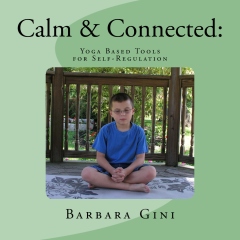
Calm & Connected: Yoga-Based Tools for Self Regulation

Calm & Connected
We live in stressful times. Societies are changing. Transitions are scary for kids & they react differently to them than adults do. It’s easy to overlook signals. 

More and more children and teens of all ages & abilities are being affected by stress each day, with devastating results. Whatever age you are, stress interrupts our ability to learn, heal, form healthy relationships and function optimally.


In a recent survey, 20%-40% of children age 8-12 reported being stressed & worried over something - yet only 8%-17% of parents & educators were even aware that children were feeling stressed. One of the proactive things we can do is to pay better attention to the outward stress signals children send us.

Children with special needs are even more sensitive to changes in their home & school environments and may show signs as well: crying, aggression, trouble sleeping, food cravings or other changes in eating habits, headaches, teeth grinding, constipation, & chronic illness could all be outward signals of stress.

Preview
More and more parents and educators are asking "What can we do to help?"

You can become aware and observe the children you love, care for and work with. Watch for those outward signals especially during times of turmoil, transition or life changes. By teaching kids to recognize the signs of stress, along with easy strategies for them to use to self-regulate, you can help them respond to outer turmoil by creating a calm more grounded inner environment when they need it most.

Calm & Connected shows you, the parent, educator or professional to guide children in recognizing and responding to stressors and to manage stress in a healthy, resilient manner. The best part is, ANYONE can use this book. You do not need any yoga background to teach these simple techniques effectively. Just follow our easy, illustrated instructions.
Preview

Inside these 87 color pages, you will find more than 3 dozen kid and school friendly, yoga-based tools, techniques, games, activities and more, all aimed at helping children recognize stress & self-regulate. By learning to use them, kids age 3 and up can begin to effectively recognize stress, create a calmer connection to themselves and others, effectively manage stress, reduce anxiety, improve focus connect with their inner calm, minimize anxiety improve concentration & enjoy life more.  In addition they will learn to make better choices for themselves in every situation. This information is a must-have for any home or school health & wellness library.

Preview
The techniques are effective as an intervention or re-direction method but are most effective when practiced consistently:  it’s crucial that they are re-enforced every day for all kids-in school, at home, on the field or stage and in the therapy room. After initial instruction, children will be able to do these techniques independently. 

Bad habits are formed over time and good habits will also take time. A stress response is simply a habit of responding a certain way to sensory input. So is a relaxation response. Children need to be taught that they do have a choice as to how to respond to stressors. They need to know what tools they can use if they are in pain, scared or their senses are overloaded and they feel confused and as if they are losing control.

Calm & Connected will help you show them what do to.


Order Your Print Copy of Calm & Connected here

*Now Available on Kindle


*Calm & Connected is part of our R.E.A.Ch™ Programming (Relaxation Education for Adults & Children) Find out more here: R.E.A.Ch Programming


Contact: barbara@bodylogique.com


.

Monday, August 13, 2012

10 Steps to Encouraging Kids to Participate in Yoga, School and Life

Photo:
unicef.org.nz

"Education Is Not the Filling of a Pail, But the Lighting of a Fire"  ~W.B.Yeats

Whether you are talking about yoga, recreation, education, parenting or coaching, our most important task is to "light a fire" by engaging our young audience as they learn. If children are engaged, they will participate more, and the more they participate, the more engaged they become. This keeps them motivated to keep learning through every experience, both in and out of the classroom.


Below are 10 factors that I have found to encourage active participation in all types of learning in the classroom and in life. How many are you currently using? How many more can you incorporate?


1- Environment: Think in terms of  whether or not the environment is clean, sensory friendly and welcoming. Outside of physical factors, what makes an environment most relaxing & welcoming is how relaxed and approachable the teacher/coach/parent is. A relaxed child will be more willing- and able- to participate and learn.

2- Senses: Awaken and engage each and every sense. Use music, games, art, colorful posters to encourage integration of the body as well as the brain. We learn through all of our senses and the more you incorporate them into homework, coaching or classrooms the more a child will want to learn.

3- Structure: Have a plan, but structure it loosely to allow room for spontaneous and free exploration of related questions, topics and activities. This adds and brings imagination to the learning experience. When it comes to a home routine, keep tasks & rules consistent and no more in number than the age of the child in years up to a maximum of  7 at a time. (Seven is the maximun number of items or ideas the brain can remember at once.)

4- Visual Presentation: About two thirds of our brain is used for visual processing while only 2% of it is used for conscious and cognitive functions. Traditional classrooms are set up to teach to that 2%. Be sure to use cartoons, photos, drawings, props, felt boards and other visual aides to engage that part of the brain kids use most.

5- Modify & Adapt: There are many ways that children learn. Have as many (physical and educational) supports available for them to use. In yoga this might include straps, bolsters, balls, and in the classroom this might include video, charts or images. If using technical, long or unfamiliar words, explain concepts with simpler ones until understood. Then introduce the technical terms.

6- Keep it Real: This applies more so to yoga teachers than others, but remember to be consistent and use regular everyday voice and language. If you speak using awkward metaphors or alien language, (such as "align with your chakras" or  "shine your head forward" or "feel the happiness in your organs" ) kids will tune you out, not take you seriously and not grasp the concepts you are trying to teach. Speak using as few words as possible, in simple, everyday language & introduce new vocabulary only after the basic concepts are grasped.

7- Participate: Kids are more willing to play or try an activity that the adult facilitator is participating in rather than imposing on them. It fosters a sense of trust. So find your inner child and play with the kids.

8- Feedback: Listen to what the kids say-and don't say. Observe their reactions and interactions. Allow the children to share what their favorite part of a class or activity was- (after sharing their not-so favorite) and suggest other things they might like to do/learn. Find a way to incorporate it into the curriculum.

9- Be a Good Student:  Be open to learning. Let students (individually or in a group) plan lead a class activity. It will give them a greater appreciation for learning, and you just might learn something too!

10- Fun: Remember above all that kids are kids. Not miniature adults. They are rushed through life unnecessarily and need time, patience and fun. Find ways to package what students need to know, into something fun that they will want to know and help light a healthy (educational) fire in each of them!


Contact: barbara@bodylogique.com


.


Friday, August 10, 2012

In Case You Missed It: August 6 - 10

Vintage Harley Women Photo:
avidrider.com
This week was another full one for me with summer camps winding down and my yearly office clean out in full swing, getting ready for new projects and the transition from summer to fall. I have been able to carve out some time for doing the things for myself that I love, which is so important for caregivers who work both in and out of the home.

For some families the end of summer is a difficult time, due to stress. In fact, the common question or theme from everyone I talked with or had contact with this week was "family stress".  Its fitting (or is it synchronicity?) that this week I also finished proofing my third book, "Calm and Connected: Yoga Based Tools for Self-Regulation" . 

This one is a different format than the "S.M.Art Stories™" curriculum series and was my favorite to write so far, because it gives specific insight into causes of family stress and simple non-intrusive ways to address and minimize it. It is written for adults and educators to guide kids to stay Calm and Connected even at the most chaotic times. This title will be available on Amazon in the next week or two so watch the blog and our Twitter , You Tube and Facebook pages for an introductory offer & other announcements!

And now for our weekly posts.

Wishing you a "Calm & Connected" weekend!


~Barbara


Calming Technique: Peace Ball (Video)

The Mechanics of the Brain

50 Children's Books with a Positive Message

The Best Swim Gear for Kids with Special Needs

For Visually Impaired and Dyslexic Students: A (Free) High Tech Solution

Natural Learning: Brain Based Principles

Visual Affirmation Tools for Kids


Contact: barbara@bodylogique.com